The Woman Who Only Wanted Old Dogs
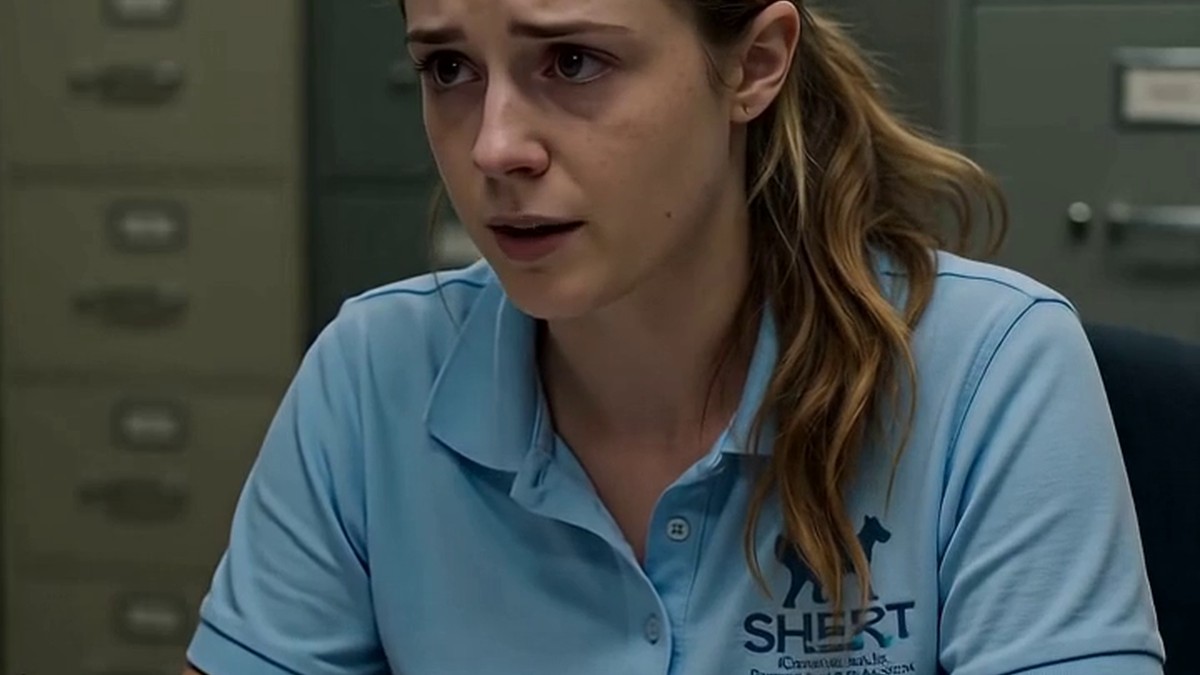
The bell above the door chimed, and Emily looked up from the intake forms. The woman standing at the counter wasn’t like the usual visitors. No nervous smile, no fidgeting with a purse. Just a quiet certainty in her gray eyes and a canvas tote bag looped over one arm. Her sneakers were worn, grass-stained at the toes, and her jacket had faded along the seams from years of sun and wash cycles.
“I need a very old dog,” she said.
Emily blinked. Three years volunteering at the New Hope Shelter in Columbus, Ohio, and she had fielded every request imaginable. Families wanted puppies that wouldn’t chew the furniture. Young couples asked for photogenic rescues to post on Instagram. One man demanded a dog with heterochromia because it matched his aesthetic. But never this. Never a request for a dog no one else would even glance at.
“How old are we talking?” Emily asked carefully.
“The oldest you have. Ten, twelve. The older, the better.”
Emily excused herself and found Linda, the shelter director, scrubbing a food bowl in the back sink. “There’s a woman out front. She’s asking for the oldest dog we’ve got.”
Linda dried her hands. “Show her in.”
The woman’s name was Margaret Cole. She sat down in the cramped office, placed her bag on her knees, and folded her hands. They were capable hands, chapped and veined, with soil under the nails that no amount of washing could remove. Hands that had dug gardens, soaped floors, and soothed frightened animals.
Linda leaned forward. “Margaret, you understand that senior dogs come with extensive medical needs. Special diets, medication, frequent vet visits. It’s not easy, and it’s not cheap.”
“I know,” Margaret said.
“Do you have experience?”
Margaret’s gaze drifted toward the window. Outside, a row of chain-link kennels gleamed under the spring sun. A distant dog barked twice and fell silent.
“I have Duke at home right now. Fourteen years old, a lab mix with arthritis in both hips. I adopted him from a shelter in Indianapolis two years ago. Before him, there was Teddy—a blind terrier mix with advanced cataracts. He lived with me nineteen months. Before Teddy, I had Nellie, an old German shepherd with hip dysplasia. She was with me eight months.”
She recited the names without drama, but each one landed with the weight of a stone dropped into still water. Linda took off her reading glasses.
“You’re telling me you deliberately take in elderly dogs?”
“Yes.”
“Why?”
Margaret met her eyes. “Because everybody wants puppies. They want a clean slate, a fresh start. But an old dog sits in a kennel and waits. She doesn’t understand why she’s no longer loved. Why the person who used to scratch her behind the ears stopped coming. Why she’s sleeping on concrete instead of a warm rug. I don’t want her last year—maybe her last months—to be spent like that.”
The office fell silent. The only sound was the rhythmic thump of a young dog’s paw against a cage door somewhere down the hall. Thump. Thump. Thump. Not angry. Just lonely.
Linda stood up. “Come with me. I want you to meet someone.”
—
The kennels smelled of pine-scented cleaner and dog food. Margaret walked past the young dogs without slowing. A sleek retriever mix leaped against the wire mesh, tail wagging. A black-muzzled shepherd barked and spun in a circle. Margaret’s eyes moved past them, scanning for gray, for stiffness, for the quiet resignation of a dog who had given up on hope.
Linda stopped at the second-to-last enclosure. Inside, on a piece of flattened cardboard, lay a large brown hound mix with drooping jowls and a muzzle dusted completely white. Her back legs were splayed at an awkward angle. A water bowl sat untouched near the gate.
“This is Sadie. She’s thirteen. Kidney disease and cardiomyopathy. The vet gives her a year, maybe eighteen months, with diligent care. Her owner passed away, and the daughter dropped her off in a cardboard box and said something about allergies.”
Margaret crouched down. She curled her fingers through the cold wire. “Sadie.”
The dog lifted her head. She didn’t get up—moving seemed to cost her something—but her tail gave a single, heavy thump against the cardboard. Her eyes were rheumy, the whites tinged with red, but they locked onto Margaret’s face. Recognition without history. Hope without expectation.
Slowly, painfully, Sadie hoisted herself onto her front legs. She shuffled forward three steps and pressed her dry nose against the gate. Margaret scratched her gently along the white blaze of her forehead, down to the bridge of her nose.
“I’ll take her,” Margaret said.
—
The paperwork took thirty minutes. Emily stamped the forms and watched through the window as Margaret sat on a bench outside, Sadie at her feet. The old dog leaned her full weight against Margaret’s shin and sniffed the hem of her jacket, the shoelaces, the knuckles of the hand that rested on her back.
“Linda,” Emily whispered. “Is she… okay? I mean, taking dogs that are just going to die. It feels like she’s signing up for heartbreak.”
Linda crossed her arms and watched the pair through the glass. “Emily, I’ve worked here fifteen years. People come and go. Half of them bring the dog back in a month because it barked too much or ruined a carpet. This woman? She’s not picking a pet. She’s carrying the ones everyone else threw away. That’s not heartbreak. That’s a calling.”
Outside, Margaret clipped a soft, frayed canvas collar around Sadie’s neck and whispered something no one else could hear. The dog licked her hand once—a slow, deliberate gesture—and they walked toward the bus stop together.
—
A month later, Linda’s phone buzzed. A photo: Sadie sprawled on a thick tartan blanket, legs kicked out, a one-eyed plush duck beside her. Her eyes were clearer, brighter, the cloudiness receding. Her tail was a blur in the frame—wagging. The message underneath read:
“Sadie has settled in. First week she pressed herself against the wall. Then one night she crawled up onto the bed and hasn’t left. She likes her right ear scratched; the left one might be sore. Kidney values are stable, vet is pleased. Duke tolerates her—they share the sunny spot on the balcony. Thank you for her.”
Linda read it twice. Then she scrolled to a handwritten list tacked to her bulletin board. The last entry said: *Barney – 14, terrier mix. Owner deceased. Deaf in left ear. Eats little. No interest from visitors.* She picked up her phone and typed:
“Margaret, we have another one. Barney, 14, very quiet. If you’re ready, let me know.”
The reply came four minutes later: “I’ll be there Saturday. I’ll make space.”
—
Saturday arrived with a gray drizzle. Margaret walked through the door at exactly ten o’clock, her canvas bag streaked with rain. Emily met her at the front desk and led her down the familiar hallway. Halfway to the kennels, Emily’s words burst out before she could stop them.
“Doesn’t it destroy you? When they… leave?”
Margaret’s worn sneakers squeaked on the wet concrete. She didn’t slow down. “It does,” she said. “But when Nellie was dying, she was in my lap, on a clean sheet, and I petted her the whole night. She could have died here, alone, on that cold floor. It hurt me. It still does. But Nellie wasn’t afraid. Her last feeling was being held. That’s the difference. This isn’t about my grief, Emily. It’s about their peace.”
Emily turned away fast, blinking hard. She cleared her throat and resumed her professional tone. “Barney’s this way.”
Barney lay in a shadowed corner, a stout black terrier with a white beard and milky eyes. His good ear pricked at their footsteps, but he didn’t stand. Margaret knelt, pulled a folded napkin from her bag, and offered a sliver of chicken through the gate. He took it gently, his whiskery lips barely brushing her skin. She stroked the rough fur between his brows.
“Alright,” she murmured. “Let’s go home.”
—
The months turned. Margaret became a quiet legend at the shelter. Linda kept a running list of senior surrenders, and Margaret’s name was always the first call. Duke, Sadie, and Barney formed a creaky, gray-muzzled pack that shuffled after her from room to room. Photos arrived on Linda’s phone like clockwork: the trio asleep in a sunbeam; Sadie wearing a knitted sweater during a cold snap; Barney discovering the joy of a shallow splash pool in the backyard.
Then came the day a dirty white van pulled up to the shelter gates. A man in a stained hoodie unloaded a cardboard box from the passenger seat and drove off without a word. Inside the box was a dog named Rosie.
She was a matted poodle mix, so emaciated you could count every rib through her patchy fur. Her teeth were rotten, her claws curled into spirals that scraped the ground, and her eyes were dull with a lifetime of neglect. The vet’s assessment was grim: congestive heart failure, advanced dental disease, and a tumor on her spleen that would require costly surgery. She was at least twelve years old, maybe older.
The shelter’s board of directors convened in the conference room. The CFO, a lean man named Roger, tapped his pen against the financial report. “We’re over capacity and underfunded. The surgery alone is three thousand dollars. And even if we do it, she’s got six months tops. We have to be realistic. Euthanasia is the kindest option.”
Linda shook her head. “Kindest for our budget, you mean.”
Before Roger could reply, the door opened. Emily stood in the frame, her face pale. “Margaret is here. She heard about Rosie.”
Margaret walked in without waiting for an invitation. Her canvas bag was replaced by a small zippered folder of receipts and vet records. She placed it on the table and looked at Roger with the same calm, unshakeable certainty she’d shown the very first day.
“You’re planning to put her to sleep,” she said. It wasn’t a question.
Roger spread his hands. “I know you mean well, ma’am, but this dog’s quality of life is practically zero. And the cost—“
Margaret pulled a check from the folder. It was made out to the shelter for four thousand dollars. “That covers the surgery and the immediate aftercare. I’ve already spoken to the veterinary cardiologist at Ohio State. She’ll operate tomorrow. I’ll take Rosie home as soon as she’s stable.”
Roger blinked. “You can’t just—“
“You’re right,” Margaret said, her voice still soft but immovable as bedrock. “I can’t just let her die because a spreadsheet says so. This shelter’s mission is to protect and rehome. Rosie is still alive. She still wags her tail when someone says her name. She ate two dog biscuits from my hand five minutes ago. That’s quality of life. That’s worth something. That’s worth everything.”
Linda cleared her throat. “I move we accept this donation and proceed with the surgery.”
The board vote passed three to one.
—
The surgery was successful. The tumor was benign. Margaret brought Rosie home on a crisp autumn morning, carrying her in a soft crate lined with fleece. For the first weeks, Rosie simply lay on her bed and watched Margaret with wide, disbelieving eyes. Then one day, she pushed her nose into Margaret’s palm and gave a tiny, tentative lick. The next day, she found the squeaky toy basket. The day after that, she let out a hoarse, croaky bark when Margaret came through the door.
Six months later, Rosie was still alive. One year later, she celebrated her thirteenth birthday with a dog-safe cake surrounded by Duke, Sadie, and Barney. The photo Margaret sent to Linda showed the four dogs wearing party hats, their old faces messy with frosting. Sadie had gained two pounds. Barney’s hearing had gotten worse, but he had learned hand signals. Duke, the fourteen-year-old who wasn’t supposed to survive the winter of 2024, was snoring on the couch.
That evening, Emily came to visit. She sat cross-legged on the floor of Margaret’s living room while four elderly dogs snored peacefully around her. The house smelled of beef stew and dog shampoo. A shelf in the corner held framed photos of Teddy, Nellie, and a dozen others, each with their own collar hanging beside the frame.
“I used to think you were crazy,” Emily said.
“I know,” Margaret smiled, handing her a cup of tea.
“Now I think I want to do what you do.”
Margaret looked at her. “Then you will. There’s always another dog waiting.”
The following spring, a new volunteer started at the New Hope Shelter: Emily, who now ran the “Senior Paws” program, dedicated entirely to fostering and adopting out elderly dogs. Her first foster was a twelve-year-old beagle with a crooked smile and a cataract in one eye. She named him Lucky. The second was a fourteen-year-old mutt who had spent seven years in the shelter system. She named him Champ.
Linda stood at the window and watched Emily walk a wobbly old dog around the courtyard, the same way she had once watched Margaret. The gray-muzzled beagle stopped to sniff a patch of grass, and Emily knelt down to scratch his ears, no longer afraid of the coming goodbyes.
Some people try to avoid pain at all costs. Others walk straight into it with open arms, carrying soft blankets and canvas collars, knowing that every ending is just another dog who left this world feeling, for the first time in too long, utterly and completely loved.