The Verdi Room at the St. Regis shimmered like a jewelry box left open under the chandeliers. Crystal pendants caught the light and threw it against the walls in tiny rainbows, while a string quartet sawed through something dreamy by Debussy. The air smelled like expensive perfume and warm brioche, and every woman in the room seemed to be wearing a dress that cost more than my monthly rent.
I balanced a silver tray with two glasses of prosecco, threading my way between hedge-fund managers and their polished dates. My uniform was starched and pinched under the arms, a cheap rental from the catering company that smelled faintly of industrial detergent. I’d tucked my hair into a tight bun and kept my eyes down the way they trained us to. Invisible. Efficient. Part of the furniture.
But my heart was a jackhammer against my ribs.
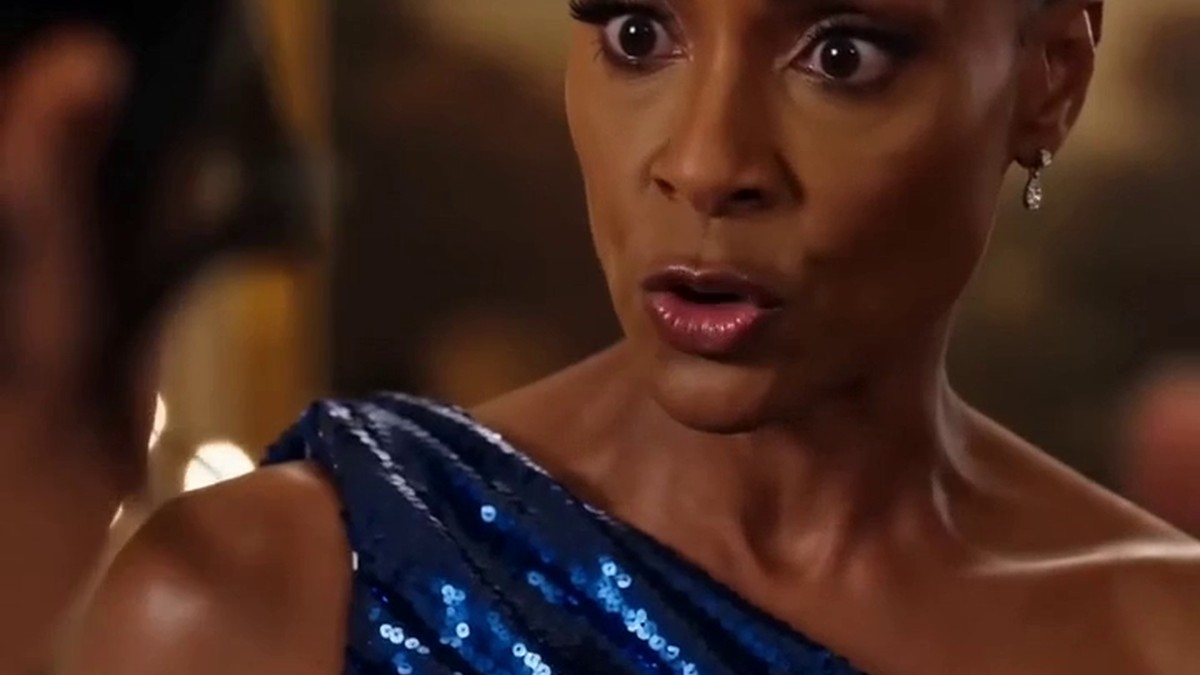
I’d memorized her face from a dozen photographs, from the society pages and the gallery website and the framed portrait in the lobby downstairs. Eleanor Vance. Thirty-four today. Owner of the most coveted contemporary art space in San Francisco. The woman who stood at the center of the room in a backless sapphire gown, laughing at something a silver-haired man whispered in her ear.
The caterers were supposed to circulate, not hover. I broke protocol and stopped dead, ten feet behind her, staring at the bare expanse of her back.
I had imagined this moment a thousand times. Screamed it into my pillow. Scribbled it in journals I later burned. In some versions, I walked right up and introduced myself. In others, I stood on a chair and announced it to the whole room. But standing there, with the ice bucket chill still numbing my fingers, only one version felt right.
I stepped forward and tipped the tray.
The prosecco hit her spine in a foaming, golden rush, soaking through the silk and plastering the fabric to her skin. She gasped, a sharp intake of breath, and for half a second the entire room seemed to freeze — the music faltered, the laughter stopped, heads turned in slow motion.
Eleanor spun around. Her face was a mask of shock that crumbled instantly into fury.
“What the hell do you think you’re doing?” Her voice cut through the hush, shrill and unguarded. The guests nearest us recoiled. The silver-haired man took a step back, his hands raised as if to distance himself from the mess.
I didn't move. I just watched her chest heave, watched the wet stain spread down her thousand-dollar dress.
And then her hand flew.
The slap cracked across my left cheekbone with enough force to jerk my head sideways. Pain exploded behind my eye, sharp and hot, and my teeth clacked together. The tray clattered to the marble floor, the empty glasses shattering. Somewhere behind me, a woman gasped, “Oh my God.”
My face stung like a burn. I straightened up slowly, lifting my hand to touch the spot where her palm had landed. I could already feel the skin puffing, the heat radiating into my temple. My eyes watered, but I did not blink.
Eleanor was breathing hard, her perfectly made-up face flushed and ugly with rage. Her hand still hung in the air, fingers splayed, as if she was deciding whether to hit me again.
I looked into her eyes — the same deep hazel I saw in my own mirror every morning — and let the words spill out before I could choke on them.
“Happy birthday, Eleanor.” My voice came out small and raw, but steady. “It’s Lily. Your sister.”
Everything stopped. The quartet had faltered into silence. The guests were frozen, a ring of mannequins in evening wear. But all I saw was her face — the way the anger drained out of it like water from a cracked bowl, replaced by something blank and uncomprehending.
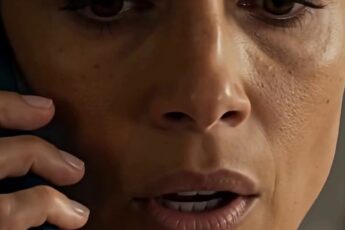
Her pupils blew wide. Her lips parted. The hand that had slapped me floated down to her chest, pressing flat against the soaked silk. “What?”
I didn’t repeat myself. I just held her stare and let her look. Really look. The shape of my nose, the curve of my jaw, the little scar near my left eyebrow from when we’d crashed our bikes into the garage door when I was six and she was nine. She’d held my hand the whole way to the emergency room.
“Lily?” The word cracked out of her in a whisper. Her whole body started trembling, those elegant shoulders shaking under the ruined gown. “Lily died. They told me she died. The fire—”
“The fire didn’t kill me.” My throat tightened. “Social services separated us. I was in the hospital for two months, and by the time they tried to find you, you’d already been adopted. Your new family didn’t want complications. They told you I was dead to make it easier.”
I’d practiced saying it without crying. I failed. A tear slid down my cheek, right over the red handprint she’d left there, and dripped onto my polyester collar.
Eleanor’s face crumpled. Every ounce of regal composure dissolved into something raw and childlike. She reached out a shaking hand, not quite touching my swollen cheek.
“They said it was a closed adoption,” she breathed. “They said you were gone. I looked for you. I looked for years. I hired detectives—”
“I know.” I caught her hand and pressed it against my face. Her palm was cold against the heat of the slap. “I found the records two years ago, after my adoptive mom passed. And I’ve been trying to figure out how to tell you ever since. I was going to write a letter, I was going to call your office, but I just—” A sob hitched in my chest. “I just wanted you to see me. Really see me.”
Eleanor’s knees buckled. She didn’t fall — I caught her elbow, and the silver-haired man stepped forward to steady her, but she waved him off. She grabbed both my hands, her grip fierce and desperate.
“Lily,” she said again, as if saying it enough times would make it true. “My God, Lily. I hit you.”
“I dumped champagne down your dress. Call it even.”
A laugh burst out of her, ugly and wet, and then she was crying — really crying, mascara streaking down her cheeks, shoulders heaving. She pulled me into a hug so tight I could feel her heart hammering against my own chest.
Over her shoulder, I saw the bewildered faces of her guests. The string quartet had given up altogether. The catering manager was wringing a napkin in both hands, probably calculating the lawsuit. I didn’t care.
Eleanor pulled back, still holding my arms, and stared at my face like she was memorizing it. “I have a sister,” she announced, her voice wrecked but carrying through the silent room. “Everyone, this is my sister. She’s alive.”
A confused smattering of applause broke out. Someone — I think the silver-haired man — started laughing in disbelief.
Eleanor turned back to me, wiping at her eyes with the back of her hand. “You’re coming home with me tonight. No arguments. I have twenty-five years to catch up on.”
“Your party—”
“Forget the party.” She looked down at her soaking dress, at the shattered glass on the floor, and then back at the red mark blooming on my cheek. She touched it gently, wincing as if she’d felt it herself. “I’m so sorry.”
“Don't be,” I said. “It was worth it.”
She shook her head, a fresh wave of tears spilling over. Then she pulled me close again, right there among the broken glass and bewildered millionaires, and held on as if she’d never let go.
I buried my face in her shoulder and breathed in the scent of champagne and expensive fabric. After twenty-five years of being nobody, I was finally someone’s sister again.