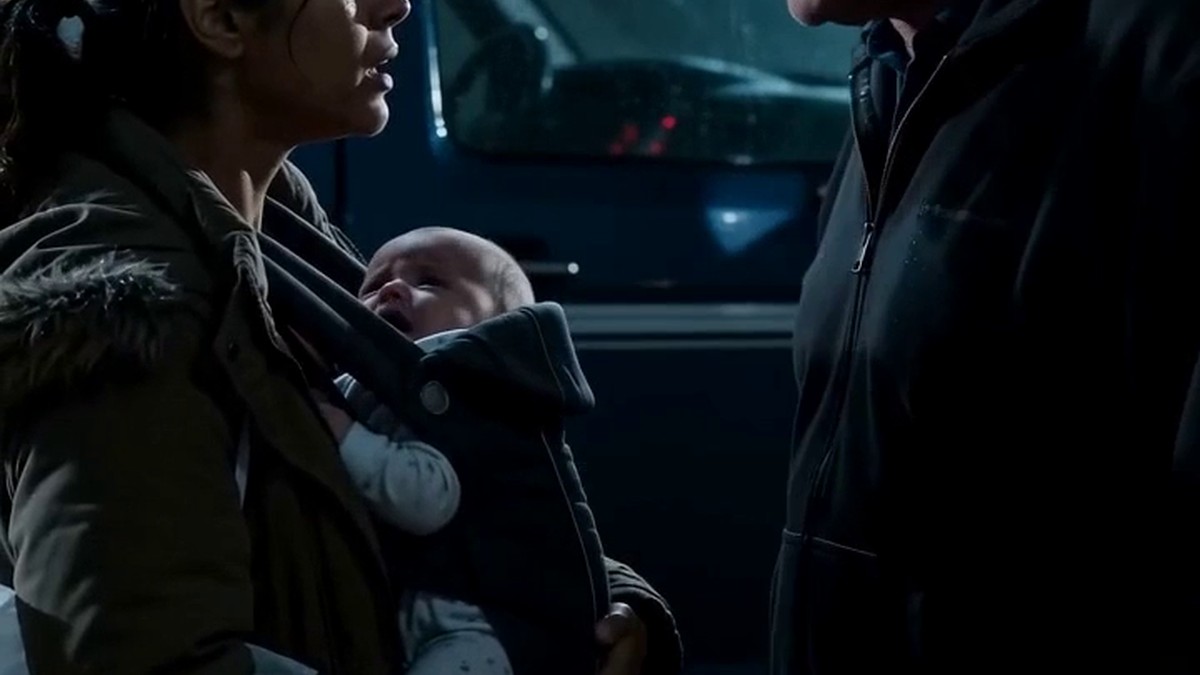
Tessa walked out of UPMC Magee-Womens Hospital into a March wind that smelled like wet asphalt and the river. Her son—two days old, no name yet except the one she murmured to him at night—slept against her chest inside her old parka. She had forty-one dollars left in her checking account.
That part was a fact. The other fact: her parents had not come.
Carol and Gary had made it clear three weeks before delivery. “Don’t bring that baby home.” Carol’s voice through the phone, no crack. “You want to keep it, fine. But not under our roof.”
Tessa had been their daughter since she was seven. Eleven years. They had taught her to ride a bike, had driven four hours to a college orientation. But a grandchild—a baby from a guy who had blocked her number—that was where the math stopped working for them.
She kept walking toward the bus stop on Fifth Avenue. The carrier bag cut into her shoulder. The baby stirred. A PAT bus wheezed past, its sign for Downtown flickering in the rain.
Then she stepped off the curb without looking.
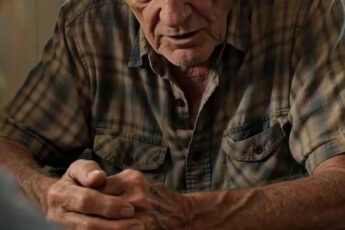
Brakes shrieked. A dark blue Ford F-150 skidded to a stop six inches from her hip. The driver’s door flew open. A tall man, white hair, work jacket, came at her like a storm.
“God almighty, are you trying to die?” He pointed at the truck, then at the baby. “You and that child—what were you thinking? You want me to live with that? Huh?”
Tessa’s hands went numb. The baby woke and began to cry. She tried to speak, tried to say she was sorry, but the words came out in pieces.
The man stopped. He looked at her face, at the newborn, at the bag slipping off her shoulder. His anger fell away.
“Where are you headed?” he asked, his voice dropping.
She opened her mouth. “I don’t know.”
He blew out a breath. “Get in the truck. Both of you. We’ll figure it out at my place.”
She didn’t move. He reached past her and opened the passenger door.
“Come on. I’m Harold. What’s your name?”
“Tessa.”
“Nice to meet you, Tessa. Now get in before that baby freezes.”
Harold lived in a brick house in Brookline, a few blocks above the boulevard. The kitchen had a clock that ticked too loud and a dead orchid on the windowsill. He gave her the room at the end of the hall—his son’s old room, though she didn’t know that then. He brought her towels and stood in the doorway like a man who had forgotten how to host.
“You need diapers,” he said. “I’ll make a list.”
She tried to hand him her wallet. He waved it off.
“Put that away. I got it.”
While he was gone, she lay down on the bed with the baby. She meant to stay awake. She didn’t. When she woke, the baby was not in her arms.
“Where is my baby?” She was on her feet before her eyes were fully open. She ran into the hallway.
Harold came around the corner, the boy cradled in one arm, a plastic Target bag in the other. “Easy. He’s fine. You needed sleep.”
She took the baby back so fast Harold took a step back. But the boy was warm, awake, blinking at the ceiling.
“He was getting fussy,” Harold said. “I had him. Here—I bought the diapers. And some onesies. And a thing of formula, just in case.”
She looked in the bag. Newborn size. Yellow and gray. She pressed her lips together and said nothing.
That evening, after a neighbor—a retired nurse named Rita—came over and showed her how to bathe the baby in the kitchen sink, Harold made coffee and sat across from her.
“Stay here,” he said. “I got three bedrooms and no one to fill ’em. I’m widowed, no kids, no grandkids. I work part-time at the hardware store. It ain’t much, but it’s a roof.”
She didn’t answer right away. The baby made a small sound in his sleep.
“You had a son?” she asked.
Harold’s hand went to his shirt pocket, then fell away. “Yeah. Jasper. He was about to get married—his girl was pregnant. I was working offshore in the Gulf, six weeks on, six off. He was supposed to wait for me to get back for the wedding. But he loved motorcycles. Lost control on Route 51. Died before I got home.”
The coffee went cold between them.
“My wife,” Harold said, “she didn’t last long after that. And Jasper’s fiancée—I never found her. She just disappeared. I knew she was having my grandchild. I looked for years. Nothing.”
He looked at the baby. “So I’m asking you, Tessa. Stay.”
She thought about it. Then she said, “I was going to name him Jasper.”
Harold’s head came up. “What?”
“Jasper. I don’t know why. I just always liked it.”
He put his cup down. His hand was shaking. “That was my son’s name.”
They sat there while the clock ticked.
“Then it’s settled,” Harold said. “You’re staying.”
She moved in. Three weeks later, she came out of the bedroom in a new shirt—one Harold had bought—and the silver chain around her neck caught the light. He stopped in the hallway.
“That chain,” he said. “Where’d you get it?”
She touched it. “My birth mother left it with me. When she dropped me off at the fire station.”
Harold didn’t move. “Can I see it?”
She unclasped it and handed it over. He turned the small locket over in his fingers. His face lost color.
“Did you ever open it?” he asked.
“There’s no clasp.”
He pressed the edge a certain way—his thumb found an almost invisible seam—and the locket split in two. Inside was a tiny coil of dark hair.
Harold sat down on the floor, right there in the hallway. Tessa knelt beside him.
“I had this made for Jasper,” he said. “For his eighteenth birthday. That’s his hair. I put it in myself.”
The words hung in the air.
“You’re my granddaughter,” he said.
She started to say something about a DNA test. He shook his head.
“No. I don’t need a test. You have his eyes. And the locket. And his name for your son.” He reached for her hand. “You’re mine.”
They didn’t talk about it again.
Carol and Gary waited three days for Tessa to come home and apologize. They had it planned: she would knock, she would cry, and they would make her see reason. The baby could go to a good family. She could go back to college. They would all move on.
She never came.
On the fourth day, Gary went to the police station to file a missing person report. A female officer with gray hair listened to the story. Then she folded her hands on the desk.
“So you refused to let your adult daughter and her infant into your home,” she said, “and now you want us to find her so you can what—finish the job?”
Gary opened his mouth. Nothing came out.
“She’s twenty-two,” the officer said. “She’s not missing. She’s gone. And if I hear you pressured her to give up that baby, I might start asking questions about neglect. You want to keep talking?”
Gary stood up so fast his chair scraped the floor. Carol grabbed his arm.
In the car, Carol said, “We could have raised him. We could have managed.”
Gary didn’t look at her. “You told me to make her give him up.”
“You agreed.”
“I was wrong.” He drove the rest of the way without speaking.
Their neighbor, a woman with a yappy beagle, cornered them at the front steps. “Haven’t seen Tessa. She have the baby?”
Carol’s mouth stretched thin. “She’s at a retreat upstate. Some new-mom program.”
The neighbor squinted. “A retreat. Huh.”
They went inside.
Six months later, on a Saturday in September, they went to the Giant Eagle in Banksville. The air inside smelled like floor wax and rotisserie chicken. They were pushing a cart down the baby aisle—Carol needed paper towels—when she saw the diapers first. A whole case of Pampers size three.
Then she looked up.
Tessa stood at the end of the aisle. The baby—Jasper—was strapped to her chest in a carrier. Beside her stood Harold, leaning on a cart stacked with formula, wipes, and a bag of dog food.
Carol’s hand went to her throat.
Tessa walked toward them. Harold followed.
“Mom,” Tessa said. “Dad.”
Gary let go of the cart handle. His face worked, but no words came.
Carol reached out. Tessa stepped back, not far, just enough.
“This is Harold,” Tessa said. “My grandfather. My real one.”
Harold looked at Gary, then at Carol. He didn’t offer his hand.
“I don’t understand people who take in a kitten and then throw away her kittens when she grows up,” Harold said. “Either don’t take the animal, or deal with the problem like a decent human being. Tessa ain’t a kitten. You couldn’t throw away her baby. So here she is.”
Gary’s voice cracked. “Tessa, I’m sorry. I was weak. I went along with your mother. But we want to be a family again. Even just visits.”
Tessa didn’t look away. “I remember you leaving work early for my school play. I remember Mom sewing my Halloween costume at midnight. I remember all of it.” She paused. “And I remember you telling me to get rid of my baby. I remember no one picking me up from the hospital.”
She turned to Harold. “Can we check out? He needs a nap.”
Gary took a step forward. “Please. Let us hope. Let me be your dad again. I’ll call. Or you call me. Whenever you want.”
Harold put a hand on Tessa’s shoulder. “I’ll be right beside her.”
They left Carol and Gary standing next to the paper towels.
Two months and eleven days later, Tessa sat on the edge of her bed in Harold’s house. Jasper was asleep in the crib, one arm flung out. She looked at her phone for a long time. The screen lit up with Gary’s number. She hadn’t dialed it in months.
She pressed the button.
In his garage, Gary was under his old Chevy Nova, changing the oil. His phone buzzed on the workbench. He reached for it, knocked over a can of WD-40, caught the phone, saw the screen.
Tessa.
His thumb hit the answer button. He brought the phone to his ear, dark oil on his fingers.
“Hello?”
Silence. Then her voice, small but steady.
“Hi, Dad.”
Gary closed his eyes. A wrench clattered to the floor.
“I missed you,” she said. “Can we meet? Saturday. Eat’n Park on West Liberty. Ten o’clock. I want you to meet your grandson.”
Gary’s throat closed. He nodded, then remembered she couldn’t see him.
“Dad?”
“I’ll be there,” he managed. “Tessa—”
But she had already hung up.
He sat on the cold concrete floor, phone in his hand, oil on his jeans, and he stayed there until the garage light clicked off on its timer.