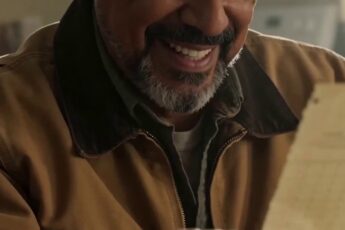
Ray Kowalski kept his hives out past the end of County Road 9, on forty acres that backed up to the Allegheny National Forest — close enough to Warren, Pennsylvania that the mail carrier still came twice a week, far enough that the cell signal dropped to one bar the second you turned off the highway. Neighbors said he talked to the bees. Some said the black bear that wandered through every June came because Ray fed it by hand. That part was made up. The bear did come, every June, and it did sit at the treeline for a few minutes, nose in the air, before it wandered off. Ray never fed it anything.
He ran two hundred hives — dark, ill-tempered bees he'd bred himself over thirty years, mean as hornets and twice as productive. The honey came out almost black, thick enough to hang off a spoon, tasting like buckwheat and wet bark. Ray sold exactly none of it locally. Every September he loaded the truck and drove four hours to the Union Square Greenmarket in Manhattan, where a certain kind of chef and a certain kind of grandmother had been waiting for him since 1994.
He didn't haggle. He didn't chat much either. He set the jars out, took the cash, made change from a canvas bag that used to hold ammunition. "Good honey this year, Ray?" "Bees don't make bad honey," he'd say. "People do that." Then he'd turn back to the next customer.
Three days at that market brought in more than most people cleared in a year. Every dollar of it went somewhere else.
Ray never had kids of his own — his wife, Dolores, died of a stroke at thirty-one, six weeks after their wedding. He spent the next decade alone with the hives, and might have stayed that way, except that in 1988 his neighbor's granddaughter turned up pregnant with no husband in the picture, and died of an aneurysm eighteen months after the baby came. The grandmother who'd been raising the boy passed two winters later. Ray walked over to the county office himself and said he'd take the child. They let him.
That was Dean. After Dean, word got around — not on purpose, just the way word does in a county with nine thousand people in it — that Ray Kowalski would take a kid nobody else wanted. A cousin from Erie showed up with a boy she couldn't feed. A pastor from a church two towns over asked if he'd consider a brother and sister whose mother was in Cambridge Springs state prison. And one November morning in 1994, somebody left a car seat on his porch with a baby girl in it, wrapped in a Steelers blanket, and no note at all. Nobody ever found out who.
Five kids, all told. Dean, Marcus, Wendell, Patty, and the baby from the porch, whom Ray named Junie because she showed up in a month that wasn't June and he liked the joke.
He raised every one of them on honey money — boots, notebooks, the occasional dentist visit, tuition when it came to that. When Dean got into Pitt's med school, Ray sold off two years of reserve honey in one week and wired every cent for the dorm deposit. When Marcus went into petroleum engineering at Texas A&M, when Wendell started law school, when Patty went to a state college for early education, when Junie — quietest of the five, the one who actually stayed and helped with the hives every summer through high school — enrolled in an ag program downstate, Ray sold the reserve each time and sent the money without being asked.
"Go learn something," he'd say, folding the check into an envelope. "The bees don't mind working a little harder. It's what they're for."
And the bees worked.
Years went by the way they do. Dean became Dr. Kowalski, ran a whole department at a hospital outside Pittsburgh, wore glasses now and had gone soft around the middle. Marcus worked oil rigs out of Midland, Texas, flew home twice a year with a watch that cost more than Ray's truck. Wendell opened a firm in Manhattan, wore suits that fit like they were poured on, drove a black Audi he babied. Patty married an Army officer, moved to Fort Campbell, had two kids of her own. Junie ended up an agronomist somewhere in the Central Valley of California, running greenhouse operations for a produce co-op.
They called at Christmas. Called on his birthday. Sent cards. Every so often, one of them would try to send money — a hundred here, three hundred there, Marcus once sent a thousand. Ray sent it all straight back.
"Keep it," he'd write, in the same shaky hand every time. "I've got what I need."
And it was true, as far as it went. He had the cabin. Two hundred hives. Forest on three sides and the creek on the fourth. Quiet enough at night you could hear an owl three ridges over.
But he was eighty-one now, and his shoulder had gone bad enough that lifting a full super made him see spots. His eyes had started playing tricks in low light — twice that spring he'd walked past a hive he swore he'd already checked. The bees seemed to know it. They stung him more than they used to, like they could smell that he'd slowed down. Honey production was down almost a third from five years back. Two of the hive boxes had rotted through at the base and he didn't have it in him to rebuild them.
He understood the math of it without needing to say it out loud: another year, maybe two, and the operation would start eating itself. The hives would swarm off into the woods with no one to manage them. The trail back to the bee yard would grow over. Sixty years of work would just — stop.
So in July, sitting at the kitchen table with a mug of the previous night's coffee gone cold, Ray wrote one letter and had the copy shop in town run it off five times.
*Kids — Come home. Need to talk. It's about the place. Bring a couple days if you can spare them. — Uncle Ray*
They all came, though it took until the third week of August to line up, everybody juggling flights and shifts and custody weekends until the dates lined up like a bad Tetris game. Dean drove up first, in a black Range Rover so clean it looked wet. He got out, looked at the porch, looked at his phone, and frowned.
"Uncle Ray, you still don't have a signal out here? I just missed a call from the hospital."
"Go stand by the third hive from the barn," Ray said. "Best reception on the property."
Dean didn't laugh.
Marcus rolled in an hour later in a truck twice the size of Ray's, dust still on it from Texas plates. Wendell showed up in the Audi, wincing every time it hit a pothole on the gravel drive. Patty came by rental car from the airport in Erie, two duffel bags and a look on her face like she'd already decided how long she was staying. Junie arrived last, on the Greyhound that stopped in town twice a day, walked the last two miles up the drive on foot with a backpack, and got there just as the sun was going down behind the ridge.
They sat around the same plank table where they'd once done homework by kerosene lamp before Ray finally ran electric out to the cabin in '97. He put the percolator on. Set out a jar of the dark honey and a cutting board with bread still warm from the neighbor lady who dropped off a loaf twice a week. Somewhere out back, a dog that wasn't his — a stray mutt he'd been feeding for two years and never bothered to name — barked once at nothing and went quiet.
"So," Ray said. "Tell me how you're all doing."
Dean talked about the hospital, about insurance reimbursement rates, about how nobody wanted to go into internal medicine anymore. Marcus talked about oil prices and a rig fire he'd walked away from with nothing worse than a burn on his forearm, which he showed everyone twice. Wendell talked about a case he'd won against a company that made lawn equipment, and how the settlement alone could buy this whole property four times over. Patty talked about her boys, about how hard it was being an Army wife, about a school district that wasn't what it used to be. Junie didn't say much. She looked at the honey jar, turned it slowly on the table by its lid, and watched her uncle's hands.
Ray listened. Nodded along. Didn't interrupt.
"Sounds like you've all done well," he said finally. "Real well. Now let's talk about why I called you here."
He set his coffee mug down harder than he meant to.
"Two hundred hives. Sixty years of work. My back's gone, my eyes are going, and the bees know it — they've been stinging me like I'm a stranger. I've got maybe two seasons left in me before this whole place falls apart on its own. I need to know who wants it."
Silence sat on the table like a sixth guest.
Dean spoke first, careful, like he was addressing a hospital board. "Uncle Ray, I've got a department to run. I can't just relocate to — " he gestured at the window, the dark, the trees — "wherever this is."
"Same," Marcus said. "I've got fourteen years in with the company, pension's vesting in six. I'm not walking away from that for bees."
Wendell didn't even pretend to consider it. "I could sell this land for you, though. Timber alone's worth something, and if you subdivided the frontage —"
"Wendell." Patty cut him off, quiet, but sharp enough that he stopped. "Nobody's talking about selling."
"I didn't say sell it out from under him," Wendell said. "I said I could help him get value out of it."
"I've got two boys and a husband who moves every two years," Patty said. "I can't take on a bee farm in the mountains, Uncle Ray. I wish I could."
All eyes went to Junie last, because everyone at that table, without saying it, had already guessed. She was the one who'd stayed summers. The one whose hands didn't flinch when she reached into a super. But even she sat there a long moment, turning the honey jar, before she spoke.
"I've got a job offer," she said. "Full greenhouse manager. Salinas. It's a good job, Uncle Ray. It's what I went to school for."
Ray nodded slowly. He didn't look surprised. He looked, if anything, like a man confirming something he'd already worked out weeks ago at that same kitchen table, alone, with the cold coffee.
"All right," he said. "Then I've got some things to say, and I'd like you all to just let me say them."
He got up — knees cracking, the whole table hearing it — and came back with a cardboard file box that had been sitting under the stairs since spring. He set it down and took out five manila folders, one for each of them, and a sixth, thinner one, that he set aside.
"These first five," he said, "are copies. Every wire transfer I sent each of you, going back to 1998. Tuition, dorm deposits, the bar exam fee, Patty's wedding, Junie's truck. It's all there, dated, totaled at the bottom. I want you each to have your own copy, so nobody argues later about who got what. Dean, you got the most, because med school ran the longest. That's fine. That was never a loan."
Nobody spoke.
"This last one," he said, tapping the thin folder, "is the deed to this property, and to an account at Warren County National with eighty-one thousand, four hundred dollars in it — three years of reserve honey I never spent, because you kids stopped needing me to."
He slid the thin folder across the table. Not to any of them. He left it sitting in the middle, next to the honey jar, and looked at his hands instead of at their faces.
"I called Denny Ostrowski, the ag extension agent in town, back in June," he said. "He runs the youth beekeeping program at the high school — teaches kids who've got nowhere else to go what I once had nobody to teach me. There's a girl in that program, seventeen, been in foster care since she was nine, sharpest hands with a hive tool I've seen since Junie was that age. Denny says she wants to do this for a living. I've already signed the deed over to the county land trust with instructions — the property and the account go to fund that program, with her running the hives, soon as she finishes the coursework this spring."
"Uncle Ray —" Dean started.
"I'm not finished." Ray's voice didn't rise, but it stopped Dean cold anyway. "I'm not angry at any one of you. You did what I raised you to do — you went out, you got educated, you built lives that don't need mountains and bee stings in them. That's what the honey money was for. It worked. I don't get to be disappointed that it worked."
He picked up the thin folder again, just to hold it a second, then set it back down.
"But I'm not going to let sixty years of work rot into the ground because none of you have room for it, and I'm not going to let it get carved up into lake lots either." He looked at Wendell when he said that, just for a second. "There's a girl who needs exactly what this place can give her. So that's where it's going. County trust finalizes the paperwork the first week of September."
Patty was the first to cry, quietly, into a paper napkin. Marcus stared at his folder like it might explain itself. Dean opened his, read the total at the bottom — just over two hundred thousand dollars across eleven years — and closed it again without a word. Wendell didn't touch his.
It was Junie who finally spoke, in the low light of the kerosene-lamp table where she'd once sounded out multiplication tables. "Can I still come up? In the summers? Help her with the hives?"
Ray looked at her for a long moment — the only one, in the end, who'd asked to come back rather than asked what she'd get.
"Bees don't care who's holding the smoker," he said, "so long as somebody is."
Outside, the nameless dog barked once more at the dark, and settled back down on the porch boards, and the last of the coffee went cold in five cups nobody finished.