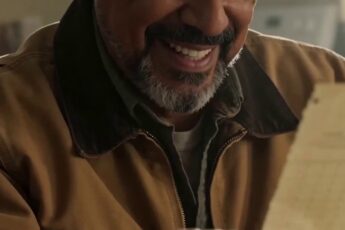
The pork roast was still warm when my daughter set down her fork and said it: "Mom, you can't be serious. That's our money you're burning."
She looked across the table at her brother, and Brian took his cue. "You and Dad worked your whole lives. Now you want to blow a chunk of it on some two-week rental up north? For what? To watch the lake?"
I kept my hands around my coffee cup. The cup had a chip on the rim, right where I always put my thumb. "It's not a blow," I said. "It's two weeks. Dr. Mbeki told your father he needed rest. Actual rest, not just sitting in this house waiting for the next snowfall to shovel."
Frank sat at the head of the table, his plate untouched. He'd had the triple bypass eighteen months earlier, and ever since, meat sat in front of him like a thing he didn't recognize.
"You could rest at home for free," Megan said. She had my mother's sharpness, the same way I had my own. "You don't need to spend four thousand dollars to sit on a porch."
That was the moment I felt it — not anger yet, something colder. My daughter was doing math. She had calculated what that four thousand would look like if it stayed in our account and eventually made its way to her.
I didn't say that out loud. Frank did.
"Your mother almost buried me two winters ago," he said. His voice had that flat tone from the hospital room, the one he used when the surgeon told him the blockage was ninety percent. "And when I came out, you two didn't sit by the bed. You sat in the waiting room on your phones."
"That's not fair," Brian said. "We were there."
"Booking flights. For yourselves. I saw the tickets on the counter. Cancún."
Brian's face went red. "So we're not allowed to plan a vacation? You get to spend four grand on a lake house and we're the selfish ones?"
I set down the cup. The chip was sharp against my thumb.
"Here's the difference," I said. "It's our money. We earned it. Your father worked forty-one years at the same plant. I worked thirty-one at the clinic. Nobody handed us a thing. And now you're sitting in my kitchen telling me a two-week rental is stealing from you."
I paused. "You think you're owed a check when we die. That's what this is. You've already divided it up in your head."
Megan didn't deny it. That was the part that got me most. She just tightened her grip on the fork and said, "You should be thinking about the future. Not just —"
"Yours," I said. "Not just yours. Say it."
Two winters before that dinner, on a Tuesday in January, Frank had been out shoveling the driveway. The neighbor's retriever, a big brown thing called Otis, had been barking at the mail truck the whole time. I was inside, boiling water for tea, when I heard the shovel scrape and then nothing.
I found him on his knees by the garage, one hand still on the shovel handle. His face was gray. Not pale — gray.
The ambulance took him to Bronson Methodist Hospital. The cardiologist, Dr. Mbeki, a woman with steady hands and an Alabama accent, sat me down in a room that smelled like coffee and said, "Your husband's left anterior descending artery is ninety-two percent blocked. They call it the widowmaker. He came in alive, so we have a chance."
She did the surgery the next morning. Three bypasses. When Frank came out, he had tubes in his arms and a breathing mask over his mouth, and all I could think was that the last thing we'd argued about was whether to replace the cracked carafe on the coffee maker.
After four weeks of cardiac rehab, Frank sat on the couch and said, "I'm tired of waiting to die."
We'd been doing the math — how much to leave, how much to keep, what the house would sell for. We'd been doing it so long we forgot we were still alive.
"We're going to Traverse City," he said. "Two weeks. That rental on the bay you had bookmarked for three years."
I had bookmarked it back when he'd first started complaining about chest pain. The photos showed a small cottage with a blue door and a porch facing West Grand Traverse Bay. It was eleven hundred a week. We could afford it ten times over.
So I booked it. Fourteen nights, two thousand four hundred dollars with the cleaning fee and tax. I printed the confirmation and stuck it to the refrigerator with a magnet shaped like a cherry.
We told them at the next Sunday dinner. I made the roast because Frank was eating again. The confirmation was still on the refrigerator.
I should have known by the way Megan's eyes went to it. She hadn't even taken off her coat.
"Two weeks?" she said. "In July? Peak season? That's —" She stopped, did the math in her head. "That's almost three thousand dollars."
"Two thousand four hundred," I said. "Including cleaning."
"And the gas," Brian said. "And food. And whatever else. You're looking at four grand easy."
Frank looked up from his plate. "And?"
"And?" Brian pushed his chair back. "Dad, you just had open-heart surgery. You need to be careful with money. What if something happens? What if you need long-term care? That's what the money is for."
"The money is for living," Frank said. "That's what it was always for."
Megan set down her fork. "You worked your whole lives to build something. For us. That's what parents do. They think about their children."
I picked up the coffee cup with the chip. "And what do children think about?"
That's when the conversation turned. Brian said we were treating our savings like it was endless. Megan said we should consult a financial advisor before "doing anything drastic." And then, the line that broke something in me:
"Every dollar you spend now is a dollar we won't have later," Megan said. "You're not just spending your money. You're spending ours."
The room went very still. I could hear the refrigerator hum.
Frank leaned forward. "Say that again."
"I'm just being honest," Megan said. "You always told us to be honest."
"You want us to sit here, in this house, waiting to die, so you can get a bigger check." Frank's voice was even, the way it got when he was beyond anger. "That's the honest truth of what you just said."
"That's not what I meant."
"It's what you said. Dollar for dollar. You've already counted it."
Brian tried to step in. "Dad, c'mon. She's scared. We're both scared. We just don't want you to make a mistake."
I remember looking at him — my son, thirty-eight years old, a marketing manager, with a mortgage and a leased Acura and a timeshare in Florida — and I thought: he's not scared for us. He's scared for the balance of a trust fund that doesn't exist yet.
That night, after they left, Frank and I sat in the living room. The TV was on but the sound was off. A local news segment about the cherry festival played across the screen.
"We need to talk to a lawyer," Frank said.
"About what?"
"About everything."
Three days later we sat in a small office above a coffee shop on West Michigan Avenue. The attorney, Ruth Kessler, had a wall of law books and a small bowl of peppermints on her desk. She listened without interrupting while Frank explained the situation.
When he finished, she set down her pen. "You want to be clear," she said. "And you want there to be consequences if either of them contests it. That's what a no-contest clause does. But I have to warn you — it can make Thanksgiving awkward."
Frank laughed, a dry sound. "Thanksgiving's already awkward."
Ruth opened a folder. "Here's what I'd recommend. You set up a revocable living trust. You remain the trustees and beneficiaries during your lifetimes. Upon the second death, the first three hundred thousand dollars goes to the cardiac rehabilitation program at Bronson Methodist Hospital. The remainder — whatever is left after your expenses, long-term care, and the charitable gift — is split equally between Megan and Brian. If either of them challenges the trust in court, they forfeit their share entirely."
She explained the math. Our total estate, including the house, the 401(k), and the savings, was worth about nine hundred fifty thousand dollars. If we lived another ten years, traveled, and Frank needed any long-term care, the remainder for the kids might be as little as forty thousand each. Maybe less.
"That's the point," Frank said. "They need to understand it's not a guarantee."
Ruth said, "Then you should tell them. In writing, and in person. And you should do it before you leave for Traverse City."
I signed the documents that same day. Frank signed them. Ruth notarized them. The whole thing took forty-five minutes.
We told them on a Saturday in late May. I made coffee. Nobody ate.
Ruth had drafted a one-page summary. I laid it on the table between us. Megan read it first. Her mouth moved silently over the words.
"Three hundred thousand dollars to the hospital?" Her voice cracked. "You're giving away our —"
"Read the rest," Frank said.
Brian picked up the paper. His hands were not steady. "No-contest clause? So if we object, we get nothing? That's — that's coercion."
"It's a choice," I said. "You can accept the terms, or you can challenge them and get zero. The law allows it."
"I don't believe this," Megan said. "You're punishing us for being honest about our concerns. For being worried about your future."
"You weren't worried about our future," Frank said. "You were worried about your own. There's a difference."
Megan started to say something, then stopped. She put both hands flat on the table. "Okay. Okay, I hear you. I — I've been under a lot of pressure. Work. The mortgage. My student loans are paid off now, but I put everything on a card last year and I'm trying to dig out. I didn't mean to sound like I was —"
"Like you were counting down to our death?" I asked.
She flinched. "Mom."
"Is that what you're doing? Treating your parents' lives like a countdown to a payday?"
Megan's face crumpled. She didn't cry — my daughter doesn't cry in front of people — but her chin did a little dance. "I'm sorry," she said. "I didn't think about how it sounded. I was scared about my own mess, and I took it out on you. That wasn't fair."
Frank didn't say anything. He just looked at her.
Brian stood up. "I can't do this right now." He walked out. The front door closed with a sound like a book dropped flat.
Megan stayed another hour. We talked about her credit card debt — fourteen thousand dollars, she said. She'd been using the card for groceries and gas and a root canal. Nothing extravagant. But it had piled up.
I offered to help her budget. I didn't offer to bail her out. That would have undercut everything.
Frank drove home the point. "We'll help you learn to manage it," he said. "But we're not opening the vault. That's the whole lesson, Meg."
She looked at him for a long moment. "I understand," she said. Then she went home.
Five days before the Traverse City trip, Brian showed up at our front door. No phone call, no text. He just stood on the porch with his hands in his pockets, like he'd driven over from his apartment in Grand Rapids and lost his nerve on the way.
I let him in. The coffee was already made. The carafe was still cracked, because Frank and I had decided not to replace it until we got back from the trip. A small thing. But it felt important.
"Mom," he said. "I need to know if this is real. The trust. The hospital. All of it."
"Sit down," I said.
He sat at the kitchen table. I took the trust document from the drawer by the sink — the blue folder Ruth Kessler had given us. I set it in front of him, opened to the signature page. Frank's name, my name, Ruth's notary stamp. The date: May 24.
"It's real," I said. "Signed and notarized. Three hundred thousand goes to the cardiac rehab program at Bronson. Whatever's left after your father and I are done living goes to you and Megan. If either of you tries to break the trust, that share disappears."
I flipped two pages. "And this is the first check." It was already written. Ten thousand dollars, made out to Bronson Methodist Hospital Foundation, memo line: Cardiac Rehab Fund.
Brian's eyes went from the check to the signature page and back. His mouth opened and closed.
"You don't have to do this," he said.
"I already did."
He sat there, both hands on the table, not touching anything. The kitchen clock ticked. Outside, Otis the retriever barked at a passing truck.
"Dad worked forty-one years at the plant," I said. "I worked thirty-one at the clinic. We saved every month. We skipped vacations. We drove the same car for twelve years. Not so you could stand on our front porch and tell us we're spending your money. So we could spend our own."
Brian didn't answer right away. Then he said, "I'm sorry."
I looked at him. "For what?"
"For treating you and Dad like a bank account. For making you feel like your life was just a countdown to my inheritance. That was wrong. And this —" he gestured at the check and the document — "this isn't wrong. It's your money. You earned it."
He swallowed. "Can I come with you? To Traverse City? Just for a weekend?"
That surprised me. I had expected anger, or bargaining, or silence. Not a request to join us.
"You'd have to sleep on the pull-out couch," I said.
"I can handle that."
"Fine," I said. "Call Megan. Tell her she's invited too. But this isn't a negotiation, Brian. The trust doesn't change."
"I know," he said. "That's not why I want to come."
He left. The check stayed on the table, waiting to be mailed.
The next morning I put the check in an envelope, sealed it, and walked it to the mailbox on the corner. The flag went up. The sun was already warm. Somewhere down the street, a sprinkler was going.
Frank came out onto the porch and handed me a cup of coffee. The carafe on the counter was still cracked, but the coffee was hot.
"We did the right thing," he said.
"I know."
We stood there for a minute, watching the mail truck turn the corner. Then we went inside and finished packing.