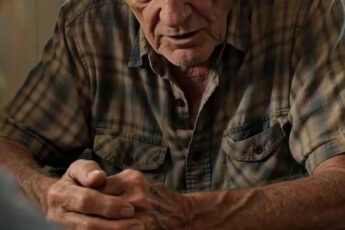
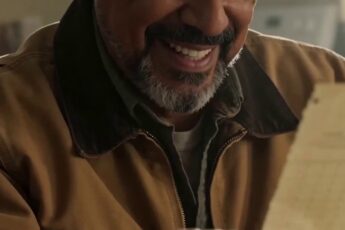
My sister handed the man I’d paid to like me a pair of grill tongs before he’d been at the party ten minutes. “Make yourself useful, handyman,” she said. Cole took them without a word. The air in my parents’ backyard in Huntersville, North Carolina, smelled like citronella candles and scorched propane. My cousin snickered into his sweet tea.
I was thirty-one, and to my family that meant I was a walking disappointment. My mother had called three days earlier while I was standing in line at a Biscuitville on South Boulevard. She didn’t say hello.
“You need to bring a man to the barbecue,” she said. “People are tired of watching you stand by the potato salad by yourself.”
I ordered a large sweet tea, and because my hands were shaking, I turned too fast and poured half of it down the front of the man behind me. He was tall, with grease in the creases of his knuckles and a faded work shirt. I apologized so fast my voice cracked. He grabbed napkins, said it would wash out. Then I said the dumbest sentence of my life.
“I’ll pay you to be my boyfriend for one day.”
He looked at me. One eyebrow went up. “You’re serious?”
“My family has a barbecue Saturday. They think I’m a failure because I’m single. You don’t have to do much. Just stand next to me and act like I’m not a burden.”
He laughed once, not mean. “Usually I turn down acting jobs from women who ruin my shirt with sweet tea.”
Then he saw my face. I must have looked exactly like I felt, because he said, “What’s your name?”
“Mara Ellison.”
“Cole Hargrove.” He wiped his hand on his jeans. “One day.”
We drove through my parents’ iron gate on Saturday at exactly noon. My mother had told me to bring someone presentable. Cole showed up in dusty work boots and a gray T-shirt with a torn sleeve. In the back of his pickup sat a hard hat and a set of tire chains. I didn’t know then that his truck was worth more than my car, and that his boots were scuffed because he’d spent the morning at a loading dock.
My sister Camille saw us first. She crossed the lawn in a white sundress, gold bracelets clinking. She looked Cole over.
“This is him? I didn’t know you were into broke construction workers.”
Uncle Ray choked on a deviled egg. My mother appeared behind a row of hydrangeas and tugged me aside.
“Where did you find him? He looks like the man who cleaned our gutters.”
“He’s my guest.”
“He’s embarrassing us. Keep him away from Camille’s work friends.”
I walked off before I said something I couldn’t take back.
My father shook Cole’s hand with two fingers and didn’t ask a single question. Cole didn’t react. He just went to the drink table and poured himself a lemonade.
Forty minutes later, Uncle Ray decided to humiliate him. “So what do you do, Cole? Handyman? Landscaping?”
“I solve operational problems,” Cole said.
Uncle Ray launched into a rambling lecture about freight rates and warehouse capacity. Cole listened, then answered for about sixty seconds. He talked about inventory variance, regional forecasting errors, and capital drag in distribution networks. Uncle Ray’s mouth opened and shut like a fish.
“I need a beer,” Uncle Ray said.
Camille saw the whole exchange. She didn’t like it.
At four o’clock, she tapped her fork against a wineglass. The chatter on the deck stopped.
“I have an announcement.” She stood by the main table, glowing. “I’ve officially been promoted to Regional Operations Director at Hargrove Freight & Logistics.”
Everybody clapped before she even finished. My mother gasped. My father raised his glass. Camille got out her phone and displayed a shiny digital business card with her name and the fake title. Then she looked straight at me.
“Get up, Mara. Give a toast.”
“For what?”
“For me. Tell everyone how proud you are that at least one daughter in this family made something of herself.”
The deck went silent. I could feel every pair of eyes. My fingers tightened around my glass. I knew what would happen. I’d stay quiet. They’d laugh.
Then Cole reached across the table, took the glass from my hand, and set it down. The sound cut through the silence.
“Regional Operations Director?” he said.
Camille lifted her chin. “That’s right.”
Cole looked at her phone. “How does Hargrove Freight & Logistics reconcile regional inventory discrepancies when physical counts don’t match centralized forecasting?”
Camille’s mouth opened. “What?”
He repeated the question.
She blinked. “Well… regional managers don’t handle that directly. The marketing department does.”
A few relatives frowned. Uncle Ray said, “Marketing?”
Cole got out his own phone. Camille’s face went tight.
“What are you doing?”
He didn’t answer. He scrolled, tapped a contact, and put it on speaker. A professional voice answered on the second ring.
“Legal department.”
Cole spoke even. “Does a woman named Camille Ellison hold the title of Regional Operations Director at Hargrove Freight & Logistics?”
A short pause. Then: “No. There is no one by that name in regional leadership.”
Camille’s face turned the color of mayonnaise. Uncle Ray already had his phone out. “I’m checking her LinkedIn.”
“Ray, don’t—” my mother started.
He looked up. “Says she’s a data entry clerk.”
Camille pointed at Cole. “He’s lying! He’s just some fake boyfriend Mara hired to humiliate me!”
My father stepped forward. “What do you mean, hired?”
Cole stood. Not fast. He looked at Camille, then at my mother, then at my father, then at the stunned faces around the deck.
“My name is Cole Hargrove. Hargrove Freight & Logistics belongs to my family. Last spring, my father stepped down after a heart attack. I’m the sole owner and CEO.”
The only sound was a neighbor’s golf cart backfiring down the street.
Camille said, voice barely there, “That’s not possible.”
“Because of my work boots?”
She said nothing.
“I spent this morning at our repair facility in Charlotte because a sorting line broke. I don’t run the company from a corner office.”
My mother recovered first. “Cole, you misunderstood. We just like to joke. That’s our family style.”
He faced her. “You told Mara to keep me away from Camille’s professional friends so I wouldn’t say anything stupid.”
Her smirk faltered.
“You also said I looked like the man you hired to clean the gutters.”
My mother turned to me. “You told him our private conversation?”
“No,” Cole said. “You were loud. I was standing on the other side of the hydrangeas.”
I had never seen my mother without a comeback.
My father tried. “Let’s not make a tragedy out of a few bad jokes. Sit down. Let’s drink and talk. I’ve always been interested in the trucking business.”
Cole didn’t take the glass. “When Mara introduced me, you didn’t ask a single question.”
Camille stepped forward. “This doesn’t affect my job.”
“It affects it directly.”
“I was promoted. You don’t know all the details.”
“I sign every regional promotion order.”
“Maybe it hasn’t reached your desk yet.”
“There is no such position in my company structure.”
She pressed her phone to her chest. “Then it’s a new position.”
Cole looked at her for a long second. “Did you print that business card yourself?”
She didn’t answer.
My mother said, “Camille?”
Camille swung toward me. “You planned this! You knew who he was and brought him to expose me!”
I stood. My legs were shaking, but my voice came out even. “Until ten minutes ago, I had no idea who he was.”
“Then why is he here?”
Everyone looked at me. I could have lied. After Cole’s announcement, they would have believed anything. But Cole was watching me without judgment.
I breathed in. “I hired him.”
My mother made a strangled sound. My father’s face went red. Camille’s smirk came back.
“I knew it!”
“Shut up, Camille.”
She froze. I had never spoken to her like that.
“I met Cole three days ago at a Biscuitville. Mom had just called and told me I was an embarrassment. She ordered me to find someone. So I offered a stranger money to pretend to be my boyfriend.”
My father slammed his hand on the table. “Enough! You’re ruining a family event.”
“I’m not the one who lied about a promotion.”
“You lied to the entire family!”
“Because you spent years teaching me that showing up alone was worse than lying.”
He opened his mouth. Nothing came out.
I turned to Camille. “You had a job. A real one. But you needed me to fail so you could feel important. So you invented a title.”
“You’re jealous.”
“No. I just don’t need your approval anymore.”
My father shouted, “Get out of my house!”
I picked up my bag. Cole followed.
My mother called after him. “Cole, please stay. You don’t have to leave because of Mara’s meltdown.”
Cole didn’t turn. “I came with Mara. I’m leaving with her.”
He opened the passenger door of his truck. I got in. The driveway was lined with granite pavers. A dead yellow jacket floated in the condensation on the windshield.
As we drove away, Camille ran after us. “You can’t fire me!”
Cole stopped the truck. “I haven’t fired you yet.”
“Then why did you make that call?”
“To find out the truth.”
“I do good work!”
“Tomorrow, internal audit will look into whether you used company branding, corporate data, or executive contacts to create fake documents.”
Camille’s face went even paler. “It was just a business card.”
“Then you have nothing to worry about.”
Her eyes flicked away. That’s when I knew. There was more.
In the truck, I covered my face. “What have I done?”
Cole started the engine. “You didn’t ruin anything. Your sister lied.”
“She’ll lose her job.”
“She used the company name. If it’s just a stupid attempt to impress relatives, the consequences are one thing. If she did more, they’re another.”
I told him about the last few months: Camille bragging about big contracts, investor meetings, a partnership with a competitor called Blue Ridge Transport Group. Cole’s hands tightened on the wheel.
“Blue Ridge has been trying to get into our tenders for six months. We blacklisted them.”
“Why?”
“Dubious reputation.”
“Camille could have negotiated with them using your company’s name?”
“That’s exactly what I’m going to find out.”
The next morning, Camille showed up at my apartment door without makeup, her dress wrinkled from the barbecue. She pushed past me.
“You need to call Cole.”
“Good morning.”
“Now. Tell him to stop the audit.”
“Why?”
“Because I’ll get fired.”
“If you only printed a fake business card, maybe you’ll get a warning.”
She looked away.
“What did you do, Camille?”
“I signed some documents.”
“What kind?”
“Letters of intent.”
“On behalf of the company?”
“They weren’t real contracts.”
“You had no authority.”
“I wanted to prove I could handle more. If the deals worked, they’d promote me.”
“With Blue Ridge?”
She stopped. That was enough.
“God, Camille.”
“They offered good terms.”
“Cole said the company blacklisted them.”
“He doesn’t understand! He’s a spoiled heir who pretends to be a worker. I’ve been in that office for years.”
“You’re a data entry clerk.”
Her face twisted. “That’s why you have to help me. He looks at you like you’re special. You can convince him.”
“Get out.”
“Mom says if I go down, it’s on your conscience.”
That old guilt hit me in the stomach. But I remembered Cole’s words: no one would stand next to me unless I did it first.
“No,” I said. “I won’t call him.”
“You’ll destroy me.”
“No. You did that.”
She grabbed her purse and slammed the door.
An hour later, Cole called. “Camille came to you?”
“She signed letters of intent with Blue Ridge.”
“We already know. It’s worse. She sent them internal rate cards and tender proposals. They promised her a cut of future contracts and a title.”
I sat on the edge of my bed. “Will she be arrested?”
“Not yet. Lawyers and security first.”
Over the next weeks, Camille was fired. She cooperated, returned some money, and avoided criminal charges. But my parents blamed me. My mother sent texts: “Fix this.” “Your father’s blood pressure is high.” “Cole will listen to you.”
I turned off my phone.
Then one Tuesday, my father appeared in the lobby of my office building in Uptown Charlotte. I worked as a data systems manager at a retail software company. He sat in a leather chair, gripping the key fob to his Mercedes.
“We need to talk.”
“I’m working.”
“This is more important.”
I stayed standing. “You have ten minutes.”
“You’ve changed.”
“I stopped being afraid you’d leave.”
“Camille can’t find a job. No one will hire her.”
“It’s been two weeks.”
“She can’t get a management position.”
“She has no management experience.”
“She’s talented.”
“Then let her start over and prove it.”
His jaw tightened. “Cole could give her a second chance.”
“He already didn’t press charges. That is the second chance.”
“She’s your sister.”
“She sold company secrets to a competitor.”
“She made a mistake.”
“If I did the same, you’d call me a felon.”
He said nothing. That silence told me everything.
“You always resented her,” he said.
I shook my head. “You needed me to resent her. You spent years putting us side by side so you could explain why she was better. It was easier to have a golden child and a failure. Except it turns out I’m not a failure. And Camille isn’t perfect.”
He stood. “You’ll regret this when you’re alone.”
“I felt lonelier at your dinner table than I ever have by myself.”
He left without another word.
That night, Cole found me in the parking garage of my office. He leaned against his truck with two cups of iced tea. “Your father came?”
“How did you know?”
“Your assistant told me when I called. I didn’t want you to sit in the dark alone.”
He opened his jacket. Underneath was the same stained T-shirt from the day we met.
I laughed so loud a security guard looked over. Cole didn’t laugh. He just watched me with something in his face that made my chest ache.
Our first kiss happened there, under a flickering fluorescent light between a pay station and a concrete pillar.
A year passed. Cole and I took it slow. He worked constantly, but never used it as an excuse to make me feel small.
Then my mother called at 7:10 a.m. “Your father’s in the hospital. His heart.”
I drove to the cardiac unit in Charlotte. My father lay pale, monitors beeping. The doctor said it was a hypertensive crisis, not a heart attack.
My mother sat by the window. Camille wasn’t there.
My father kept his eyes on the ceiling. “Camille took out a home equity loan on the house.”
I thought I’d misheard.
“She said it was for an investment. I signed the paperwork. The money’s gone. Blue Ridge used her. The accounts are frozen.”
“How much?”
He said one number: $480,000.
My mother’s eyes were wet. “The bank can take the house in three months if we don’t pay.”
I sat down. “Where’s Camille?”
“Gone,” my mother said. “She disappeared.”
“And you want me to ask Cole to pay off the loan.”
They both looked at me. My mother dipped her chin. “For him, it’s not a lot.”
“You called me here to ask my boyfriend of two months to cover Camille’s fraud.”
“Your father is sick.”
“And I’m your daughter. But you’ve never once called just to see me.”
I stood. My father closed his eyes.
In the hallway, Cole was waiting. I hadn’t asked him to come. He just came.
“What happened?”
I told him. He listened.
“Will you help them?” I asked.
“Do you want me to?”
“I don’t know.”
He took my hands. “Then I won’t do anything until you decide. But help doesn’t have to mean writing a check.”
My mother burst out of the room. She grabbed Cole’s arm.
“Thank God you’re here. You have to save us.”
Cole removed her hand. “I can help you find a legal solution.”
“We need money.”
“First, we call the police.”
“No.”
“Then I can’t help.”
“But you have the money!”
“Having money doesn’t create an obligation to pay for someone else’s crime.”
My mother turned to me. “You put him up to this.”
“No. He’s just the first person who won’t let you use me.”
Her eyes narrowed. “Then leave. And don’t come back.”
It didn’t break me the way it used to. She wasn’t banishing me from the family. She was banishing me from the role she’d assigned me. The guilty one. The weak one.
I took Cole’s hand and walked to the elevator.
But before the doors closed, my phone rang. Unknown number.
“Hello?”
Camille’s voice came through, thin and ragged. “Mara, I need help.”
I pressed speaker. Cole leaned in.
“Where are you?”
“I can’t say. They’re watching.”
“Who?”
“Blue Ridge. They think I took the money.”
Cole spoke. “Camille, this is Cole Hargrove. Tell us where you are.”
“No! You’ll call the police.”
“If those men are actually after you, police are your best option.”
“I have evidence. Shell companies, fake tenders, names. Everything from the last three years.”
“Where did you get it?”
“I copied an archive before I ran.”
“Why did you take the home equity loan?”
She was quiet. Then: “They promised to triple it. I wanted to prove I was worth something.” Her voice cracked. “Everything I did was to make you all see me as more than a clerk.”
Cole’s voice was cold. “You broke the law.”
“I know. Mara, please. I’m at a motel off I-77 near Rock Hill. Room 112. Come alone.”
“No. I’ll come with Cole and the police.”
“Then I’ll run.”
“Camille, you’ve already run from your job, your parents, and your responsibility. If you want to save yourself, tell the truth.”
“I’m scared.”
“So am I. But I’m not lying for you.”
An hour later, we met her at the motel. She was pale, hollow-eyed, in a hoodie and no makeup. She handed Cole a flash drive and two phones.
“This is everything,” she said.
“Why didn’t you give it up earlier?”
“I tried to make a deal with them. They wanted the drive back.”
“They would have taken it and eliminated you as a witness.”
She flinched.
A detective knocked. Camille looked at me.
“Will you come with me?”
“I’ll go to the station,” I said. “But I won’t lie for you.”
She dipped her chin.
The investigation took six months. Camille’s evidence exposed a fraud ring. Some money was recovered. Not all. My parents had to sell the Huntersville house to cover the $480,000 loan. After paying the bank, they had enough for a two-bedroom condo off Providence Road.
My mother called it a tragedy. Not because her daughter nearly went to prison. Not because our family had crumbled. Because she lost the house where she could throw parties.
Camille got probation, a fine, and a ban on handling money at work. She found a job as a dispatcher at a small trucking company in Gastonia. No promotion. No fake title. No designer dresses.
One afternoon, she called me. We met at the same Biscuitville where I’d spilled sweet tea on Cole.
She sat across from me in jeans and a plain sweater.
“I wanted to apologize.”
“For what, exactly?”
She laughed, not happy. “For everything. For years of putting you down so I could feel better. For the lies. For dragging you into my mess. For telling you that you’d never amount to anything.”
I watched her. “Why did you do it?”
“Because I was afraid of you.”
“Of me?”
“You never needed Mom and Dad the way I did. You moved out, got your own apartment, built your own life. I only did what I was praised for. You terrified me.”
“That’s tragic, Camille.”
“I know. I don’t expect you to forget. I just wanted you to know: you were never the failure. I was the one who couldn’t survive without applause.”
I felt a knot loosen in my chest. Not because she finally validated me. Because I didn’t need her validation anymore.
“I accept your apology,” I said. “But trust won’t come back after one coffee.”
“I understand.”
We didn’t hug. We just sat there with our cups.
Cole proposed on a deck overlooking Lake Norman. He got down on one knee in his work boots.
“You hired me to pretend for one day,” he said. “I’d rather choose you every day.”
I said yes.
We planned a small wedding at a barn in Davidson. No hundred guests. No show. Only people who actually cared.
On the morning of the ceremony, I sat in the bridal suite. My phone buzzed with a text from my mother: “I can’t watch you marry without my blessing.”
I read it. Then I opened my banking app.
For eleven years, I had automatically transferred $900 a month into a joint account I had with my mother. It was supposed to be for family emergencies. That morning, the balance was $73,150. I had never touched it.
I transferred the full amount to my personal savings. Then I removed my name from the joint account and ordered a new debit card to my address. The confirmation screen read “Account closed.”
I set the phone face down on the dressing table. My hands were not shaking.
Camille knocked. She wore a simple blue dress and carried a small box.
“I know the dress code said no gifts,” she said. “But I wanted you to have this.”
Inside was a photograph of us as kids, maybe six and eight, hugging each other at Myrtle Beach. On the back, she’d written: “Maybe we can be sisters again.”
I put the photo in my clutch and walked down the aisle to Cole.
The ceremony was short. He squeezed my hand once. The minister pronounced us married.
As we walked back up the aisle, my phone buzzed against my hip. I didn’t look. Then it buzzed again, and again.
Before I picked up my bouquet, I saw a text from my mother: “I’m at the Shell on Highway 73. The card just got declined. What did you do?”
I deleted the thread and handed my bouquet to the flower girl. My husband took my arm. Behind us, the string quartet started up again.
I didn’t answer. The phone went dark in my hand.