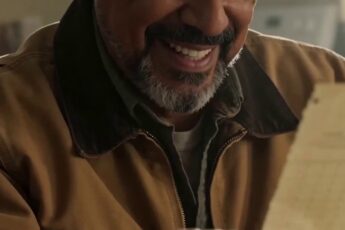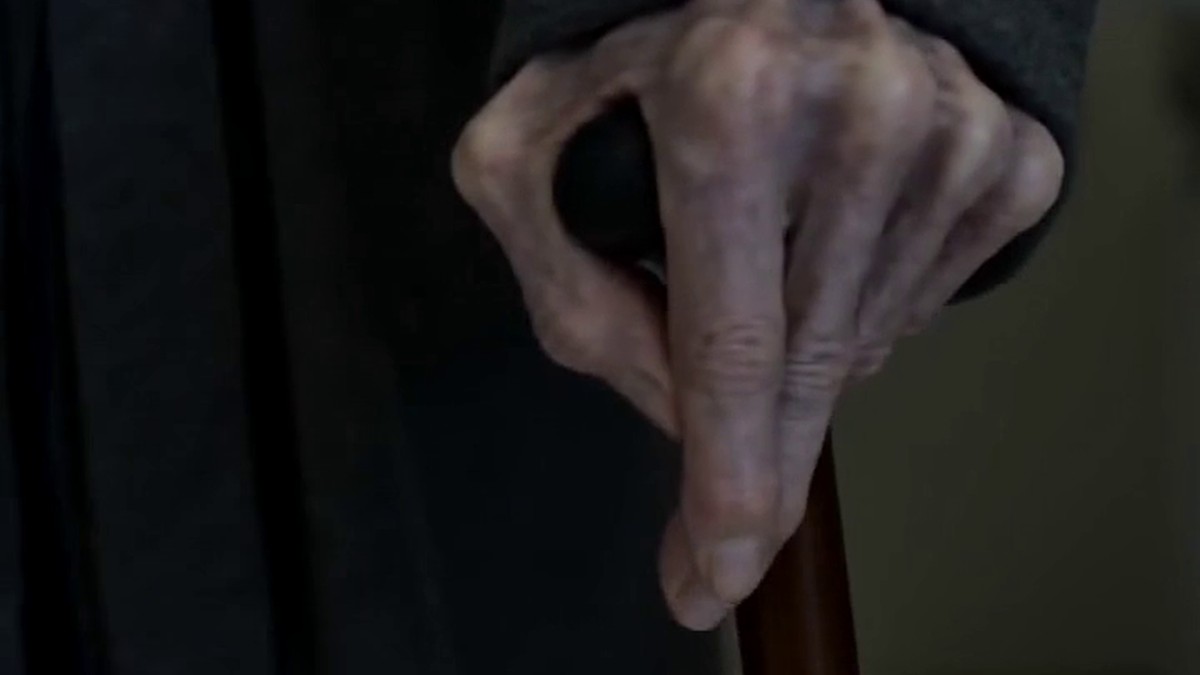
The thing about working in a building like The Atwater is you learn to move like a ghost. Silent elevators. Service corridors. The rule was simple: be invisible, be efficient, and never, under any circumstances, go past the lacquered red door at the end of the east hallway. That was Richard Cross's private wing, and officially, he was in there "convalescing." Unofficially, the staff had been told he didn't want to be seen. Bad reaction to a spinal surgery, they said. Some kind of neurological fallout. The man who'd built a billion-dollar logistics empire from a Weehawken warehouse couldn't grip a pen.
I'd been cleaning his penthouse for three years, six months, and eleven days. His house manager, Diane Lafferty, made sure I never forgot my place. She'd been his late wife's best friend, the keeper of the gates, and she wielded a clipboard the way some people wield a crucifix. I was late that Tuesday because the boiler in my Inwood walk-up had finally died and I'd spent forty minutes on the A train with my four-year-old, Maya, wrapped in my coat like a burrito. Daycare was closed—strep throat sweeping through the toddler room—and I had exactly eighty-four dollars in checking. I didn't have a backup. I didn't have a village. I just had this job.
Diane met us in the service foyer with a look that could curdle milk. "This isn't a nursery, Kiara. The family's attorneys are meeting in the library at two. If she makes a sound, you can collect your last check from payroll."
I nodded, the way I always did, and set Maya up in the laundry alcove with a juice box, a box of crayons worn down to nubs, and her stuffed triceratops, Pickles. "Color me the Chrysler Building," I said. "Stay right here. Not a peep."
The penthouse was a museum of cold marble and colder silences. I was polishing the brass elevator call button in the main gallery when I heard it: a thud from the east wing, deep and heavy, like a side of beef hitting a walk-in freezer floor. I froze. The red door was open six inches. Nobody left that door open.
I dropped my cloth and ran.
Maya had gotten there first. She'd followed the noise the way little kids follow anything that sounds like a mystery, and I found her kneeling on the Brazilian cherrywood floor of a cavernous bedroom, next to a man who looked like a crumpled Giacometti sculpture. Richard Cross. He was on his side, one hand clawing at the rug, his face the color of old oatmeal. I'd only ever seen his photograph in the lobby. In person, at fifty-six, he was less an emperor and more a skeleton wearing an emperor's monogrammed pajamas. His eyes, though—they were sharp and furious and terrified.
Maya had wedged Pickles under his head like a pillow. "It's okay," she was saying. "My mom says you don't leave people on the floor when they fall down. That's the number-one rule."
I felt the world tilt. I was going to lose my job. I was going to be arrested. But I got on the floor and helped him sit up against the bed, his breathing ragged, a tremor running through him like a live wire. "Mr. Cross, I am so, so sorry. She didn't mean to… we'll be gone in five minutes. I'll pack our things."
He didn't look at me. He was looking at Maya, who was trying to get him to hold Pickles. "The enojada lady told me I wasn't allowed up here," she confided. "So shh. It's our secret."
He let out a sound. It was rusty and broken, but it was a laugh. The first one, he'd later tell me, he'd made in eight months.
The door swung wide open. Diane Lafferty stood there, flanked by a man I recognized from the financial pages: Marcus Webb, the company's COO. "What is this?" Diane's voice was a whip crack. "I knew it. Theft. You brought your kid here to case the place. Richard, I'm calling security."
"Kiara," Richard said, his voice a dry rasp. He was trying to sit straighter, fighting his own body for every inch. "You're not fired."
"The hell she isn't," Marcus snapped.
Richard turned his head, a move that clearly cost him a full measure of his dwindling strength. "If she goes, you both go. Consider this the termination of your 'concerned family' program. I'm reinstating my own rules. Starting with the door."
Diane's face went rigid. She thought I was too intimidated to understand the low, furious exchange that followed between them in the hallway. She was wrong. "The new medication protocol is already in place," she hissed. "The evaluation is in two weeks. If that kid keeps snooping around, she's going to see something that blows this whole thing before he signs."
I held my breath. But as Marcus pulled Diane away, my eyes landed on the nightstand. Three amber prescription bottles. Two had labels for a mild muscle relaxant, but the pills inside were different shapes. I'd cleaned enough medicine cabinets to know. I'd also known my grandmother's dementia, and the way the wrong pill could swallow a person whole.
—
The rule changed the next day. The red door was to remain open. Maya had visiting rights.
I didn't trust it. I spent every shift waiting for the axe to fall, but Richard… he just kept asking for her. When daycare reopened a week later, he wanted to know where she was. The next morning, Maya marched back in carrying a drawing. A stick-figure man in a big chair, a stick-figure girl, and a lopsided purple blob. "That's you, that's me, and that's the elevator we're not supposed to touch. I drew you sitting down because Mama says your bones are on strike."
Richard stared at that picture for five full minutes. The guy who had the original Warhol in his guest bathroom. For years, nothing got through to him but contracts and updates on his own decline. Now, this.
The penthouse started to thaw because of her, in odd, small ways. The chef who never spoke started leaving little bowls of blueberries on the counter for her. The doorman, a Belarussian guy who'd been impassive for a decade, taught her how to flick a nickel into the fountain for luck. She was a tiny, chatty chaos agent who didn't care about net worth, and the staff, seeing Richard engage with her, started to feel like they were allowed to be human again. He started eating. He fired the in-house therapist and hired a mean, brilliant physical therapist from a boxing gym in Red Hook.
The only thing missing was his daughter, Elena. I asked him once, carefully, why her framed photo on the desk was the newest thing in the room but she never visited. "Diane says she's swamped," he said, and something in his face closed like a fist. "Managing partner track. Seventeen times now she's had to cancel." He said it like a man reciting a fact he'd stopped believing.
But I kept watching the nightstand. The wrong pill in the wrong bottle. I pocketed one, wrapped it in a Kleenex. That night, cutting through the library to the service exit, I heard Diane and Marcus. They were off-script, their voices low and ugly.
"Dr. Fellman's flying in Thursday," Marcus said. "He's our guy on the state's panel. But he's skittish. He needs to see a man who can't hold a conversation, not one who's starting to do leg lifts."
Diane's voice was ice. "The new sedative is in with his blood pressure meds. He'll be disoriented by Wednesday. The power of attorney and the living trust amendment are all set. One signature, and we can move him to the long-term care facility upstate. The board won't even question the transfer of authority after that quarterly loss we leaked."
"And if the cleaner saw something?"
"Her? Who's going to believe a maid from Washington Heights against the Cross family legacy? Fire her before Thursday. Invent a reason. Say she stole the silver."
My hands were shaking so hard I dropped my keys. I had twenty-four hours. I could grab Maya and run back to my cousin's place in Philly. But I walked back into that room instead. Richard was struggling to open a childproof cap, his fingers failing. I took the bottle from him, and I set the single wrapped pill on the table.
"Before you take that, I need to tell you what I found. All of it."
I told him. The pills. The conversation. The evaluation. The facility. His daughter's name, and how her calls had stopped reaching him. He closed his eyes, and a tremor went through him that wasn't his disease. "For two months I've been waking up confused, my mind full of static," he said. "She told me it was brain fog from the nerve damage. My own body, betraying me. And I thought Elena had just—given up on me."
He reached into a drawer and pulled out a burner phone and a USB drive. "My lawyer can't get a court order without proof I'm being coerced. He told me to record anything I could. I have calls where Marcus talks about 'calming the asset.' But Diane's too smart to talk business on the phone in front of me. My own medical files are locked in the home office. And two weeks ago, after Bill warned me things were escalating, we had a camera put in the safe—the one place Diane never touches, because she's terrified of the insurance liability if anything happens to the watches. It only catches what happens near that safe. It's caught nothing yet. I've been waiting for her to be stupid enough to use it."
I looked at the USB drive. Then I looked at the houseplant in the corner of his room, a massive fiddle-leaf fig. "The cleaners before me watered that thing with Poland Spring," I said. "Diane checks the soil moisture meter once a week. She's obsessed with that plant 'cause it cost three grand. I bet an army could march through a wall and she wouldn't look behind that pot."
The next afternoon, Maya recovered the smoking gun. She was chasing Pickles, who had "flown" under a credenza in the home office where Diane worked. She belly-crawled under it and came out holding a blue folder. "Mama, it has Mr. Cross's name on it." Inside were altered medical reports, a draft petition for conservatorship, and a durable power of attorney document naming Marcus as the sole agent, with a notary's stamp pre-applied. Tucked behind it was a spiral notebook—Diane's own handwriting, a running log of doses and times, dates matched to Richard's worst mornings.
We had them.
The trap snapped on a Wednesday morning. Diane announced to the entire staff that a vintage Patek Philippe valued at one-point-two million dollars was missing. "No one leaves," Marcus ordered. Two private security guards "searched" our bags and found the watch in the side pocket of my backpack. I was standing by the service elevator, Maya clutching my leg.
Diane played her part perfectly. "Desperate people do desperate things, Kiara. Kiss your daughter goodbye. The NYPD is on its way."
Then the elevator chimed. The door slid open, and Richard Cross emerged. He was standing, leaning heavily on a cane, his body shaking with the monumental effort. Standing. His face was grey, but his eyes were burning coals.
"Cancel the police."
"Richard, you're confused," Diane said, a patronizing smile snapping into place. "It's the medication. You need to lie down."
"The watch," he said, pausing to catch his breath, "was in my safe. We put a camera in there two weeks ago, Diane, after Bill told me you'd try something to get rid of Kiara before Thursday. It feeds to a server my lawyer, Bill Hargrove, monitors. Bill, you can come in now."
A wiry man in a three-thousand-dollar suit stepped out of the elevator, holding a tablet. He hit play. The screen showed Diane, clear as day, removing the watch, walking through the gallery, and sliding it into my backpack.
Her smile didn't crack. "You don't understand, Richard. She's manipulating you. We're your family."
"You haven't let a single one of my actual family members, my friends, my *daughter*, onto this floor for almost a year," he said. "You screened my calls. You told them I was too far gone to recognize anyone. You isolated me so completely I started to believe the silence was my own fault."
At that moment, two men from the Attorney General's office walked in with Bill's junior partner and a certified neuropsychiatrist. Marcus stepped forward, trying to block them. "This is a private residence. You have no warrant, no cause. We have a court-ordered evaluation scheduled under the state's elder-care act, and you are interfering."
The psychiatrist, a calm woman in her sixties, spoke up. "I was contacted by Mr. Cross's attorney. I was told Mr. Cross was suffering from persecutory delusions and cognitive collapse. I'm refusing the referral."
Bill laid out the files on the marble counter. Diane's own dosing log, with entries that lined up exactly with dates in Richard's medical chart. Bank statements showing five-figure transfers from a company account controlled by Marcus to the consulting firm of Dr. Fellman, the panel doctor who'd been signing off on Richard's "decline" without ever running an independent exam. And the pill I'd stolen: toxicology results confirming a heavy veterinary sedative, not approved for humans, that matched a substance named twice in Diane's own handwriting.
"You've been poisoning him," Bill said, "for six months, and you wrote it down like a grocery list. The financial crimes division will want to trace the seventeen million that's gone missing from the pension fund, but for now, the attempted murder charge will keep you busy."
Diane's eyes finally found mine, and I saw the exact second her mask crumbled into pure hatred. "This is insane. You're going to burn down a century of legacy because of a maid and her brat?"
Richard took a step toward her. The effort made him tremble, but he refused the arm of a security guard. "No. You burned it down when you decided my signature was worth more than my life."
—
It took months for the legal mess to untangle. Dr. Fellman lost his license and was indicted alongside Marcus. Richard didn't get a miracle cure. The original nerve damage was real, and the poison had left new scars, episodes of paranoia and ragged memory that crept in at night. Some mornings he still woke up convinced the door was locked. But he had a new medical team, an actual board, and a life that wasn't being stolen a milligram at a time.
Elena came the Saturday after the arrests. I was in the hallway with a laundry cart when the elevator opened and she walked out fast, coat still buttoned, and stopped short at the sight of her father standing—actually standing—by the window. She didn't say anything for a second. Then she crossed the room and put her arms around him like she was checking he was real. "Seventeen cancellations," I heard him say into her hair, "and not one of them was you." She stayed four hours that day, and came back the next week, and the week after that.
He called me to the library on a cold Saturday in December. Maya was in the kitchen, "helping" the chef make a mess with flour. On the table was a contract. A salary that made my throat close up, full benefits, a 401(k), and a schedule written around Maya's school hours. Next to it was a trust fund document, legally binding and irrevocable, for Maya's education. From pre-K through a four-year state college, fully funded, one hundred and ten thousand dollars in a 529 plan.
"Mr. Cross, I didn't help you for money."
"You're right. You did it when everyone else chose fear or greed." He pushed the papers toward me. "This isn't a reward. It's a correction. I also need you to do something else for me."
He slid over a third document. The incorporation papers for a childcare center in the Bronx, a non-profit providing drop-in care for shift workers, domestic staff, single parents—people who couldn't afford to be late. Eighty slots, meals provided, fees on a sliding scale down to zero. It was called "The Pickles Playhouse."
"No sign on the glass," he said. "I don't want my name on it. I want her triceratops on the wall."
On Christmas Eve, the penthouse held a dinner. Elena sat next to her father the whole night, refilling his water glass before he even reached for it. Maya wore a paper crown and declared herself "the queen of people who open doors." She fell asleep on the velvet couch, her head on Richard's shoulder, her hand loosely holding Pickles. He didn't move for two hours, just sat there, reading the same page of a book, his free hand resting on a stack of crayon drawings now framed on his desk next to his deal trophies.
I asked him, quietly, in the kitchen later, "You say she saved your life. But she only went in there because she heard a noise."
He looked through the doorway at the sleeping girl, his empire reduced to the simple, ferocious act of keeping a small, purple plastic dinosaur safe in a warm room. "Everyone in this building heard me fall that day," he said. "The board. The lawyers. The staff. My own daughter, on the other end of a phone Diane never let ring through." He paused. "Maya was the only one who didn't pretend the noise was a figment of her imagination."
He handed me my copy of the signed contract. I noticed the date. He'd dated it the day we met. He'd been waiting for me to be ready to accept it.
I carried it down to the lobby, folded inside my coat. Mr. Hanssen, the night doorman, was locking the outer doors, the faint smell of his clove cigarette still hanging in the cold air. "Good night, Ms. Ruiz," he said, the way he always did, except this time he held the inner door for me the full width, both hands, until Maya and I were all the way through. Outside, the snow had started, and Maya ran three steps ahead of me down the sidewalk, arms out, catching flakes on her tongue, Pickles clutched under one arm and dropped in the slush without her even noticing.