I clocked in at four on a Tuesday because the Vault Room booking looked like easy money—ten guests, one server, no menu substitutions. The restaurant sits in an old bank building in Walker’s Point, Milwaukee. The room still has the original vault door on the second floor. It smells like brass polish and steam from the dish pit. Outside, sleet tapped the windows facing the Hoan Bridge.
My daughter was at her dad’s, so I didn’t have to rush home. I had a parking ticket on the windshield from the city lot on Pittsburgh Avenue. I remember because I used it to scrape ice off the side mirror before walking in.
The reservation was under Douglas Cross. Family estate meeting. I set the table for ten—white cloth, heavy silver, a candle sconce on the east wall that had been flickering since Labor Day.
They arrived in waves. Douglas first, a man in a gray suit that needed pressing. His wife Carol followed, pearls pressed into her throat like she was holding something down. The sister, Mindy, kept checking her phone under the table. The husband, Brett, ate bread like he was angry at it.
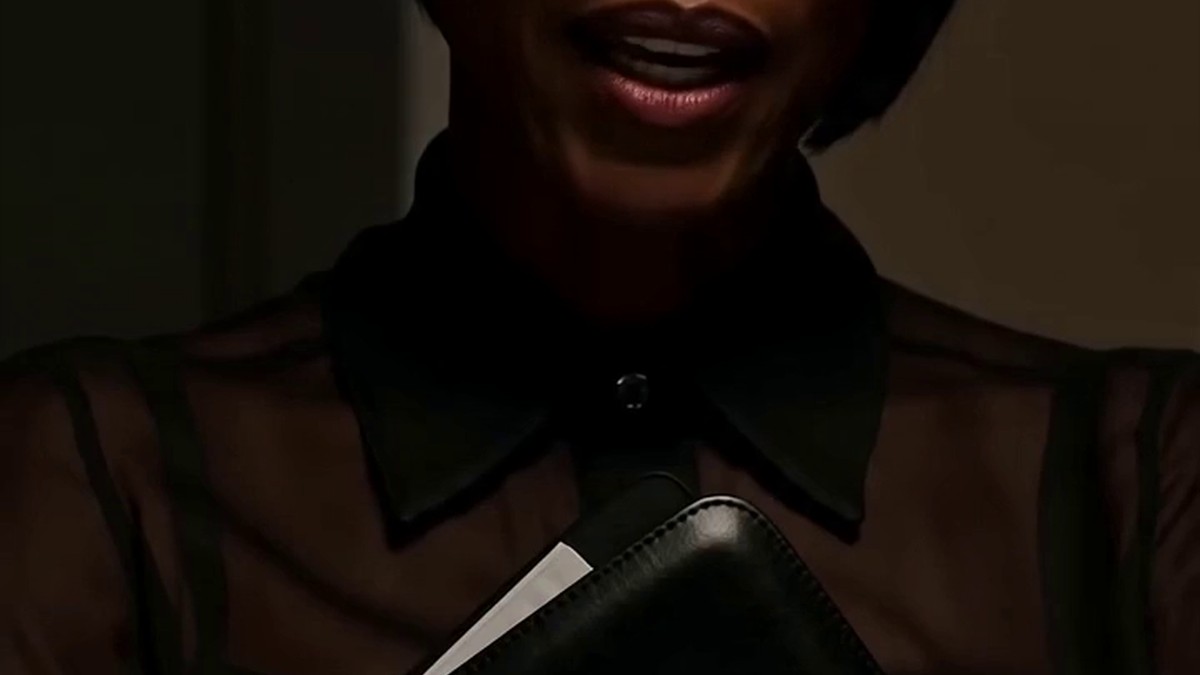
The last one through the door was Vivian. She came in a thin black blouse, a wool coat over one arm, and a black accordion folder under the other. She didn’t set that folder on the floor with the coats. She placed it next to her plate like a second dinner guest.
It had a white sticker on the tab. #7. Like a storage unit number, not a file name.
They ordered the family-style ribeye, two bottles of the house cabernet, and a round of brandy before the salads came. I poured, kept my mouth shut. Douglas talked about the Packers game as if nothing in that room was heavy. Carol folded her napkin into smaller and smaller squares.
Then Vivian put a single sheet of paper on the tablecloth.
I was refilling water at the far end. The words cut through the low hum of the vent.
“These are the signatures someone used to stake my name on the loan.”
I stopped with the water pitcher in my hand. Douglas set his fork across his plate. Carol’s wine glass tipped, but she caught it with both hands.
“Your father was trying to hold things together,” Carol said.
Vivian didn’t raise her voice. She took another page from the black folder. “These are copies of texts. This one is the debt controller transfer. As of tonight, the main creditor isn’t the bank you’ve been sweet-talking. It’s me.”
The room went so still I could hear the loose switch on the candle sconce click.
A cousin in a green dress made a sound like a trapped bird. Mindy said, “You can’t do that.”
Vivian slid a third paper across the cloth. “Grandma Edith did not leave the house to you, Dad. She left it to me. You only had use of it if you didn’t try this kind of thing.”
Douglas tried to laugh. It came out like two pieces of metal rubbing.
I stepped out to get more bread. When I came back, he was standing, his knuckles on the table edge. His face had gone the color of uncooked dough.
“It wasn’t for the business,” he said. “I owed people. The kind who don’t wait for a bank’s grace period.”
Mindy said “no” so soft it was more breath than word. Carol’s pearls clicked as she pressed a hand to her throat.
Vivian stood too. She gathered the papers, but not in a rush. She tapped them into a neat stack, the way an accountant ends a meeting.
“The loan is for three hundred eighty-seven thousand dollars,” she said. “The house in Wauwatosa has been floating on a lie for twenty-five years. I’m not fixing it anymore.”
Douglas shouted something then. I was already at the doorway, tapping my pen against the doorframe to remind them other rooms were still open. He turned to Vivian.
“You were always too cold to love.”
Vivian didn’t flinch. She answered so evenly I felt it in my own chest: “I just stopped pretending love means letting you take everything.”
She walked past me with the black folder under her arm. I stepped aside. Her coat was still over one arm, and she didn’t put it on. I remember that—she walked into the sleet in a thin blouse, like she needed the cold to wake up.
Behind her, the room split open. Carol was crying. Mindy was screaming at Douglas about “what have you done.” Brett was already texting someone. A cousin tried to leave through the service door and knocked over a bus tub.
I had to go back in and settle the bill. The total came to $1,146 with tip. Douglas signed the merchant copy, then stood there a second too long, his eyes on the empty chair where Vivian had been. He didn’t have a word for it.
I found her gray scarf on the chair after they left. I ran it to the front door, but her car was already gone. I hung it on the host stand, and nobody ever came back for it.
Next morning, after my daughter caught the school bus, I checked the Milwaukee County Circuit Court website. I don’t know why. Maybe because I couldn’t get the image of that black folder out of my head.
At 7:58 a.m., a firm called Bell & Carver had filed an emergency motion in “Cross v. Cross.” The exhibit list made me sit down at the kitchen table with my coffee.
Safe deposit boxes: three, at First National Bank on Water Street, registered jointly by Douglas Cross and the estate of Edith Halverson.
Contents described as: gaming receipts, property certificates, old title transfers, and a second will.
I scrolled. There was a scanned page of the will. At the bottom, in handwriting, a line from Edith: “Vivian gets everything if they ever try to take it from her. I knew how that house worked.”
I read that line three times. My hand was shaking a little, not from the cold.
That afternoon around two, the front door of the restaurant banged open. I was in the office doing payroll. It was Douglas Cross, no coat, snow melting in his hair. He asked for the manager.
I said I was the manager.
He wanted the reservation contract, the itemized receipt, and the security video from Tuesday night.
I told him I couldn’t release security footage without a subpoena.
He put both hands flat on the host stand. His voice had a crack in it, like a man who’d been shouting since midnight. “You think this is over? She’s freezing everything. Everything.”
I didn’t answer. I handed him the restaurant’s policy sheet and the number for our legal office.
He took it, crushed it into his fist, and walked out. The door chime rattled.
I locked the Vault Room myself that night. The candle sconce still flickered by the east wall. I made a note to call the electrician. Then I turned off the lights and heard the old vault door click shut.