The scratching at the door sounded like a branch against a window, not a living thing. Thin. Uncertain. I was standing in the kitchen with a frozen pizza half out of the box and the oven preheating, and I almost ignored it. Figured it was the wind rattling the loose weather stripping in the hallway. October in Cleveland does that.
Then it came again. Three weak scritches, a pause, three more.
I dropped the pizza back in the box. Didn't turn off the oven. Didn't care.
Cheeto sat on the welcome mat like a bag of bones wearing an orange fur coat. His ribs pushed against the skin. One ear was crusted with something dark. His left eye leaked a yellow gunk. He looked like he'd crawled out of a drainpipe and then got hit by a small car.
But the white patch on his nose was there. The kinked tail, too.
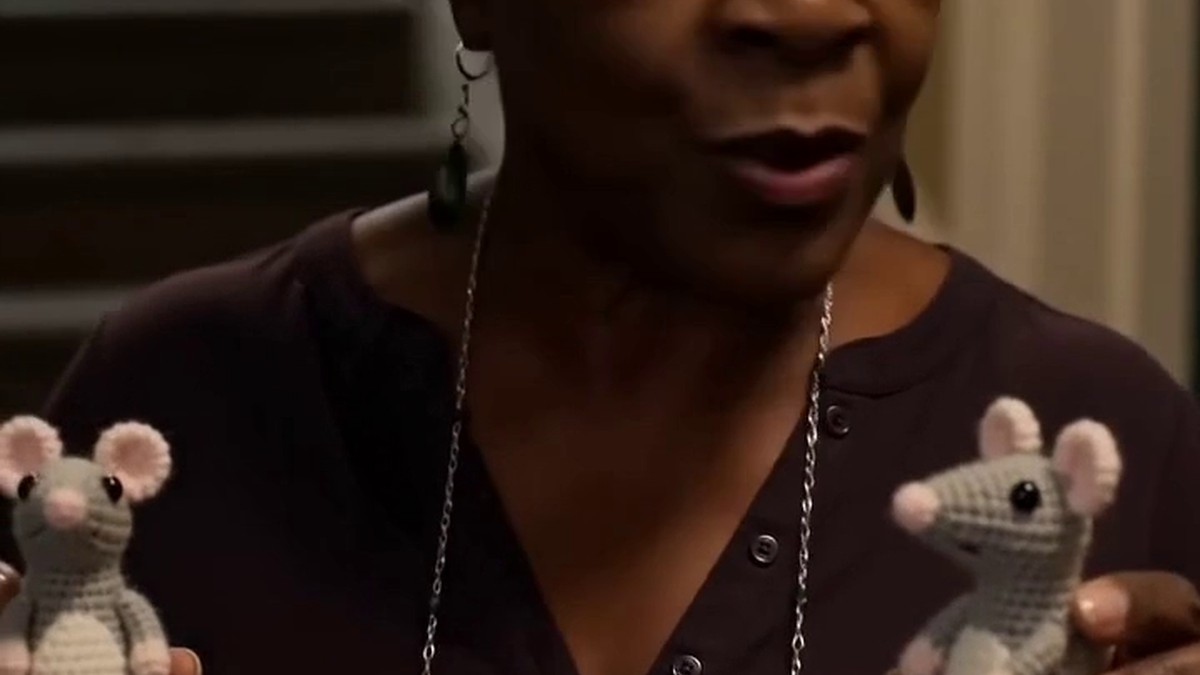
And between his front paws, placed with the care of an offering, sat a crocheted mouse.
I lowered myself to the floor. The hallway tile was cold through my jeans. The mouse was small enough to fit in my palm—burgundy yarn, lumpy and uneven. Button eyes sewn on at slightly different heights. A tail of braided yarn, frayed at the tip.
I brought it to my nose without thinking. Pipe tobacco. Dried catnip. And underneath, the faintest trace of Vicks VapoRub.
The smell hit me like a shove.
Harold Finch. Apartment 2B.
The old man who crocheted cat toys. The one whose mailbox I'd been walking past for a month.
—
Cheeto disappeared on a Tuesday in early October. I noticed because the apartment had gone too still. Cheeto was a cat who made noise: thumping off the back of the couch, yowling at the window when the squirrels got too close, scratching the carpet outside the bathroom door like he'd been locked out of a bank vault.
That Tuesday, the first real cold snap of the season, I came home from school and stood in the doorway listening. Nothing. No thump. No scratch. No indignant meow about the delayed dinner.
The kitchen window was open a crack. The fire escape ladder was down.
Third floor.
I looked over the edge. The alley below: dumpster, broken asphalt, a few shredded garbage bags. No orange body. No orange anything.
That was the first night I didn't sleep.
The next morning I printed flyers. "LOST CAT. Orange tabby. Answers to Cheeto. White stripe on nose. 216-555-0147." I taped them to every lamppost on the block, the laundromat bulletin board, the corner store on Lorain. The cashier, a woman named Darlene with long acrylic nails and a gold cross necklace, said she'd keep an eye out. The mailman said he hadn't seen any dead cats on his route. Small mercies.
I checked the local shelters. Twice. Three times. Filled out lost pet reports with the Cleveland APL. Scrolled through photos of orange cats behind cage bars until they all blurred together.
By day ten, I'd stopped leaving the porch light on.
By day twenty, I'd thrown away the leftover cat litter.
By day thirty, I'd caught myself thinking: maybe it's easier this way. No more hair on my black sweaters. No more 5:45 AM wake-up demands. No more forty-two dollar bags of prescription kibble.
The thought made me physically ill. I poured a bowl of cereal just to have something to do with my hands, then watched it go soggy.
My daughter Chloe came over that Sunday. Twenty-four, works nights in the ER, so she sees worse things than a missing housecat. That's what she told me, anyway. She sat at my kitchen table in purple scrubs, picked at a hangnail, and said, "Dad, it's been a month."
"I know how long it's been."
"I'm just saying. Maybe you should think about—"
"About what?"
The hangnail. She went back to it. "I don't know. Not sitting in the dark with the window open."
The window was open again. October air, dry and sharp, smelling of leaf smoke and someone's wood stove. Cheeto used to sit on the sill and chirp at the chickadees.
"Your grandma used to say: don't leave your heart on the windowsill," Chloe said.
"Grandma also thought the moon landing was filmed in Arizona."
Chloe laughed. First sound in the apartment in weeks that wasn't the refrigerator cycling on and off.
Then she got up, poured out the soggy cereal, and put the bowl in the dishwasher. "I'll look again on my way home. The feral colony behind the McDonald's—maybe he wandered that way."
But Cheeto hadn't wandered. He'd been two floors down, behind a door I passed every single day.
—
The morning Cheeto came back, I sat on the hallway floor for a long time, holding the crocheted mouse. Then I stood, pulled on my shoes, and went downstairs.
Apartment 2B. The door was dark green paint over old wood, cracking along the edges. A brass number 2 screwed to the center. Below the peephole, a small mezuzah; Harold's wife had been Jewish, back before she died of a stroke in 2011. He'd never taken it down.
I knocked.
Nothing.
I knocked harder. Pressed the doorbell. It buzzed like a trapped bee.
The hallway had gone silent. The kind of silence that has weight.
Down the stairwell, the bank of mailboxes in the lobby. I walked one more flight down and stood in front of the wall of brass doors. Apartment 2B. The box was so full the door wouldn't close. Flyers for gutter cleaning, a frozen-seafood coupon book, three weeks of the Plain Press community newspaper. Sticking out at odd angles like a paper fan.
I pulled my phone from my pocket and called the landlord. A man named Greg who owned the building and always smelled like cigarettes and damp wool.
"Harold Finch in 2B," I said. "When's the last time anyone talked to him?"
A pause. I heard a TV game show in the background. "I don't know, man. He pay his rent through October. Always pays on time."
"His mailbox is overflowing."
Another pause. Longer this time. "You think—?"
"I think you need to bring the master key."
—
Greg arrived twenty minutes later in a brown Carhartt jacket and work boots, carrying a key ring that jingled like sleigh bells. The air coming from under Harold's door was cold. Not October-cold. Something else.
Greg knocked. "Harold? Mr. Finch?"
Nothing.
He inserted the key. The lock turned with a click that echoed.
The smell hit us first. Not decomposition—Harold had been gone maybe a week, maybe less, and the window was open. But staleness. Abandonment. Air that hasn't moved in days.
Harold sat in his brown recliner, feet up, a tartan blanket across his lap. On the small table beside him: a bottle of nitroglycerin pills, a glass of water with a film across the top, and a bowl of dried cat food, empty except for a few crumbs.
In his hands, still caught in the act, a crochet hook and a half-finished mouse. Burgundy yarn. Button eyes waiting on the armrest.
The balcony door was propped open with a brick wrapped in duct tape. A cat door had been clumsily installed at the bottom, the edges sealed with packing tape. On the balcony, a patch of dead catnip in a terra-cotta pot, and two more bowls—one for water, one for food. Both empty.
Harold had been feeding Cheeto. For a month. While I walked past his door every morning and every evening, thinking: I should check on him. Tomorrow. This weekend. When I have time.
The medical examiner said it was a heart attack. Sometime in the night, six or seven days ago. He'd been sitting in his recliner, crocheting cat toys for the strays he never stopped feeding, and his heart just gave out.
The cat door. Cheeto had been in and out the whole time. Eating Harold's food. Sleeping on Harold's lap, probably. And I'd been three floors up, eating frozen pizza and leaving the window open like an idiot.
—
Harold's relatives turned out to be a nephew in Akron who hadn't spoken to him since 2019. He came to clean out the apartment with the efficiency of someone checking off a chore. Before he could throw them away, I took the eleven completed crocheted mice from the windowsill. Eleven little lumps of yarn, each one slightly different. Each one made by hands that kept going even when no one was watching.
The nephew didn't care. He said I could take whatever I wanted. He had a U-Haul to catch.
That night, I sat at my kitchen table with a ball of burgundy yarn and Harold's crochet hook—the nephew let me keep that, too. I watched a YouTube tutorial on how to crochet a simple oval. Then I watched it again. Then I put down the phone and tried it myself.
It took me three hours. The result was a mess—lopsided, loose stitches, the tail too short. It looked like a burgundy kidney bean. But it was a mouse. Kind of.
I placed it on the floor in front of Cheeto. He sniffed it, then looked up at me with his one good eye. The other eye was starting to clear up, thanks to the antibiotic drops the vet sold me for thirty-eight dollars.
Then I took the eleven real mice—Harold's mice—and I walked through the building.
There are twelve apartments in our building. Mine is 3B. Harold's was 2B. That left ten.
I placed one mouse on each doormat. Apartment 1A: a young couple with a baby. 1B: a retired nurse named Carol. 1C: a man who worked nights and never said hello. 2A: the building handyman. 2C: an elderly woman with three chihuahuas. 3A: a college student. 3C: a woman who taught piano lessons. 4A: a guy who always had his TV up too loud. 4B: a family with two kids. 4C: the landlord's mother.
Each mouse had a small card tucked under it. I'd printed them at the library because my printer was out of ink. The card said:
*Harold Finch made these for the cats. If your mailbox gets full, or if you're sick, or if you just need someone to knock—call me. Apartment 3B. 216-555-0147.*
I left one mouse for myself. The ugliest one, the one with mismatched button eyes. I put it on my kitchen windowsill, next to the catnip plant I'd bought at the garden center for eight dollars.
Then I sat down and wrote a check to the Cleveland Animal Protective League. Seventy-five dollars. In the memo line: *For the feral cats behind the building. In memory of Harold Finch.*
I called the nephew the next morning and asked for Harold's recipe for cat food. The nephew laughed and hung up.
So I bought a bag of the cheapest dry food at the corner store—thirty-two dollars and fifty cents, with tax—and I started feeding the strays. Every evening at six-thirty. The black-and-white one with the torn ear showed up first. By the end of the week, there were five of them waiting every night.
Cheeto sits on the windowsill and watches. He doesn't go outside anymore. The fire escape is locked now—I bought a twelve-dollar padlock from the hardware store and threaded it through the latch. He can watch the birds, but he can't jump.
One night, about two weeks after everything, Chloe came over. She saw the ugly homemade mouse on the floor and said, "What the hell is that?"
"My first attempt."
She picked it up, turned it over. "It's terrible."
"I know."
She put it back down. Then she looked at the checkbook on the counter, the seventy-five-dollar carbon copy still showing through the top sheet. She didn't say anything. She just went to the stove and started making coffee.
Cheeto wound around her ankles, purring.
The ugly mouse stayed on the floor. I never threw it away.