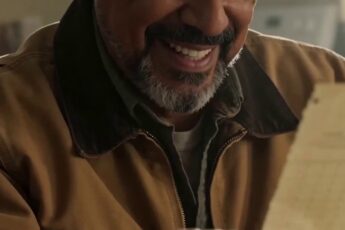
The oyster-shell driveway of Halebrook crunched under the tires of the black Lincoln Continental. Blair Aldridge checked her reflection in the window glass. The green silk gown from Whitaker Street had cost four thousand eight hundred dollars. The shoes were another nine hundred. She had spent the last week practicing the right way to laugh at stories about trust funds.
The driver cut the engine and put his cap on the seat. He opened the rear door with one hand and offered the other. Blair did not take it.
“You want me to bring the car around at eleven?” he asked.
She looked at the house beyond him. Columns, gas lanterns, a wall of gardenia. She answered without meeting his eyes. “What I want is for you to close the door and remember who pays for the gas.”
“Understood.” The driver’s voice stayed even. “If you go left up the steps, there’s a broken stone. You might want to watch your feet.”
Blair passed him. The hem of the dress brushed the oyster shells. She heard him say something else, low, maybe to himself. She didn’t turn. She was too busy cataloguing the faces in the doorway.
Inside, the ballroom smelled like magnolia and old money. Waiters circled with trays of French 75s and pimento cheese puffs. Blair made two circles of the room. She laughed at a joke about the Savannah River. She remembered the names of three people from the Oglethorpe Club.
Then the room changed. The noise didn’t stop; it sort of folded in on itself. Blair looked toward the double doors. The man coming through them wore a dinner jacket that made every other suit in the room look rented. His coat was midnight blue. He moved like he had never waited in a lobby.
A man near the bar said, “There he is. Elliot Royce.”
Blair’s mouth went dry.
She recognized the hands first. Then the shape of his jaw. The driver’s navy uniform was gone. In its place was the heir to the Royce Automotive Group and the founder of the foundation that would decide whether Aldridge & Co. landed the six-hundred-fifty-thousand-dollar gala contract.
Blair set her glass on a tray with a crack that was too loud. Elliot Royce took a coupe from the butler. His eyes swept the room. They found hers. He didn’t smirk. He didn’t wave. He just lifted the coupe two inches and tipped it in her direction.
The toast said everything.
She drove herself home. The phone started before she reached the bridge to Hilton Head. A client had called off a daughter’s wedding reception. Another wanted to “pause” a corporate dinner. Dara, her office manager, sent a voice note in the morning: “The foundation hasn’t cancelled the tasting, but they changed the contact. Do you know a Camille Fontaine?”
Blair knew Camille. She had borrowed her florist for one season and never given the referral back.
That morning, she opened her email and found a message from the Royce Family Literacy Foundation. She expected the word “withdrawn” or “due to other candidates.” She got neither. The email invited her to volunteer at the Chatham Square Family Center on Saturday. The last line read: “Every seat at the table has a different price. Some are paid in time.”
She read it four times. Then she threw her phone across the bed and lay there watching the fan turn above her. The ceiling had a water stain shaped like the state of Georgia.
Saturday, rain made the streets of Savannah smell like wet asphalt and diesel. Blair showed up at the family center in Dunwoody jeans and a cotton shirt. She brought a hair tie from the glove box. A tall man named Deacon handed her a crate of canned corn and pointed to a folding table.
The room had a box fan with one broken blade. It clicked each time it turned. By the third hour, Blair’s back hurt. By the fourth, she knew the names of three grandmothers in the lunch line.
Elliot Royce came through the front door at eleven. He wore a faded t-shirt from Georgia Southern and an apron. He didn’t announce himself. He took a ladle and served mac and cheese next to Deacon. A boy in red sneakers asked for more. Elliot crouched, eye level with the kid, and said, “If I give you more, you have to tell me one book you read this week.”
Blair kept packing. The clicking fan counted the seconds.
She volunteered again the next Saturday. And the next. On the fourth Saturday, she found him out back by the dumpster, peeling off a pair of disposable gloves. The air was thick with the smell of old bread and rain.
“You’re still here,” he said.
“I keep waiting for you to kick me out.”
“I don’t own the food bank.” He balled the gloves and tossed them into the can. “I just show up.”
She wanted to say something about the night at Halebrook. The words sat in her throat. What came out was: “Why did you send me that email?”
Elliot leaned against the brick wall. “Because you showed me exactly who I used to be. I parked cars at these same parties when I was nineteen. I slept in a garage on West Boundary Street when the power got cut. People like you looked at me the way you did. I learned to keep my mouth shut and my cap on.”
Blair didn’t have a response. She looked at her sneakers. One of the laces had come loose.
“I sent you the email,” he said, “because you’re not the only one who ever mistook a uniform for a person’s worth. But you might be the only one who shows up after.”
The next Monday, the Savannah Morning Press ran a small item. Royce Foundation had chosen Fontaine Events to produce the autumn gala. The contract was six hundred fifty thousand dollars. Dara called while Blair was eating a gas station biscuit at the counter.
“You saw it.”
“I saw it.”
“We are two weeks late on the Broughton Street office. If we don’t pay, they can put us out.”
Blair drove back to her apartment. She stood in front of the closet. The green silk gown hung at the end, still in its zippered bag. She took it down. She pulled the shoes from the bottom shelf. She carried them to a consignment shop on Whitaker Street. The owner offered forty-three hundred. Blair signed the slip without a word.
Then she opened her banking app on her phone. She transferred ten thousand seven hundred from the account she had marked “Board Table.” The screen showed the new balance for a full second. Three hundred eight dollars.
She bought a cashier’s check for fifteen thousand dollars at First Citizens Bank. She put it in a manila envelope with one sheet of paper. The paper said:
“I’m withdrawing Aldridge & Co. from any future event with the Royce Foundation. The dress sold for $4,300. The rest is what I would have spent on a table at the Oglethorpe Club. Pay it forward. Or don’t. It’s yours now.”
She drove to Chatham Square on a Thursday morning. The parking lot had a maroon Buick parked across two spaces. She found Elliot loading boxes of apples into the back of a truck. He had a clipboard under his arm. His t-shirt said “Savannah Banana” and the word “banana” was crossed out.
Blair walked up and put the envelope on the tailgate. “I’m not bidding. I’m not asking. I just need you to see it.”
Elliot put down the clipboard. He opened the envelope. He saw the check first. Then he read the note. His jaw worked. Somewhere behind him, the box fan inside the center hummed.
“You do know this doesn’t come with a second chance,” he said.
“I’m not buying a second chance.”
He folded the check once and slid it into his back pocket. A white SUV pulled into the lot. Through the window, Blair saw Camille Fontaine, her hair fresh from the salon. Camille spotted her and froze.
Blair did not wave. She got into her car and backed out. In the rearview mirror, Elliot was still standing at the tailgate. He lifted a hand. Not a toast this time. Just a hand in the air.
Blair drove toward the bridge. The fan in her apartment didn’t click. That was the only thing she changed that day.