# The House Goes to Me
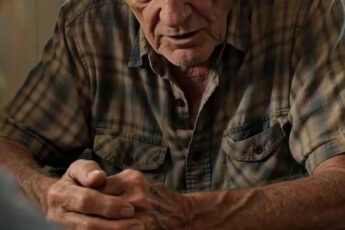
They keep saying I should "consider my options." That's how my daughter Cynthia puts it, standing in my kitchen with a casserole in her arms and that worried look on her face. She means sell the house. Move into something smaller. A condo. A senior apartment. Some place with a pull cord in the bathroom and a nurse on speed dial.
I'm 81 years old. I've lived in this Polish Village bungalow on Lagrange Street in Toledo, Ohio for forty-three years. I raised three kids here. I buried a husband here. I learned to sleep with the sound of the Amtrak horn cutting through the kitchen window at 11:42 every night.
And I'm not going anywhere.
This all started last spring, when the crabapple in the front yard dropped half a limb onto the sidewalk. Not a big deal. My neighbor Eddie Kowalski came over with his chainsaw, took care of it in twenty minutes. But Cynthia heard about it and acted like the whole house was about to collapse into the Maumee River.
"You can't be climbing ladders, Mom," she said, three times in one phone call. "What if you'd been out there when it fell? What if it was the roof next time?"
What if, what if, what if. I've been listening to "what if" my whole life. What if one of the kids gets hurt walking to St. Adalbert's? What if Jimmy loses his job? What if the transmission on the old truck gives out? Here's the thing about what if: you can spend your whole life answering it and never actually live.
But Cynthia kept pushing. She's the oldest, forty-nine years old, lives with her husband Dale in a four-bedroom colonial in Perrysburg. She sends me links to senior living facilities. She bookmarks articles about "aging in place safety." She offered to take me to an open house at a "retirement resort" in Sylvania — that's what they call it now, a resort, like I'm going to sit by a pool and drink margaritas with shuffleboard widows.
I am not going to a resort.
Here's what nobody explains to you about being old: there's a particular kind of stillness in a house at 7 a.m. when you're alone. Not lonely. The coffeepot gurgles. The floorboards in the hallway pop when the heat kicks on. The light comes through the kitchen window and lands on the table where my husband Walt used to read the newspaper. That's not emptiness. That's a room that knows me.
I have been taking care of people since I was thirteen years old. My mother got sick young. My father worked at the Jeep plant and came home late with black under his fingernails. I made the dinners, packed the lunches, scrubbed the bathtub, folded the laundry. Then I married Walt at nineteen and did it all over again for him and three kids. I worked as a secretary at Woodward High for twenty-eight years, answering phones and calming down teenagers and covering for teachers who couldn't get their attendance sheets straight. I worked.
When Walt died nine years ago, everybody expected me to fall apart. Maybe I did a little, in the beginning. I'd set the table for two out of habit. I'd hear the garage door open and then remember. But then one morning in October, I sat down with my coffee and looked out at the leaves piling up against the porch steps. I started making a list, right there on a napkin, of everything I wanted to do that I'd never gotten around to. Read a mystery novel cover to cover in one sitting. Take the #34 bus downtown and walk along the river. Buy a hot dog from the cart on St. Clair and eat it on a bench, watching the geese. Not because anyone was waiting for dinner. Not because a husband who didn't like broccoli was going to make a face. Just because I wanted to.
So when Cynthia showed up three months ago with a folder from a real estate agent, I wanted to laugh. I didn't. I poured her a cup of coffee and sat down.
"Mom, just look," she said. "The market's good right now. You could get two hundred and forty thousand for this place. Easily."
She flipped open the folder. There were pictures of my house from the street, from the backyard, from the alley. The realtor had written "charming character home, needs updating" in a little note. I turned that page over and put my coffee cup right on top of it.
"You had somebody photograph my house," I said.
"For the listing. You'd have to approve it, of course. But Mom, you'd never have to worry about a roof again. Or property taxes."
"Let me tell you something about property taxes," I said. "I've been paying them for forty-three years. I know exactly what they are. Two thousand, nine hundred and forty-nine dollars last year. I have them marked in the checkbook ledger with a green pen because that's the color I use for everything related to this house."
Cynthia's mouth opened and closed. She does that when she's trying to find the nice way to say something. "But why would you want the burden? The upkeep? The snow shoveling? I mean, Dale and I — we'd love to have you closer. You know that."
Closer. That's the word they all use. Not "with us." Not "in our home." Closer. Like I'm a package they want to track on their phone.
I didn't argue. I've learned that arguing with a forty-nine-year-old woman who thinks she knows better is like arguing with the wind blowing off Lake Erie in February. You can shout all you want, but the wind doesn't care.
"What I don't understand," she said, "is why you won't even consider it. It's like you're not thinking about the future."
I was. I was thinking about the future every single day. I just wasn't thinking about the future she had planned for me.
The next Sunday, Cynthia brought it up again. This time Dale came along, which was her way of saying she was serious. Dale sat at my kitchen table and folded his big hands and said, "Ruth, we're only trying to help. The house needs a new furnace. That's eight or nine thousand dollars. And the roof over the back porch is going to go in the next few years. It doesn't make financial sense to keep pouring money into a property when you could be enjoying your retirement."
I looked at Dale, this man who's been my son-in-law for twenty-seven years, who once drove forty minutes in a snowstorm to jump my car battery, who carries my groceries up the porch steps when he sees me coming back from the market with the cart. I love Dale. But I love my house more. That's okay. It's allowed.
"How much do you think I have in my checking account?" I asked.
Dale blinked. "That's your business, not mine."
"It's my business," I said. "So let me explain it to you. I have enough to pay for the furnace. I have enough to pay for the roof. I have enough to pay for the rest of my life in this house, because I've been saving money since before either of you was even a thought in your parents' heads. And now I'm going to spend it. On my house. On myself."
"That's not the point, Mom," Cynthia said, and her voice climbed half a step. "It's not just about money. It's about what happens when you fall and nobody's here. It's about what happens when you forget the stove is on. I lie awake thinking about it. Do you know what that's like?"
"I lay awake for thirty years wondering if Walt's truck was going to make it home in one piece," I said. "Everybody lies awake over somebody. That doesn't mean you get to pack up their life to sleep better."
She looked at me like I'd slapped her. Maybe I had. I didn't take it back.
"Fine," she said, standing up so fast her chair scraped the floor. "Then let's talk about the will. Because if something happens to you and it's not settled, Jimmy and Pam and I are going to be fighting over this house in probate court for a year. I've seen it happen to Dale's cousins. It got ugly."
"There's nothing to fight over," I said. "It's handled."
"Handled how? You keep saying that like it means something. Show me. Show me it's handled."
So I went to the bedroom and came back with a file box, the green one that used to hold Christmas cards. I set it on the table between the casserole dish and the napkin holder. Cynthia pulled it toward herself before I even sat back down, like she didn't believe me, like she needed to see it with her own hands. She dug through the folders — mortgage statements, tax records, a paid-in-full notice from the funeral home for Walt's services, a legal pad with my handwriting — until she got to the document from the county recorder's office, stamped and notarized.
She read it once, fast. Then she read it again, slower, her lips moving slightly over the legal language.
"A life estate," she said. "You did a life estate."
"Six months ago," I said. "My name stays on the deed. I remain here until I die. Then, and only then, does it pass to the beneficiaries I've chosen. There are no other conditions. Nobody can force a sale while I'm alive. Nobody can list it with a realtor. Nobody can move me out because they think it's what's best."
"You can't just—" Cynthia stopped, started over. "Did a lawyer actually draft this? Because there are ways to challenge these. Capacity issues, undue influence—"
"Undue influence from who, Cynthia? I did this alone. I drove myself to the appointment. I sat across from the attorney by myself and signed with my own hand while she watched. You want to challenge my capacity, you go right ahead and try. I'll be the one testifying against you."
Dale put a hand on her arm. She shook it off, but she stopped talking.
"I also had a will drafted," I said. "It's in a safe deposit box at the Fifth Third downtown. The lawyer has a copy. Your brother and sister know about this. They've known for a while."
Cynthia set the paper down like it had gone hot in her hand. "You told Jimmy and Pam before you told me?"
"I told them because they didn't hand me a real estate folder every time I opened my mouth. I tried to tell you, Cynthia. Twice. Both times you talked over me about grab bars and one-bedroom floor plans. So I stopped trying to tell you and I just did it. I paid eleven hundred dollars to a lawyer to make sure it's legal. And now it's done. There's no undoing it."
She sat there for a long moment, staring at the paper without reading it anymore. The casserole had gone cold on the table between us. I noticed a chip in the dish — one of those brown Pyrex ones from the 1970s that I'd handed down to her and never asked for back.
"I wasn't trying to steal your house," she said. She said it in a small voice, like a kid caught with her hand in the cookie jar. "I was trying to keep you safe."
"Honey," I said, "I know. I know you were. You're my daughter. You love me. But you're also the girl who used to rearrange my spice rack alphabetically because you thought it made more sense your way. Some things don't need to be rearranged."
Dale asked some practical questions, which I answered. Yes, the life estate allows me to maintain the property as I see fit. No, I'm not leaving the house to the church — I'm leaving it to the three kids, equally, including Cynthia. No, I don't have a reverse mortgage, and I never will. No, the taxes and insurance are still my responsibility, and yes, I'll keep paying them the same as I always have.
Cynthia didn't say much after that. She packed up the folder, slower than she'd pulled it out, and set it back inside the green box like she was handling something fragile.
When they left, I stood on the porch and watched Dale's truck pull away down Lagrange Street, Cynthia's silhouette rigid in the passenger seat. The neighbor's dog — a fat beagle named Bruno who lives two houses down — trotted over and sat on the bottom step, waiting for his biscuit. I'd been feeding him Milk-Bones every afternoon for six years, even when his owner told me I was going to make him overweight.
I gave him one. He took it from my hand like always and then lay down on the porch, resting his head on the splintered board that Walt always said he'd replace. I sat down beside him in the lawn chair I bought from the hardware store the year we moved in, forty-three years ago. Older than Cynthia, that chair. Older than her marriage to Dale.
The leaves on the crabapple were starting to turn. Not fully — just little spots of orange at the edges, like a matchhead catching.
I stayed there until the streetlights came on and the kids from the Catholic school down the block finished their football game in the empty lot across the street. I watched them split up and head home, their backpacks bouncing, their voices carrying through the fall air.
Then I went inside, locked the front door, and made myself a grilled cheese sandwich in the same cast-iron pan I've had since my mother gave it to me on my wedding day. I ate it standing at the counter, reading the mail. A bill from the electric company. A postcard from my cousin in Florida. A letter from the diocese asking for a donation.
I wrote a check for the electric bill. I pinned the postcard to the refrigerator with a magnet shaped like a chicken. I threw the diocese letter in the recycling.
At 11:42, the Amtrak horn blew, same as always, long and low through the kitchen window. I stood there for a minute, watching the lights pass between the trees at the end of the block until the last car cleared and the sound faded back into crickets. Then I checked the back door — turned the knob twice, the way I always do — and went to bed.