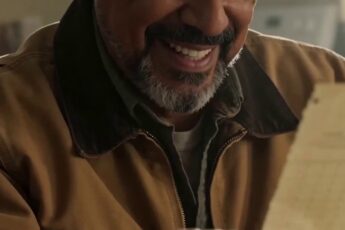
Marisol Delgado stood at the kitchen counter in her rented duplex on Alvarado Street, wrapping a plate of enchiladas in foil for a man who wasn't coming home for dinner. Again. She'd made them from her mother's recipe, the one that took two hours and turned her hands red from the chile. She set the plate in the fridge next to three others just like it, untouched, from the past three weeks. Then she closed the door and stood there a moment with her palm flat against the cold handle.
Nine years married to Danny Osei. Nine years of birthdays remembered a day late, of "I'll be there" that meant nothing, of coming home from her shift at the community clinic in Riverside to find him already asleep on the couch with the TV on mute. She used to think it was the job — he managed a small fleet of delivery trucks out of a warehouse near the 91 freeway, long hours, tired body. She made excuses for him longer than she should have.
The turn wasn't loud. It happened on a Tuesday in March, six months back, the night her father went into the ICU at Riverside Community Hospital after a stroke. She'd called Danny from the waiting room, voice cracking, asking him to come sit with her. He said he had a work call. He said it like it was nothing — like her father's life was a scheduling conflict. She sat alone that night in a plastic chair under fluorescent lights, and somewhere between midnight and four in the morning, something in her chest quietly locked a door.
She didn't tell him it had happened. She didn't even fully understand it herself, not right away. She kept making his lunches. Kept ironing his work shirts. Kept answering "fine" when he asked how her day was, because the real answer had gotten too long and too tired to say out loud. But she stopped waiting for his car in the driveway. She stopped saving him the good piece of pie. Small things. The kind of things nobody notices going missing until the house is already empty of them.
Her sister Yesenia was the one who said it plain, sitting across from her at a diner off Magnolia Avenue, coffee going cold between them. "You've already left him, Mari. You're just still doing his laundry."
Marisol didn't argue. She stirred sugar into coffee she wasn't going to drink and looked out the window at a Metrolink train passing two blocks down, the sound of it rattling the glass. "I don't know how to tell him," she said. "He'll say I never said anything was wrong."
"Did you?"
"I said it a hundred ways that weren't words. He never once asked me if I was okay when I wasn't."
That was the truth of it. Danny wasn't a cruel man. He never raised his hand, never raised his voice much either. His failure was quieter than that — it was the failure to notice. The failure to ask. Every criticism landed like a small stone: the enchiladas were "a little dry tonight," her overtime at the clinic was "probably not worth it for what they pay you," her tears after her father's stroke were met with "he's stable now, right? So we're okay." Not one of these things was a betrayal by itself. Stacked up over six months, over nine years, they built a wall thick enough that she stopped trying to climb over it and started living quietly on her own side.
The night it broke open, Danny came home just after ten to find the porch light off and Marisol at the kitchen table with a manila folder in front of her — bank statements, a printed lease application, the title to her Honda Civic, which was in her name alone.
"What's this," he said, not really a question, more of a flat statement, the way he said most things.
"I signed a lease on the Delgado place on Iowa Avenue. My cousin's unit came open." She didn't look up right away. When she did, her hands stayed on the folder, flat, steady. "I move in the fifteenth."
He laughed, short and disbelieving. "Because I missed a couple dinners?"
"Because I sat in a hospital waiting room by myself while my father had a stroke, and you had a call." Her voice didn't rise. "Because I stopped telling you things a long time ago and you never once asked why. Danny, I've been gone for months. I just finally stopped pretending."
He sat down across from her, the chair scraping against the linoleum, and for a second he looked like he wanted to fight it — to list every good year, every anniversary dinner, every reason this was unfair. But something in her face stopped him. She wasn't angry. She was already somewhere else, already past the part where his answer could change anything.
"There's no other guy," he said finally, quieter.
"There doesn't need to be." She closed the folder. "You didn't lose me to another man, Danny. You lost me to every night you chose your phone over my father's hospital room. To every time 'we're fine' was easier for you than asking if I was."
Three weeks later she carried the last box out to the Civic herself, past the kitchen where four foil-wrapped plates still sat forgotten in a fridge that was, by then, half empty of her things. She left the lease paperwork for the duplex in his name only — she'd already changed her name back off the joint checking account at the credit union on Van Buren, split the $6,200 they'd had saved right down the middle, $3,100 each, no argument, no lawyer needed because there was nothing left to fight over that mattered more than just being done.
Danny called twice that first week from the new place. She let both calls go to voicemail. On the third call, she picked up, not because she'd softened, but because she was steady enough now to say it once, plainly, and mean it: "I'm not upset anymore, Danny. That's how you know it's really over. I hope you figure out what to notice, for whoever's next." Then she hung up, set the phone face-down on the counter of her cousin's kitchen, and finished unpacking the box marked KITCHEN — the one with her mother's chile-stained recipe cards still tucked inside a rubber band, ready for a stove that was finally, fully, hers.