The doctor’s tie was crooked, the dark blue one with little anchors that he always wore on Tuesdays. I noticed it because I couldn’t look at his face. The word “palliative” came out of his mouth, and I just kept staring at that one anchor pointing the wrong way. Outside the window, a Lake Ontario wind was stripping the last leaves off the sycamores on Culver Road.
I’d driven Lily’s old Honda to the appointment. The driver’s seat still smelled like the vanilla air freshener she hung from the rearview mirror. I sat in the parking lot for twenty minutes, the engine off, the key still in the ignition. Then I went home and put her favorite soup on the stove.
That bowl of chicken and wild rice was the beginning of my goodbye.
Ten years earlier, my sister Marianne died in a wreck on I-90 just past the Rochester exit. The state trooper who came to the door was so young his acne was still healing. He told me, Grandma Ruth, and Lily—who was ten years old and didn’t yet know the world could break in a single phone call. Nobody else came for her. My sister never gave up the father’s name, and no man ever stepped forward. So Ruth and I pushed two twin beds together in the spare room, hung a string of Christmas lights along the headboard, and told her this was home now.
Lily crawled into my bed so many nights that first year, clutching a stuffed rabbit with one missing ear. She didn’t cry—she just held on. I’d lie awake, listening to the furnace rumble and the cat next door yowling at the moon, and I’d trace circles on her back until her breathing evened out. I didn’t know then that those nights were shaping me into something I never planned to be.
When I was thirty-five and my mother lay dying in the hospice bed we’d set up by the picture window, I sat in the kitchen and watched a mug of coffee turn cold. Lily, fifteen by then, found me. She didn’t say anything. She just wrapped her skinny arms around my neck so hard I had to gasp for air. “Now it’s just you and me,” I told her. My voice caught on the word “me,” because that was the moment I understood: I was not her mother, but I was the only mother she had left.
After that, I worked double shifts at the Tops Friendly Markets on Lake Avenue—stocking produce, running the register, whatever brought in a paycheck. I came home so tired I sometimes fell asleep sitting up on the couch, still in my work polo. But on Sundays, if I’d managed to set aside a few dollars, Lily and I would walk to the Dairy Queen on West Ridge Road and share a Blizzard—one spoon between us. She’d always leave me the last bite of the Oreo chunks, a tiny act of kindness that told me she was going to be okay.
I never got married. When co-workers asked why, I’d shrug and say, “I already raised my daughter.” It was the truth, eleven years long, and I never regretted a single one of them.
Last March, the tiredness settled into my bones like cement. I blamed it on my age, on the long shifts, on the fluorescent lights that always gave me a headache. But then the pain started—a deep, grinding ache in my abdomen that no amount of ibuprofen could touch. Lily, home from college for spring break, stood in the kitchen with a carton of organic milk in her hand and said, “Aunt Clara, this isn’t just exhaustion. You’re going to the doctor if I have to carry you.”
The tests showed advanced pancreatic cancer. It had already spread. The specialist on Culver Road, the one with the crooked tie, gave me maybe three months. I walked out of that office and the whole world looked overexposed, the gray sky too bright, the traffic light on Empire Boulevard blinking red and green like a confused heartbeat.
I didn’t tell Lily the timeline, just that I was sick and needed some treatments. But she knew—she saw the papers on the counter, the Palliative Care brochure with its soft-focus photos of people holding hands. She didn’t say a word about it. Instead, she got up every morning at 5 a.m. to drive me to chemo, then sat in the waiting room with her laptop, finishing her criminal justice classes online. I’d catch her sometimes with her head resting on her hand, staring at nothing. She looked so much like my sister in those moments—same copper hair, same stubborn chin.
The last time we really talked, I was propped up in the hospital bed with a view of the parking garage. The beeping of the IV pump was so steady it became a kind of music. Lily sat on a hard plastic chair pulled close, holding a paper cup of cafeteria tea.
“Promise me you’ll finish the semester,” I said. My voice was thin, like paper rustling. “And you’ve got to learn to cook rice without burning it—the trick is to lower the heat once it boils, you never remember that.”
She tried to smile. “Rice. Got it. What about you—you still need me to bring you the—”
“And don’t spend your life looking for a man who never looked for you.” I cut her off because I was running out of breath, and I needed this last part to land deep. I grabbed her hand. The skin on my fingers was dry and fragile. “You’re going to be fine. I’m not scared for you anymore. Ten years I’ve watched you, and you’re already the person I hoped you’d become.”
She pressed her forehead to our clasped hands. “I can’t do this without you.”
“You’ve been doing it,” I said. “I just made the soup. You fed yourself.”
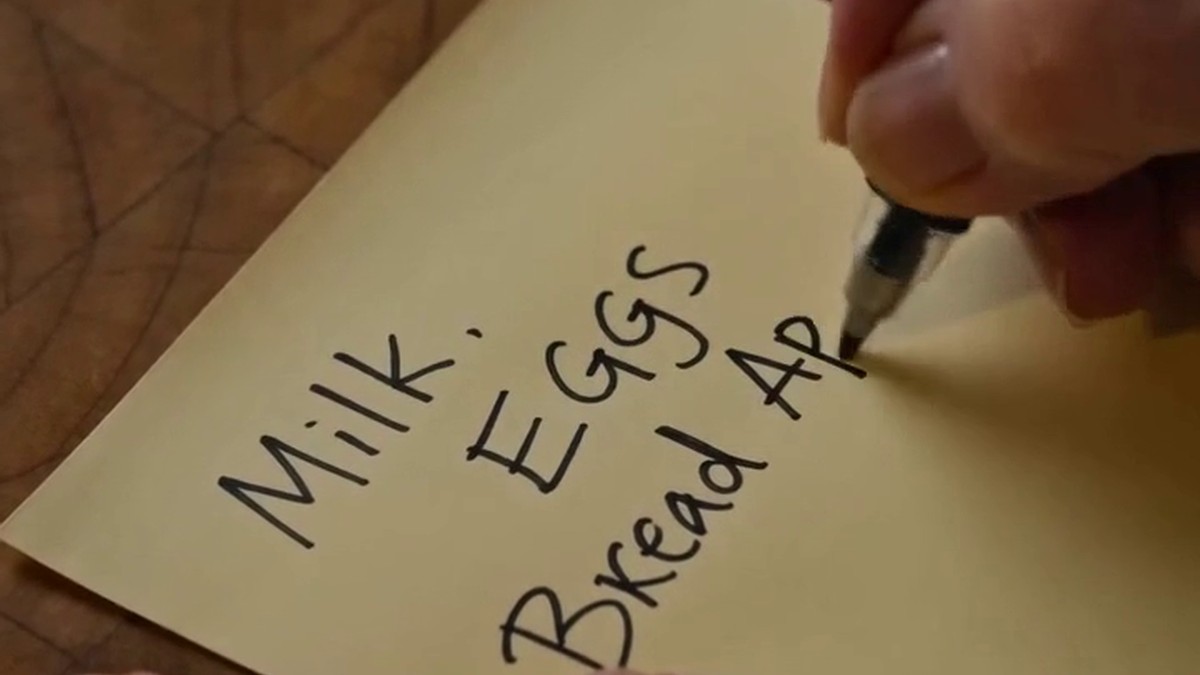
The night before the ambulance took me that final time, I made one more batch of chicken and wild rice. I stood in my tiny kitchen with the crooked linoleum floor and the cupboard that never closed right, and I chopped carrots and celery the way my own mother taught me. I left the pot on the stove, the burner off, covered with a lid. Then I took a yellow sticky note and a magnet shaped like a daisy—Lily had given it to me in fourth grade for Mother’s Day, even though I was just her aunt—and I wrote on it:
“Milk, eggs, bread, apples. Pay the water bill before the 15th. Love you, kiddo.”
I stuck it on the fridge door, right at eye level. It wasn’t a tearful farewell or a profound wisdom. It was just the next week’s grocery list. Because that was how I loved her—by making sure she’d know what to do when I wasn’t there to do it with her.
In the hospital, when the morphine pulled me under for the last time, my final clear image wasn’t of any bright light or long-lost relative. It was that refrigerator door, the daisy magnet tilted slightly to the left, the yellow note curling at the edge from the humidity of the soup pot. I saw Lily coming home from the funeral, coat still on, walking into an empty house that smelled like me. I saw her open the fridge, see the Tupperware container, see my handwriting. I saw her read the words “Love you, kiddo” and wrap both arms around that stupid piece of paper as if it were the only solid thing left in the world.
The price, I realized as the beeping slowed, had been my entire adult life: no husband, no kids of my own, eleven years stretched thin between grocery shifts and parent-teacher conferences. And I would pay it again in a heartbeat, because Lily was not my blood, but she was my daughter in every way that mattered.
I closed my eyes. The daisy magnet spun in my mind. And for one last moment, I heard the faint echo of a teenager’s voice from years ago, calling down the hallway: “Aunt Clara, I’m home!” This time, I didn’t need to answer. She already knew I was there.