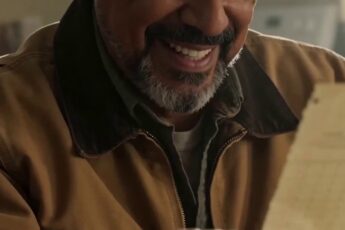
For a few seconds, the whole barn seemed to forget how to breathe.
The flower boxes outside were still bright with pink geraniums. The afternoon light still poured across the sand arena. Somewhere near the wash rack, water dripped slowly into a bucket.
But inside the aisle, everything had changed.
Mr. Devereaux stood with one polished boot half-turned away, as if he could still hide what everyone had already seen.
The barn manager, Mrs. Bennett, did not raise her voice.
She was not the kind of woman who needed to.
She had worked with horses for more than thirty years, and there was something about her quiet face that made people straighten their backs without being asked. She wore a sun-faded denim shirt, old leather gloves tucked into her belt, and reading glasses hanging from a cord around her neck.
Her eyes stayed on the hidden spur.
“Unbuckle it,” she said.
Mr. Devereaux gave a dry little laugh.
“This is absurd.”
No one laughed with him.
Ava stood beside stall five, her heart beating so loudly she could hear it in her ears. She had spoken before she had time to be afraid. Now the fear had arrived, warm and shaky in her hands.
But she did not step back.
Mateo stood near her, still holding the torn halter. His face looked pale under the dust on his cheeks, and his fingers kept moving over the broken strap as though he could stitch the whole afternoon back together by touch alone.
Behind the door, the bay horse waited.
Not knocking now.
Not shifting.
Just watching.
Mrs. Bennett held out her hand.
“The spur, Mr. Devereaux.”
His mouth tightened.
“This is professional equipment.”
“Then you should not mind professional inspection.”
That was when the aisle grew even quieter.
Two riders near the tack trunks stopped pretending to adjust their bridles. A mother in a linen blouse lowered her sunglasses from her head. One of the grooms, who had been sweeping near the end of the barn, rested both hands on the broom handle and watched.
Mr. Devereaux looked from one face to another.
For the first time since Ava had known him, no one seemed eager to agree with him.
Slowly, he bent down and pulled at the strap.
The hidden spur came loose.
When he dropped it into Mrs. Bennett’s palm, it looked small. Too small to have caused such a large silence. Too small to have made a boy feel helpless. Too small to have made a horse press against a stall door, asking over and over for someone to notice.
But small things can tell large truths.
Mrs. Bennett turned it in the light.
Dark mane hair clung near the edge. The copper-colored dust was packed into the seam, the same dust that gathered along the lower boards of stall five and the path beside the grooming bay.
Ava saw Mrs. Bennett’s expression change.
Not with surprise.
With understanding.
She looked toward Mateo.
“Tell me what happened from the beginning.”
Mateo swallowed.
His eyes moved to Mr. Devereaux and then away again.
“It’s all right,” Mrs. Bennett said. “Speak plainly.”
Mateo took a breath.
“Rio was calm after lunch,” he said. “He ate his hay and let me brush him. But when Mr. Devereaux came in, Rio kept turning his head toward his left side.”
The bay horse lifted his ears at the sound of his name.
Rio.
A gentle name. A warm name. The kind of name that made the animal seem less like a possession and more like someone with memory, preferences, and trust to give.
Mateo continued, his voice quiet but clearer now.
“I checked him where he was looking. There was dust and sweat stuck under the edge of the saddle pad from earlier. I cleaned it. Then I saw he was tender there. Not badly. Just enough that he didn’t want pressure.”
Mrs. Bennett nodded slowly.
“And you told Mr. Devereaux?”
“Yes, ma’am.”
“What did he say?”
Mateo looked down at the halter.
“He said I was being dramatic.”
Ava felt her throat tighten.
She knew that word.
Girls heard it when they noticed too much. Boys like Mateo heard it when they cared too carefully. People said it when they did not want to slow down and listen.
Mrs. Bennett’s gaze moved to the tack room doorway.
“Did anyone else hear?”
A groom named Elena stepped forward. She had gray streaks in her dark hair and always kept a soft brush in her back pocket.
“I heard part of it,” she said. “Mateo told him Rio needed a softer pad or maybe a rest. Mr. Devereaux said the horse needed discipline, not pampering.”
Mr. Devereaux’s jaw moved, but no words came.
Ava looked through the bars at Rio.
The horse was still watching Mateo.
Not the expensive saddles.
Not the polished boots.
The boy.
The one who had noticed.
Mrs. Bennett looked at the torn halter.
“And this?”
Mateo held it up carefully.
“When Rio stepped back, I tried to guide him away from the tack stand. I didn’t pull hard. I promise I didn’t. But Mr. Devereaux grabbed the lead from my hand, and Rio moved sideways. The leather was already old. It tore.”
He looked at the horse, shame crossing his face again.
“Then everyone came running, and Mr. Devereaux said I had lost control.”
Mrs. Bennett took the broken halter from Mateo and studied it.
The leather was worn thin near the buckle.
“This halter should have been replaced last week,” she said, mostly to herself. Then she looked at Mr. Devereaux. “So the boy was blamed for a sore horse, hidden equipment, and old leather.”
No one answered.
Because there was nothing left to answer.
The truth had been standing in front of them the whole time.
It had been in Rio’s nervous eyes.
In Mateo’s shaking voice.
In the hidden spur beneath the boot strap.
And in Ava’s refusal to look away.
Mrs. Bennett walked to stall five and opened the latch.
“Easy, Rio,” she murmured.
The bay horse stepped forward slowly. His coat glowed red-brown in the sunlit aisle, and his black mane fell neatly over one side of his neck. He was beautiful in the way horses are beautiful when they do not know anyone is admiring them.
Mrs. Bennett touched his shoulder first, then his neck, then moved carefully toward his side.
Rio shifted once.
Not badly.
Just enough.
“There,” she said. “Tender. Exactly where Mateo said.”
A murmur passed through the barn.
Ava saw one of the mothers cover her mouth. Another rider looked down, embarrassed, as if she remembered how quickly she had believed the louder voice.
Mrs. Bennett turned back to Mr. Devereaux.
“Rio will not be ridden today.”
“I had a private session scheduled,” he said, but his voice had lost its usual weight.
“Rio has rest scheduled now.”
That settled it.
There was no argument left in the air.
Mr. Devereaux looked around the aisle. His face had gone stiff, but not with anger now. More like a man realizing the room had seen something he had not meant to show.
Ava expected him to walk away.
Instead, he stayed.
Mrs. Bennett removed her gloves and tucked them into her belt.
“You owe Mateo an apology.”
Mr. Devereaux’s eyes flickered.
A long moment passed.
The kind of moment that stretches because pride is trying to decide whether it wants to become a wall or a doorway.
At last, Mr. Devereaux turned toward Mateo.
“I was wrong to blame you,” he said.
Mateo did not answer right away.
He looked younger in that moment. Not because he was weak, but because relief had softened his face. He had been carrying the weight of not being believed, and it was only now beginning to slide from his shoulders.
“You scared him,” Mateo said quietly. “And then you made everyone think it was my fault.”
The words were simple.
No drama.
No shouting.
Just the truth.
Mr. Devereaux looked at Rio.
“I did,” he said.
Then, after another pause, he stepped a little closer to the horse, but not too close. For once, he seemed to understand that closeness had to be offered, not taken.
“I am sorry, Rio.”
The horse watched him calmly.
Then Rio turned his head and pressed his nose into Mateo’s shoulder.
A soft sound moved through the people gathered there.
It was not applause.
It was not excitement.
It was something quieter. Something warmer.
The sound of people seeing trust return to the right hands.
Mateo lifted his arm and placed it gently along Rio’s neck.
“I know,” he whispered to the horse. “I know, boy.”
Ava looked away quickly, blinking.
Her grandmother used to say that animals could recognize the heart of a person faster than people could. Ava had always liked that sentence, but she had never understood it as clearly as she did now.
Rio knew who had listened.
Mrs. Bennett seemed to know everyone needed something ordinary to do before the emotion in the aisle became too much.
“Elena,” she said, “bring warm water and the soft cloths. Ava, get the clean grooming mitt from the table. Mateo, you stay with Rio. He trusts you.”
Mateo’s eyes widened.
“He trusts me?”
Mrs. Bennett gave him the smallest smile.
“He just told the whole barn.”
That was when Mateo finally smiled too.
Not a big smile.
Just a small, trembling one that made Ava’s chest ache.
Ava hurried to the grooming table and found the mitt. It was tucked beside a jar of hoof balm, a folded towel, and a little tin full of peppermint candies that Mrs. Bennett pretended were only for horses, though everyone knew she gave them to nervous riders too.
When Ava returned, Rio had lowered his head. Mateo stood close to him, one hand resting under the horse’s jaw.
“Start here,” Mateo said softly, touching Rio’s neck. “He likes it when you go slow.”
Ava nodded.
She brushed in careful circles, barely pressing. The bay coat warmed beneath her hand, and Rio’s breathing began to deepen.
“He’s not difficult,” she said.
Mateo looked at her.
“No.”
“He was just trying to explain.”
Mateo’s smile faded into something thoughtful.
“Most horses are,” he said. “People just don’t always like what they’re saying.”
Mrs. Bennett heard him and looked over.
“That is the wisest thing anyone has said in this barn today.”
Mateo’s cheeks turned red.
A few riders smiled.
Even Ava’s mother, standing near the open barn doors with her cardigan folded over one arm, wiped under her eye and pretended to be fixing her makeup.
Outside, the Santa Barbara afternoon had softened. The glare was gone from the sand. The light had turned honey-colored, sliding over the white fences and the tiled roof of the main barn. The air smelled of hay, warm leather, orange blossoms from the courtyard, and the mash Elena had started mixing near the feed room.
Mrs. Bennett guided Rio back into stall five after checking him again.
“Fresh bedding,” she said. “Extra water. And no saddle until I clear him.”
Mateo nodded at once.
“I’ll do it.”
“You will help,” she corrected gently. “You are not carrying this afternoon alone.”
The words seemed to surprise him.
Ava understood why.
Some people were used to being blamed quickly and thanked slowly.
Elena brought a fresh forkful of straw, and one of the older riders carried a bucket. Another girl opened the stall window so the ocean breeze could move through. Someone placed a clean towel over the rail.
The whole barn became busy with kindness.
Not loud kindness.
Not showy kindness.
The practical kind — folded cloths, warm water, fresh straw, a quiet hand on a shoulder.
Mr. Devereaux stood near the tack room, watching.
For once, he seemed unsure where he belonged.
Mrs. Bennett noticed, as she noticed everything.
“Mr. Devereaux,” she said.
He looked up.
“If you want to make this right, you may start by helping clean the grooming area.”
A few people froze.
Ava looked at the floor so no one would see her almost smile.
Mr. Devereaux looked toward the grooming table, where brushes, towels, and old saddle pads had been left in a messy pile after the commotion.
Then he nodded.
“All right.”
Mrs. Bennett handed him a rag.
“Use this.”
It was a simple thing.
A man who was used to being served, wiping dust from a wooden table while a stable hand cared for the horse he had misunderstood.
But somehow, that simple thing mattered.
Mateo watched from Rio’s stall.
Mr. Devereaux noticed.
He stopped wiping and looked at the boy.
“I should have listened the first time,” he said.
Mateo held the stall door with one hand.
“Yes, sir.”
“And tomorrow,” Mr. Devereaux added, “I would like you to show me how you check Rio’s tack before a session.”
Mateo blinked.
“You want me to show you?”
“If Mrs. Bennett allows it.”
Mrs. Bennett lifted an eyebrow from across the aisle.
“I allow it if Mateo wants to.”
Everyone looked at the boy.
This time, no one answered for him.
Mateo looked at Rio. The horse was nosing through the fresh straw, calm now, his ears soft and loose.
Then Mateo nodded.
“I can show you,” he said. “But you have to go slow.”
For the first time all afternoon, Mr. Devereaux’s smile looked real.
“I can learn slow.”
Ava would remember that sentence.
Not because it fixed everything at once.
It did not.
Some apologies need to be lived, not just spoken.
But it was a beginning.
And beginnings matter.
Later, when most of the riders had left and the courtyard had grown quiet, Ava returned to stall five.
The barn looked different in evening light. The flower boxes were shadows now. The brass nameplates on the stall doors glowed softly. Somewhere in the distance, a horse sighed in its sleep, and the old wooden beams gave little creaks as the air cooled.
Mateo was sitting on an overturned bucket outside Rio’s stall, eating a sandwich wrapped in a napkin. Mrs. Bennett had made it for him from the staff kitchen: turkey, lettuce, tomato, and an extra pickle tucked on the side because she remembered he liked them.
Ava came closer, holding something in her palm.
It was a small blue ribbon from her first beginner show. The edges were frayed, and the printed letters had faded, but she had kept it in her tack box because it reminded her of the first day she had felt brave on a horse.
Mateo looked up.
“You forgot something?”
Ava shook her head.
“I brought something.”
She held out the ribbon.
Mateo stared at it.
“What’s that for?”
“For Rio’s door.”
“But he didn’t win a class.”
Ava smiled softly.
“No. He did something better. He told the truth until someone listened.”
Mateo looked at the ribbon for a long moment.
Then he stood and tied it carefully to the stall bars.
Rio lifted his head and touched it with his nose. The ribbon moved gently in the evening breeze from the open window.
Mateo laughed under his breath.
“He likes it.”
“He earned it,” Ava said.
From the office doorway, Mrs. Bennett watched them with her arms folded and her expression soft.
“Looks good there,” she said.
Mateo touched the knot once, making sure it would not fall.
Then he looked at Ava.
“Thank you for saying something.”
Ava leaned her shoulder lightly against the stall frame.
“I almost didn’t.”
“Why?”
She looked down at her boots.
“Because grown-ups don’t always like it when kids notice things.”
Mateo nodded.
“Stable hands either.”
They both smiled a little at that.
Inside the stall, Rio stepped closer and lowered his head between them. His breath was warm and sweet from the mash. Ava raised her hand slowly, and this time Rio let her touch the white mark on his forehead.
It felt like being trusted with a secret.
The sun slipped lower outside, painting the barn aisle in amber stripes. Dust floated in the light like tiny sparks. The blue ribbon fluttered on stall five, not fancy, not perfect, but beautiful because of what it meant.
It meant a boy had been heard.
It meant a horse had been understood.
It meant a quiet girl had learned that her voice could protect something gentle.
And it meant even a proud man could begin again, if he was willing to lay down his pride and pick up a rag, a brush, or a lesson he should have learned long ago.
Before Ava left, Mrs. Bennett placed one hand on her shoulder.
“You know,” she said, “most people look at horses. Fewer people listen to them.”
Ava looked at Rio and Mateo by the stall door.
“I think Mateo listens best.”
Mrs. Bennett smiled.
“And today, so did you.”
That night, after the lights dimmed and the estate grew quiet, Rio rested in clean straw with the blue ribbon moving softly above him. Mateo checked his water one last time before leaving. He paused at the door, and Rio stretched his nose toward him.
No tapping.
No knocking.
No trying to make the world understand.
Just peace.
Mateo touched the horse’s forehead.
“I heard you,” he whispered.
And in the gentle hush of the barn, it felt as if Rio already knew.
💬 Have you ever seen an animal trust someone in a way that touched your heart? Or have you ever been the person who noticed what everyone else missed? Share your thoughts in the comments — I’d love to read what this story brought up in you.