I was the only one who sat beside my grandmother at her birthday brunch. But when her tears fell onto the empty plates, I decided to show our family what forgotten love really costs.
The empty chairs around the table were crueler than any insult my family had ever spoken out loud.
“They’ll come, won’t they?”
Grandma asked without looking at me.
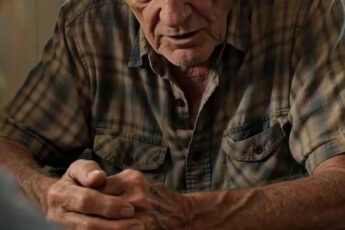
She sat at the end of the kitchen table in her lavender blouse with tiny flowers, her reading glasses slipping down her nose, her hands folded in her lap as if she were afraid to touch the celebration she had prepared. In front of her was an empty plate. Around the table were nine more. Napkins folded into neat triangles. Old forks polished until they shone. Water glasses set carefully in place. The saltshaker with the cracked lid. And an entire table covered with food that smelled like my childhood.
Mashed potatoes with butter. Baked ham sliced thin. Sweet potatoes with brown sugar. Stuffing with onions and thyme. Warm rolls in a basket under a white towel. Even the apple pie sat on the windowsill, covered with foil so it could “rest,” the way Grandma always said.
It was her eighty-fifth birthday.
And I was the only one who came.
“They’ll come,” I lied.
My phone lay face down beside my glass. I didn’t dare turn it over. I didn’t want Grandma to see the messages. I didn’t want her to read that my mother had written, “Tell Mom we’ll stop by another time. Today is just too busy.” I didn’t want her to see that my Uncle George had replied to the photo of the table with nothing but a thumbs-up. I didn’t want her to see my cousin Nina’s message: “Oh wow, all that heavy food again? I can’t, I have Pilates.”
Most of all, I didn’t want her to see my father’s message:
“Don’t be dramatic. She’s old. She won’t remember who showed up.”
But Grandma remembered.
That was the cruelest part.
She remembered who liked mashed potatoes without pepper. She remembered that George wouldn’t eat sweet potatoes if there was cinnamon in them. She remembered that my mother liked the crispy edges of the ham. She remembered that Nina, as a little girl, always wanted the roll from the top of the basket because “the bottom ones are sad.” She remembered everything we had allowed ourselves to treat as unimportant.
“I put extra butter in the potatoes,” Grandma said softly. “When you were little, you used to say potatoes should smile.”
My throat tightened.
“I remember.”
“And I made the salad a little more tart for your mother. Though I don’t know if she eats vinegar anymore. She’s always doing some new diet.” Grandma gave a small, tired smile. “I never understood that. In my day, if there was food on the table, you were grateful.”
Outside, the April wind pushed against the thin curtains. The kitchen was warm and smelled of roasted ham, but there was a coldness in the corners that had nothing to do with the window.
Old photographs still covered the refrigerator. My mother and uncle as children. Me with missing baby teeth. Nina with a ridiculous bow in her hair. My father fishing with my grandfather. In one corner was a picture of Grandma when she was young, dark-haired and bright-eyed, standing beside Grandpa, who had been gone for years.
Now she sat alone at a table set for an entire family.
Waiting for people who had already decided that loving her could be postponed.
“Should I serve you something?” I asked.
“Not yet.” Her eyes moved to the wall clock. “Maybe they hit traffic.”
I said nothing.
Grandma placed her palm over the folded napkin beside her plate and stroked it with her fingers.
“You know, Emily,” she said, “I woke up at five. Couldn’t sleep. I kept worrying the ham would turn out dry. Then I thought, if the people you love come, even dry ham tastes good.”
That was when the first tear slipped down her cheek.
It wasn’t dramatic. She didn’t sob. She didn’t cover her face. Just one small clear tear traveled through the lines in her skin and fell onto the empty plate.
Something inside me broke.
Not loudly. Not violently. More like an old beam giving way after carrying too much weight for too long.
I stood up.
“Where are you going?” Grandma asked.
“To open the window.”
I took my phone and stepped into the hallway. My hands were shaking. I opened the family group chat. The same chat where everyone sent vacation photos, kitchen renovations, dogs, restaurant pictures, and holiday greetings copied from the internet. The same chat where Grandma rarely wrote because she was afraid of using the wrong emoji, but always read everything.
I typed:
“Grandma cooked for everyone. She’s sitting alone at the table waiting. Who is coming?”
My mother answered first.
“Emily, please don’t make me feel guilty. I told you we’re busy.”
Then Uncle George:
“I’ll stop by next week. It’s not a big deal.”
Nina:
“Oh, come on. Every year it’s the same thing. Grandma needs to understand people have lives.”
I stared at the screen and felt my face go cold.
Then a new message appeared from my cousin Daniel, who lived two states away and almost never wrote in the group.
“Don’t tell them everything yet. Check the drawer under the old phone. Grandma knows more than you think. And today isn’t just a birthday.”
I froze.
Then I went back into the kitchen. Grandma was still sitting exactly where I had left her, but she did not look surprised.
The old telephone table stood in the hallway, holding a landline no one used anymore. I opened the bottom drawer. Inside was a large envelope. On the front, written in Grandma’s shaky handwriting, were the words:
“For my family. Open on my eighty-fifth birthday, if they don’t have time again.”
I carried it to the table.
“Grandma… what is this?”
She looked down at her hands.
“My decision.”
Inside were a letter and copies of documents. Grandma had decided to sell the house. Our house. The one with the porch swing, the lilacs by the fence, the kitchen where Grandpa used to drink black coffee before sunrise. The house where all of us had spent summers, birthdays, holidays, and the careless parts of childhood.
Part of the money would buy her a small apartment closer to her doctor. Part would go to a charity that visited lonely seniors. Another part would create a scholarship in Grandpa’s name at the local elementary school.
For the family, she had written one sentence:
“I am not leaving you money, because money disappears quickly. I am leaving you shame. Perhaps that will last longer.”
My eyes filled.
“They don’t know,” I whispered.
“They know enough,” Grandma said. “They know I’m alive. They know it’s my birthday. They know where this table is. The rest is excuses.”
I picked up my phone and took a picture. Not a pretty one. Not arranged. Just the empty plates, the cooling food, the pie on the windowsill, and Grandma’s hands folded in her lap.
I sent it to the group and wrote:
“Today Grandma was going to tell you she is selling the house. Not because she has to, but because she finally understood she was keeping a home for people who no longer find their way back to it. The papers are ready. So is the food. Only two of us are at the table.”
For two minutes, no one replied.
Then my phone started ringing. My mother. My father. Uncle George. I didn’t answer.
Nina wrote, “What do you mean she’s selling the house? That house belongs to all of us.”
I replied:
“A family house is not kept alive by people who never come home.”
My mother arrived first. No makeup, coat thrown on, fear disguised as anger. My father came behind her, red-faced and stiff. Uncle George arrived with his wife. Nina came in leggings, still wearing her workout jacket.
They all came quickly.
But not quickly enough to sit beside Grandma before they were afraid of losing something.
“Mom, what is this?” my mother demanded. “You can’t sell the house without talking to us.”
Grandma looked at her for a long moment.
“When was I supposed to talk to you, Karen? Today, when you were too busy? At Christmas, when you sent me a picture of a snowman instead of calling? Or last month, when I left three messages and you never called back?”
My mother’s mouth opened, but no sound came out.
Uncle George cleared his throat.
“Mom, don’t take it so personally. We all have responsibilities.”
“I had responsibilities too,” Grandma said. “When you were little. Work, laundry, sick parents, bills, meals, scraped knees, nightmares. But when you cried, I sat beside you. I didn’t say I’d stop by next week.”
Nina stared at the floor.
“Grandma, I didn’t know it hurt you this much.”
“Because you never asked.”
The silence that followed hurt more than shouting.
My father began talking about lawyers, documents, decisions made in emotion. Grandma raised one hand.
“Everything is legal. Everything is reviewed. This is not sudden. I have been waiting for years. Today, I simply stopped.”
Later that evening, Daniel arrived after driving for hours. He came in quietly, set his bag down, walked straight to Grandma, kissed her forehead, and sat on her other side.
“I missed the meal,” he said. “But I didn’t miss you.”
That was when Grandma truly cried.
Not because of the house. Not because of the money. Because someone had finally come for her.
The house was sold a few months later. Grandma moved into a small apartment near me. My mother began visiting every Thursday. Uncle George learned how to call without needing anything. Nina sometimes brought flowers and left her phone in her purse.
But Grandma never again set ten plates when only one person had promised to come. She stopped cooking love in enormous portions for people who only hurried over when inheritance was at risk.
That day taught me that old people are not only hurt by age. They are hurt by being buried alive under words like “later,” “another time,” and “not today.”
Love does not always die with a slammed door. Sometimes it grows cold beside the mashed potatoes, on a table full of food, while an old woman waits for people who had time for everything except her.