For a few seconds, nobody moved.
The officer’s words seemed to hang in the hot air above the highway.
“We need an escort to the coast.”
The bearded biker lowered his head.
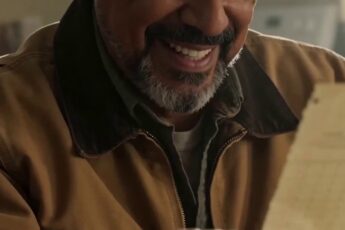
His name was Hank Dawson, though most people on the road knew him only as Bear. He had the kind of face strangers crossed the street to avoid, but the kind of hands that could hold a paper cup for a trembling child without spilling a drop.
He looked at the officer as if he hadn’t understood at first.
Then he nodded once.
“Thank you.”
The officer looked past him again, toward the white van.
The small hand was still on the glass.
It did not wave.
It only rested there, pale and fragile against the dark window, as if Lily were asking the whole world to be gentle for just a little while.
The officer raised his radio again.
“Unit twelve, I need traffic control ahead. Clear the left shoulder. Notify county. We’re moving a medical transport through. Destination: coast access road.”
A voice crackled back.
“Copy. What’s the priority?”
The officer looked at the van.
Then at the bikers standing shoulder to shoulder.
Then at the endless line of cars full of people who had started this moment angry and impatient, not knowing a child was waiting behind the tinted glass.
He said quietly:
“Highest.”
Something changed after that.
Not all at once.
But like wind moving through tall grass.
Another cruiser pulled forward. Then another. Officers began walking along the highway, telling drivers to shift, reverse slightly, make a lane, open space. Some people complained at first.
“I’ve been stuck here an hour!”
“I have somewhere to be!”
“What is this about?”
Then they saw the van.
And the bikers.
And the little hand in the rear window.
One woman in a red car covered her mouth.
A man in a delivery truck took off his cap and held it against his chest.
A mother in a minivan turned around and said something to her children. All three kids pressed their faces to the window, suddenly silent.
Hank walked back toward the van.
The side door opened just enough for a young woman inside to look out. Her hair was tied back in a loose bun, and her eyes looked like she had spent too many nights awake beside a hospital bed.
“Are we moving?” she asked.
Her name was Sarah.
Lily’s mother.
Hank took one step closer, but not too close.
“Yes, ma’am.”
Sarah looked toward the police cars.
“The officer?”
“He’s getting us there.”
Sarah’s face crumpled.
She put one hand over her mouth and nodded.
Inside the van, beneath a soft blue blanket, Lily turned her head.
Her voice was small but clear.
“Bear?”
Hank bent down so she could see him.
“I’m here, little star.”
“Are we in trouble?”
“No.”
“Then why did everyone stop?”
Hank swallowed.
He was a big man. The kind people assumed had no softness left in him. But Lily had been asking questions like that all morning, and every one of them seemed to find the one place in him that had never grown armor.
“They stopped because sometimes,” he said, “a road has to remember what matters.”
Lily thought about that.
Then she whispered, “Is the ocean still there?”
Hank smiled, though his eyes were wet.
“Last time I checked, it was too big to go anywhere.”
That made Lily smile.
Just a little.
But everyone inside the van saw it.
Her mother. The nurse beside her. The driver, who quickly looked away and wiped his cheek with the back of his hand.
The officer walked over then.
He removed his sunglasses and crouched near the open door.
“Hi, Lily.”
The girl looked at him with tired curiosity.
“Are you the policeman?”
“Yes.”
“Are you mad at the motorcycles?”
The officer glanced at Hank.
Then back at Lily.
“I was confused at first.”
“Bear said they’re my dragons.”
The officer looked at the row of motorcycles.
Engines low.
Chrome shining under the sun.
Riders waiting with their hands folded, their eyes fixed on the van.
He nodded seriously.
“That sounds about right.”
Lily’s fingers moved over the blanket.
“Dragons protect princesses.”
Hank gave a broken little laugh.
“That’s the rule.”
The officer stood.
His voice changed when he turned back to the road.
“All right. Let’s move.”
The bikers returned to their motorcycles.
One by one, helmets went on.
Engines rose, but not wildly.
Not like a threat.
Like a heartbeat.
Police cars moved ahead first, lights flashing. Two cruisers slipped into position at the front. Another took the rear. The motorcycles formed around the white van, not blocking it now, but guarding every side.
Hank rode just ahead of the van.
Two bikers stayed close behind.
The others spread out in a careful pattern, making sure no impatient driver cut across, no sudden horn startled Lily, no confusion slowed the route.
As the procession began to roll, something unexpected happened.
Drivers started helping.
A man in a pickup pulled half onto the shoulder so the line could pass.
A woman standing outside her car lifted both hands and clapped.
Someone shouted, “Go, Lily!”
Then another voice repeated it.
“Go, Lily!”
The words moved down the highway.
From car to car.
Window to window.
People who had been strangers ten minutes ago began saying her name like a prayer and a promise.
“Go, Lily!”
Inside the van, Lily heard it.
Her eyes widened.
“Mom?”
Sarah leaned close.
“Yes, baby?”
“How do they know me?”
Sarah looked out at the cars, the officers, the bikers, the people waving from open windows.
Her lips trembled.
“I think Bear told the road.”
Lily smiled.
“Good.”
The procession moved slowly at first, then faster once the lane opened fully. The city heat began to thin as they neared the coast. The air changed. It carried salt now, faint at first, then stronger.
Lily noticed before anyone told her.
Her little nose wrinkled.
“What’s that smell?”
Hank heard through the cracked window at the next light and called back:
“That’s the ocean saying hello.”
Lily turned her face toward the glass.
The nurse adjusted her blanket.
Sarah held her hand.
The officer watched from his cruiser ahead, checking every intersection, every merge, every stretch of road. He had escorted officials before. Parades. Funerals. Emergency vehicles. But this felt different.
This was not about importance the way people usually meant it.
No cameras.
No speeches.
No one trying to be seen.
Just an eight-year-old girl who had asked to see the ocean.
And a long line of people who had decided that the world could slow down for her.
At the final stretch, traffic officers had already cleared the coast road.
The medical van rolled past beach shops, closed umbrellas, families carrying towels, and tourists who stopped mid-step when they saw the motorcycles.
A little boy holding a red plastic bucket pointed.
“Mom, are they famous?”
His mother watched the van pass.
Then she saw Lily’s hand in the window.
“No,” she said softly. “They’re kind.”
The van stopped near a quiet access point where the sand was firm enough for the medical chair to roll.
For a moment, nobody spoke.
The ocean waited beyond the dunes.
Blue.
Endless.
Moving under the afternoon sun as if it had been breathing there for all of them.
Sarah stepped out first.
Then the nurse.
Hank got off his motorcycle and removed his helmet slowly.
Other bikers did the same.
No one rushed the van.
No one crowded.
Even their boots seemed quieter on the pavement.
The officer came over.
“We cleared the ramp,” he said. “Take all the time you need.”
Sarah looked at him.
Her eyes filled again.
“I don’t know how to thank you.”
The officer shook his head.
“Don’t thank me yet. She hasn’t seen it.”
Together, carefully, they helped Lily from the van.
She was smaller than many had expected.
Wrapped in a blue blanket.
A hospital bracelet still around her wrist.
A little knit cap covering her hair.
Her eyes looked tired, but when the wind touched her face, something bright came into them.
She turned her head.
“Is that it?”
Hank crouched beside her chair.
“Not yet. That’s just the sound.”
Lily listened.
Waves.
Gulls.
Wind.
The soft hush and crash of water meeting shore.
Her mouth opened slightly.
“It’s loud.”
“Too loud?”
She shook her head.
“No. It sounds big.”
The bikers formed two lines along the ramp.
Not because anyone told them to.
Because each one understood.
They stood with helmets under their arms as Lily’s chair was guided between them. Some lowered their heads. Some smiled. Some wiped their eyes and pretended it was the wind.
Lily looked from one side to the other.
“My dragons came too.”
Hank’s voice was rough.
“Every one of us.”
At the end of the ramp, the view opened.
The ocean spread before her.
Wide and shining.
The sunlight broke across the waves in pieces of silver. Foam curled over the sand. Far away, a sailboat leaned gently against the horizon.
Lily stared.
No one interrupted.
No one told her what to feel.
Even the motorcycles were silent now.
The child who had crossed miles of highway under protection from strangers simply looked at the sea.
After a long time, she whispered:
“It’s bigger than my room.”
Sarah laughed through tears.
“Yes, baby.”
“Bigger than the hospital?”
“Much bigger.”
“Bigger than the highway?”
Hank answered this time.
“Bigger than all of it.”
Lily nodded slowly, as if this confirmed something important.
Then she asked, “Can I touch it?”
The nurse glanced at Sarah.
Sarah looked at the officer.
The officer looked at the ramp, the sand, the chair, the distance to the water.
Hank was already turning.
“We can make it work.”
Four bikers brought wide boards from a nearby beach shed after asking the attendant. Two lifeguards came over. The officer helped steady the path. Drivers who had followed from the highway stood back, watching quietly.
No one took over.
Everyone simply added their hands where needed.
Board by board, they made a safe way across the sand.
The chair rolled slowly toward the water.
Sarah walked beside her daughter, holding one small hand.
Hank walked on the other side, carrying Lily’s blanket so it would not drag.
When they reached the wet sand, the nurse locked the wheels.
A wave came close.
Then slipped away.
Lily leaned forward.
Another wave came, thinner and softer, and washed gently over the tips of her bare toes.
She gasped.
Everyone froze.
Then Lily laughed.
It was not a big laugh.
It was not loud.
But it was real.
And it broke every heart on that beach in the gentlest possible way.
“It’s cold!” she cried.
Hank laughed too, wiping his face with both hands.
“That’s how you know it’s real.”
Lily looked up at her mother.
“Mom, it came to me.”
Sarah knelt in the wet sand, not caring about her dress, her shoes, anything.
“Yes,” she whispered. “It did.”
The officer turned away for a moment.
Behind him, one of the younger bikers removed a bandana from his pocket and pressed it to his eyes.
Another biker, a woman with gray braids and a leather jacket covered in patches, stepped forward and placed a small shell in Lily’s palm.
“I found this near the ramp,” she said. “The ocean probably left it for you.”
Lily studied it carefully.
It was white and pink, smooth on one side, chipped on the other.
“It’s not perfect,” Lily said.
The woman smiled.
“Most treasures aren’t.”
Lily held the shell against her chest.
“Can I keep it?”
“Forever.”
They stayed until the sun lowered.
No one hurried her.
Not the police.
Not the bikers.
Not the waiting drivers who had gathered quietly along the edge of the beach.
Some people left flowers near the van. Someone brought a soft towel. A little girl from a nearby family offered Lily a bright blue plastic shovel, then became shy and hid behind her mother.
Lily accepted it with serious gratitude.
“I’ll use it when I come back,” she said.
No one corrected her.
Hope is not something you take from a child just because adults are afraid to hold it.
As the afternoon softened, Lily grew tired.
Sarah saw it first.
So did the nurse.
So did Hank, though he pretended he was only checking the wind.
“Ready to rest, little star?” he asked.
Lily looked at the ocean again.
“Can the dragons make noise before we go?”
Hank glanced at the officer.
The officer looked at the beach, the crowd, the medical van.
Then he smiled.
“Gently.”
Hank turned to the riders and lifted one hand.
The bikers understood.
They walked back to their motorcycles, started them one by one, and let the engines rumble low.
Not loud enough to scare.
Not sharp enough to hurt.
Just deep and steady, like distant thunder behind the sound of waves.
Lily closed her eyes.
She smiled.
“That sounds like the ocean has a heartbeat.”
Sarah pressed her forehead to her daughter’s hand.
“Yes,” she whispered. “It does.”
When it was time to leave, the officer carried the blue shovel to the van himself. Hank placed the shell in a little cloth pouch and gave it to Sarah.
“Don’t lose that,” Lily murmured.
Sarah kissed her forehead.
“Never.”
As they loaded the chair, the crowd began to clap.
Softly at first.
Then louder.
But not like applause for a show.
Like gratitude.
Like respect.
Like an apology from a road full of people who had almost been too busy to notice why they had stopped.
The officer stood beside Hank near the van.
For a while, neither spoke.
Then the officer said, “You could have told me sooner.”
Hank looked at the ocean.
“I tried.”
“No. You said you were protecting it.”
Hank gave a tired smile.
“You looked like a man who needed to see before he could hear.”
The officer accepted that.
Then he said, “Maybe I did.”
Hank held out his hand.
The officer shook it.
Not as a warning.
Not as authority.
As one man thanking another for refusing to move until someone understood.
The ride back was quieter.
The sun had turned gold, then orange. Lily slept beneath her blanket with the shell pouch tucked beside her and the blue shovel near her feet.
The motorcycles rode around the van again.
But this time the highway seemed different.
Cars moved aside before anyone asked.
Drivers rolled down windows and waved gently.
A trucker tapped his horn once, soft and respectful.
People who had never met Lily whispered her name to passengers, to children, to themselves.
By the time the van reached the medical center, evening had settled.
The bikers parked in a long line outside.
No one wanted to be the first to leave.
Sarah stepped out of the van and walked to Hank.
For a moment, she tried to speak.
No words came.
So she simply wrapped her arms around him.
The big biker stood still.
Then his shoulders shook.
“I promised her,” he said.
Sarah pulled back.
“I know.”
“No,” Hank whispered. “Not Lily.”
Sarah looked confused.
Hank took a breath.
“My granddaughter loved the ocean. I promised her once I’d take her again when she felt better. I waited too long.”
Sarah’s eyes softened with understanding.
Hank looked toward the van.
“When Lily asked the hospital volunteer if motorcycles were faster than traffic, I heard about it. I thought maybe this time… maybe I could help one promise arrive on time.”
Sarah touched his arm.
“You did.”
Hank shook his head.
“We all did.”
The officer, standing a few steps away, heard everything.
He did not interrupt.
But later, before he left, he walked to the rear window of the van.
Lily was awake again, just barely.
He lifted one hand.
She lifted hers.
The hospital bracelet slid down her wrist.
“Did we get there?” she asked sleepily through the cracked door.
The officer smiled.
“Yes, ma’am.”
“Did you like it?”
He looked at the bikers. At Sarah. At Hank. At the blue shovel in the van.
Then he answered honestly.
“I’ll remember it forever.”
Lily seemed pleased with that.
“Good.”
The next morning, a photo appeared online.
Not from the bikers.
Not from the police.
From a woman who had been stuck in traffic and had watched the whole thing change.
It showed the highway from behind: motorcycles, police lights, the white van in the center, and hundreds of cars pulled aside.
The caption said:
Yesterday I was angry because traffic stopped. Then I learned it stopped for an eight-year-old girl who wanted to see the ocean. I hope I never forget how quickly impatience can become shame when we finally know the story.
Thousands of people shared it.
Some wrote that they had been there.
Some wrote that they had waved.
Some wrote that they had complained before they understood, and they were sorry.
But the comments that mattered most came from people who said:
Next time, I will look twice.
Next time, I will be kinder before I know the whole story.
Next time, I will remember Lily.
A week later, a small envelope arrived for Hank.
Inside was a drawing.
Blue crayon waves.
A yellow sun.
A white van.
A line of motorcycles that looked more like dragons than machines.
At the bottom, in careful letters, Lily had written:
Thank you for opening the road.
Hank framed it.
He hung it in the motorcycle club’s meeting room, above the table where rough hands usually held coffee mugs and maps.
No one joked about it.
No one touched it without care.
Every year after that, on the same date, the bikers rode to the coast.
Not fast.
Not loud.
Just steady.
They carried a small white ribbon on each motorcycle and stopped at the same beach access road. Some brought flowers. Some brought shells. Some simply stood in silence and listened to the waves.
The officer came too.
The first year, he arrived in uniform.
The second year, on his day off.
The third year, he brought his own daughter, who placed a blue plastic shovel near the dunes and asked why everyone was so quiet.
He knelt beside her and said:
“Because once, a little girl taught a whole highway how to listen.”
And somewhere beyond them, the ocean kept moving.
Bigger than a room.
Bigger than a hospital.
Bigger than a highway.
Big enough to hold one child’s wish, one mother’s tears, one biker’s old promise, one officer’s changed heart, and a thousand strangers learning, if only for a moment, that not every blocked road is an inconvenience.
Sometimes it is mercy standing in the lane.
Sometimes it is love refusing to move.
Sometimes the world stops because one small hand is pressed against a window, asking to see something beautiful.
Dear readers, have you ever judged a situation too quickly before learning the truth behind it? Or have you seen strangers come together for someone who needed kindness more than speed? Share your thoughts in the comments. Your words may remind someone today to be patient before they understand the whole story.