I found her on a Tuesday in late March, right after the last frost finally gave up. I’d gone out to the old tool shed behind the barn to look for a spare shovel, and there she was—a tortoiseshell cat I’d never seen before, sprawled on a pile of burlap sacks, three tiny kittens squirming against her belly. She lifted her head when I pushed the door open, ears swiveling, but she didn’t run. Just watched me with those green-gold eyes, like she was sizing me up.
I’m Eleanor, sixty-eight years old, and I’ve lived on this little farm outside Oakwood, Tennessee, for over forty of them. My husband, Carl, passed three years back. The kids are scattered—Sarah’s in Oregon, Mike’s in North Carolina—and most days the loudest sound around here is the hum of the refrigerator. So finding a whole cat family in my shed felt less like an intrusion and more like the universe finally sending me something to do besides crossword puzzles.
I brought out a bowl of water and some leftover chicken. She ate like she hadn’t seen food in a week. I named her Clementine, because of the orange patches in her coat, and decided I’d figure out the rest later.
For nine days, we had a routine. Every morning and evening, I’d take food out to the shed, and Clementine would let me sit on an overturned bucket while the kittens nursed. Their eyes opened on day seven—two gray tabbies and one solid black, just tiny puffs of fur with needle claws and no sense of direction. I caught myself talking to them, narrating my day, something I hadn’t done since Carl was around. It broke the quiet in a way I didn’t realize I’d been missing.
On the tenth morning, I opened the shed door and froze. The kittens were there, piled together in a corner, mewling softly, but Clementine was gone. The bowl from the night before sat untouched. I called for her. Checked behind the tractor, under the workbench, even walked the fence line. Nothing. She’d just vanished.
I won’t lie—my first feeling was betrayal mixed with fear. What if something got her? Coyotes ran those back fields from time to time. And then the practical panic set in: three newborn kittens, barely ten days old, and no mother. I’d raised a bottle-fed calf once in the early nineties, but kittens? I didn’t have the first clue.
I called my neighbor Dottie, who’s run a small rescue out of her house for two decades. She walked me through it over the phone—kitten formula from the feed store, a dropper from the drugstore, warm damp cloth to stimulate them to go. I spent the next week in a haze of two-hour feedings, my kitchen table turned into a neonatal unit. The black one, the runt, almost didn’t make it through the third night. I sat up with her cupped in my palm, rubbing her chest with my thumb, bargaining with a God I’d been on shaky terms with since Carl’s cancer.
By the end of the week, the kittens were latching onto a bottle like tiny football players. I’d named them—Pepper, Smoky, and Bandit—even though Dottie warned me not to get attached. “You can’t keep three cats at your age, El. Find them homes once they’re weaned.” I said I would, and I meant it. Mostly.
Then, on the fourteenth day since Clementine disappeared, I walked out to the front porch just after sunrise and found her sitting by the steps. She was a wreck—thinner than when I’d first found her, her fur matted, one ear notched in a fresh cut. And she wasn’t alone.
Pressed against her side was a scrawny orange kitten, maybe four months old, with a torn left ear and a back leg that dragged when he tried to move. He was trembling so hard I could see it from ten feet away.
“Where in the world have you been?” I said, my voice cracking. Clementine just meowed—a short, sharp, almost businesslike sound—and started walking down the driveway, glancing back at me. The orange kitten limped along behind her.
I knew an invitation when I saw one. I grabbed an old towel and followed.
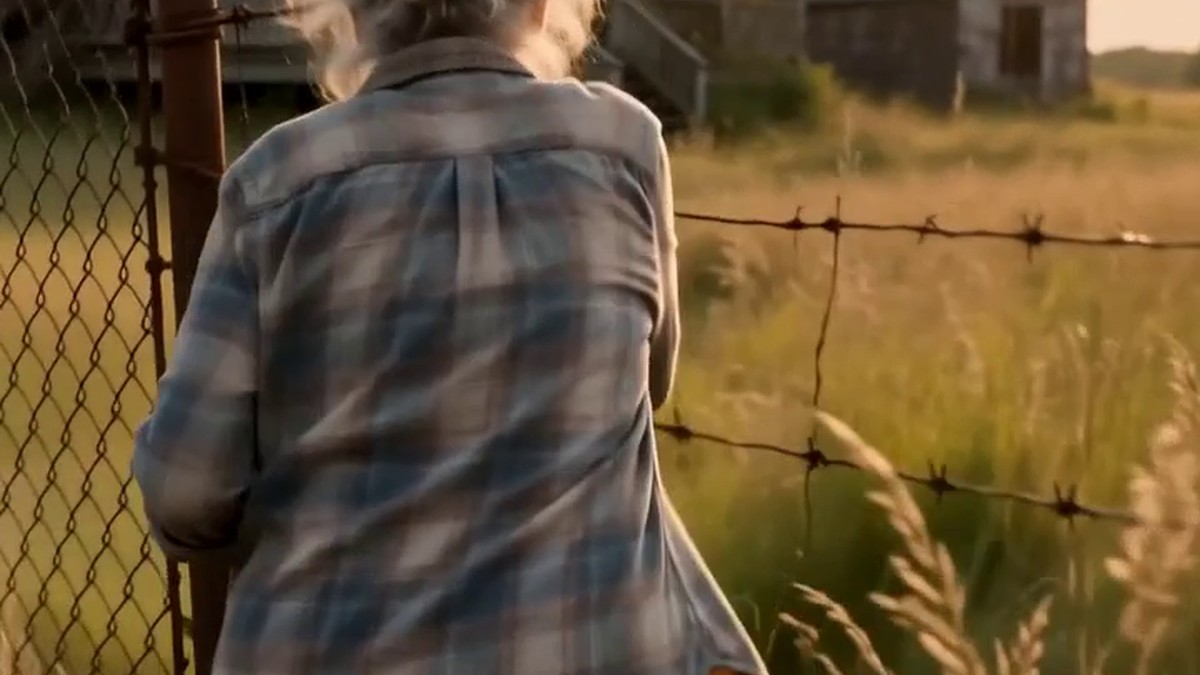
She led me across the pasture, through a gap in the barbed-wire fence, and onto the old Miller property. The Millers moved out to Arizona two years ago after Mr. Miller passed, and the place has been sitting empty ever since. The farmhouse was sagging, the porch half-collapsed, and the yard was a jungle of kudzu. Clementine made a beeline for the crawl space under what was left of the back porch. She disappeared into the dark, and a moment later I heard tiny, desperate cries.
I knelt in the wet grass, my knees popping, and pulled out my phone for a flashlight. Under the porch, huddled on a piece of waterlogged plywood, were two more kittens—filthy, both with crusted-shut eyes, their ribs visible even through matted fur. They looked maybe five weeks old, barely weaned, and utterly alone.
“You’ve got to be kidding me,” I whispered.
Clementine came back out and sat beside me, wrapping her tail over her paws like she’d just presented me with a quarterly report. She wasn’t pleading. She was stating a fact. I found these. They’re mine now. What are you going to do about it?
I sat there in the kudzu, trying to figure out the logistics. I already had three kittens at home. The orange one was wounded. These two were half-dead. I was sixty-eight years old, my retirement savings were stretched thin, and I’d promised Dottie I wouldn’t turn into the crazy cat lady. But Clementine had dragged herself back from wherever she’d been—probably hit by a car or attacked by something—and the first thing she did wasn’t find food or shelter for herself. She found a orphaned kitten and brought him to the only human who’d shown her kindness. And then she remembered two more, hidden under a rotting porch, and came back to get me.
Animals have their own morality. I’ve always believed that. But seeing it in action rearranged something in my chest.
I bundled the two sick kittens into the towel, scooped up the orange one, and walked home with Clementine padding along beside me like she’d been doing it for years. Back on my porch, I set up a second box with a heating pad, cleaned crust from eyes with warm saline, and called Dottie again. She came over with antibiotics and a resigned look.
“You know you’re keeping them,” she said, watching me syringe-feed the orange one.
“I’m fostering,” I said. “Just until they’re healthy.”
“Sure you are.”
The orange kitten—I named him Rusty, unoriginal but fitting—had a laceration on his hind leg that needed stitches. The vet, Dr. Harris over in Tullahoma, said he’d probably been dragged by something. “Lucky he found you,” she said, trimming matted fur away from the wound. “Without antibiotics, that would’ve gone septic in another day.”
The two from under the porch, a pair of gray-and-white siblings I called Pip and Squeak, needed fluids and round-the-clock care for the first three days. Clementine, meanwhile, settled back in with her original litter like she’d never left. She nursed all of them—her three, plus Rusty, plus Pip and Squeak—like they were one big chaotic family. She didn’t differentiate. A kitten was a kitten.
I’d like to say I found homes for all of them. That’s what a responsible person would do. And I did try. I put up flyers at the feed store and the post office. I asked around at church. A young couple from Shelbyville adopted Smoky and Pepper, the two gray tabbies, after they brought their little girl to meet them and she sat on my kitchen floor crying happy tears for twenty minutes. Pip and Squeak went to a retired couple down in Winchester who’d just lost their old cat and weren’t sure they were ready for another one. “We’ll just foster,” the wife told me, eyes already soft. We both knew how that would end.
But Rusty never left. He healed up, though his leg healed a little crooked, so he walks with a sailor’s roll and climbs furniture like it’s a personal challenge. Bandit, the little black runt I nearly lost, grew into a sleek, bossy queen of the house who sleeps on Carl’s old armchair like it’s a throne. And Clementine—well, Clementine never once stepped inside the house voluntarily for three months. Then one November evening, when the first hard freeze hit, she marched through the kitchen door, jumped onto the sofa, and never slept in the barn again.
That was two years ago. My daughter Sarah FaceTimed me last Christmas and laughed at the sight of three cats draped over every available surface. “Mom, you’ve become one of those people,” she said. I looked around my living room—Clementine curled on the back of the couch, Bandit purring against my hip, Rusty chasing a dust mote across the floor—and realized the house wasn’t quiet anymore. It was full of small, persistent, demanding life. The kind of life that doesn’t care if you’re retired or tired or grieving. It just needs you, right now, for breakfast and chin scratches and opening the screen door for the seventh time in an hour.
The thing about getting older is that the world can start to feel like it’s happening somewhere else. People move away. Voices fade. The routines that once tethered you loosen, and some days you look up and realize you haven’t spoken to another living soul since yesterday’s checkout person at the Piggly Wiggly. But an animal doesn’t let that happen. A cat who dragged herself home with a busted-up kitten and two more hidden under a porch—she doesn’t care about your plans or your reasons. She just shows up, and expects you to show up too.
Clementine taught me that showing up is the whole thing. Not out of obligation, not because someone’s blood, but because you saw a need and decided not to look away. That’s what she did for those kittens she had no biological reason to save. And I guess that’s what I did for her.
Yesterday evening I was sitting on the porch with a glass of iced tea, watching the lightning bugs come out over the pasture, and Rusty heaved himself into my lap with his crooked little hop. Clementine was stretched out on the top step, keeping an eye on the treeline like a tiny, striped guard dog. Bandit was somewhere inside, probably reorganizing my yarn basket. I thought about Carl, about how he used to say this farm was meant to be full of noise and mess. He’d have liked these cats, I think. He’d have called me soft and then built them an elaborate cat tower out of scrap lumber.
I didn’t plan on any of this. I found a stray cat in my shed and ended up with a whole new understanding of what home means. Sometimes the best things arrive with matted fur and a bum leg, dragging a story you didn’t know you needed to hear. You just have to open the door.