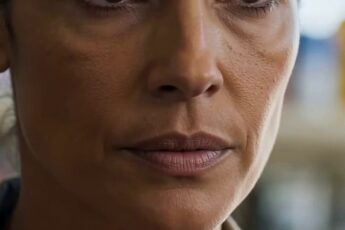
Maya stared at the silver key in Nathaniel Crane’s palm.
It was old-fashioned, small, and worn smooth around the edges, as if many nervous fingers had held it before hers. A thin blue ribbon was tied through the top.
For some reason, that ribbon hurt more than the key.
It looked like something saved.
Something protected.
Something that had waited.
“My mother had an office?” Maya whispered.
Nathaniel nodded.
“Before this company had floors, towers, jets, or headlines, it had one rented room above a print shop. Your mother had the desk by the window.”
Isabella laughed once.
Too loudly.
Too sharply.
“Father, what is this?”
Nathaniel did not look at her.
He kept his eyes on Maya.
“Her name was Elena Marlowe. She kept the first books by hand. She negotiated the first shipping contract when I was still too arrogant to understand that charm does not replace competence. She corrected my proposals, found my first investors, and once told a banker twice her age that if he wanted to speak to the person with the numbers, he should stop looking at me.”
Maya’s grip tightened around Isabella’s handbag.
“My mother never told me any of that.”
“She didn’t get the chance to tell you enough.”
The words were gentle, but the pain inside them was not.
Maya looked down.
Her mother had died when Maya was thirteen. By then, illness had already made her smaller, quieter, careful with every breath. Maya remembered medicine bottles, folded blankets, unpaid bills, and her mother’s hand smoothing her hair at night.
She remembered Elena saying:
“One day, baby, if someone makes you feel small, don’t shrink. Make them explain why they need you small.”
Maya had never understood the full weight of that sentence.
Until now.
Isabella stepped forward, her mouth tight.
“Father, she’s an assistant.”
Nathaniel finally turned to her.
“No. She has been working as one because I needed time to confirm records that should never have been lost. But she is not ‘an assistant’ in the way you mean it.”
Isabella flushed.
“I didn’t mean anything.”
Maya looked at her.
That was the lie people used when they meant everything but did not want to be held responsible for the shape of it.
Nathaniel held out his other hand.
“Maya, give me the bag.”
She hesitated out of habit.
For three years, hesitation had cost her. A late response meant a sharp look. A mistake meant being blamed for things Isabella herself had forgotten. A question meant being told, “Just do what I asked.”
Nathaniel waited.
Not impatiently.
Not as a command.
As an invitation.
Slowly, Maya handed him Isabella’s handbag.
Nathaniel took it, turned, and placed it in Isabella’s arms.
The weight surprised her.
Her fingers fumbled under the polished leather.
“Father—”
“You can carry it.”
Isabella stared at him as if he had insulted her in front of the entire airport.
Nathaniel’s voice remained calm.
“For three years, Maya carried things for you that were never part of her job.”
The security aide lowered his eyes.
The driver shifted near the car.
Isabella looked around, noticing for the first time that people had seen more than she thought.
“That’s not fair,” she said.
Nathaniel’s expression hardened.
“No, Isabella. What was not fair was watching a woman manage your schedule, protect your reputation, correct your mistakes, and still be treated as though her dignity was an inconvenience.”
Maya felt her throat close.
No one had said it like that before.
Correct your mistakes.
Protect your reputation.
For years Maya had believed her work vanished because it was small.
But it had not vanished.
Someone had been watching.
Isabella’s eyes flashed.
“So this was a test?”
Nathaniel looked toward the jet, then back at his daughter.
“No. It was a revelation. There is a difference. A test implies I created the cruelty. I did not. I merely stopped interrupting it before it could show itself.”
The words landed hard.
Isabella opened her mouth, then closed it.
Maya looked at Nathaniel.
“You knew she treated me like this?”
“I suspected,” he said. “Then I confirmed. And I am ashamed that confirmation took longer than your pain deserved.”
That answer was not perfect.
But it was honest.
Maya had learned to distrust perfect answers.
Nathaniel gestured toward the car.
“You do not have to come with us. You owe me nothing. But if you are willing, I would like to take you to the old office.”
Maya looked at the silver key.
Her hand trembled when she finally took it.
It was warm from his palm.
Behind them, Isabella still stood holding her own bag, stunned by the small humiliation of carrying what she had always considered beneath her.
Maya walked to the car.
Not behind Isabella.
Not beside the luggage.
Beside Nathaniel Crane.
The old office was not in the glass tower downtown.
It was in a narrow brick building on a quiet Miami street where the paint peeled near the windows and a bakery downstairs filled the stairwell with the smell of coffee and sugar.
Maya had passed buildings like that all her life without imagining any of them could hold part of her story.
Nathaniel climbed the stairs slowly, not because he was weak, but because memory seemed to make each step heavier.
At the top was a green door.
The brass plate was tarnished.
Crane & Marlowe Import Services
Maya stopped.
Marlowe.
Her mother’s name.
Not hidden in a file.
Not footnoted in someone else’s biography.
On the door.
Nathaniel took a breath.
“This was the first sign we could afford. Elena insisted her name go second because she said alphabetical order was less important than who signed the lease.”
Despite everything, Maya almost smiled.
“She sounds stubborn.”
“She was magnificent.”
Maya turned the key.
The lock resisted at first, then clicked.
The room inside was small.
Dust floated in the afternoon light. Two desks stood near opposite walls. One was large and dark, with papers stacked neatly on top. The other sat by the window.
A simple wooden desk.
A chair with a faded cushion.
A ceramic mug holding pens that had dried years ago.
And above it, pinned to a corkboard, a photograph.
Maya stepped closer.
Her mother stood in front of a delivery truck, hair tied back, sleeves rolled up, smiling like she had just won an argument.
Beside her was a younger Nathaniel, looking far less polished than the man on the runway. He held a clipboard. Elena held the keys.
Under the photograph, in her mother’s handwriting, was a note:
If we build it right, nobody who works for us should ever feel invisible.
Maya covered her mouth.
The room blurred.
Nathaniel stood behind her, silent.
For once, he did not try to manage the moment.
He let her have it.
Maya reached for the edge of the desk.
“This was hers?”
“Yes.”
“Why keep it?”
“Because she told me never to forget where the company learned its conscience.”
Maya wiped her cheek.
“Did it?”
Nathaniel closed his eyes.
“Not always.”
It was the right answer.
Not flattering.
Not polished.
True.
On the desk was a small wooden box. Nathaniel touched the lid but did not open it.
“She left this with me before she went into treatment. She said if I ever found you, I should give it to you only when you were somewhere that proved she had been real.”
Maya’s hands shook as she opened it.
Inside lay a silver ring, a stack of letters tied with blue ribbon, and a folded legal document.
The first letter had her name on it.
For Maya, when she needs to know she came from more than survival.
Maya sat in the chair by the window before her knees could fail her.
She opened the letter.
Her mother’s handwriting was uneven, but familiar. Maya remembered grocery lists in that same hand. Birthday cards. Notes tucked into lunch bags when there was enough food to pack one.
My sweet girl,
If you are reading this, it means someone finally found the road I was afraid would be buried. I need you to know something before anyone shows you numbers, shares, trusts, or documents: you were my greatest work. Not the company. Not the contracts. Not the years I fought men who thought I was only there to take notes. You.
Maya pressed the letter to her chest.
A sound came from her that she did not recognize.
Not quite a sob.
Not quite relief.
The sound of a child inside a grown woman finally hearing that she had not been forgotten.
Nathaniel stepped toward the door.
“I’ll wait outside.”
“No,” Maya said quickly.
Then softer:
“Please stay. Just… don’t talk yet.”
He nodded.
And for several minutes, the billionaire stood quietly in the office his empire had outgrown while the daughter of the woman who built its foundation read the words she had waited for without knowing they existed.
The legal document was simpler than the emotion around it.
Elena Marlowe had retained a founding interest in the company. After her illness, it had been placed into a protected trust for Maya. The trust had gone unclaimed for years because Maya’s guardianship records had changed after Elena’s death.
Nathaniel had hired investigators.
Some failed.
Some stole money.
Some returned with the wrong Maya.
One retired clerk from a county records office finally found a school transfer file that linked Maya Reyes to Maya Marlowe.
By then, she was already working in the Crane household.
“I almost told you immediately,” Nathaniel said.
“Why didn’t you?”
“Because I didn’t want to arrive like a storm and tell you who you were before I understood what had been done to you.”
Maya looked up from the papers.
“And because you wanted to see how Isabella treated me.”
“Yes.”
She did not say that was noble.
It wasn’t entirely.
It had cost her.
Nathaniel seemed to know that.
“I should have acted sooner.”
“Yes,” Maya said.
The word hung between them.
Not cruel.
Necessary.
Nathaniel bowed his head.
“You’re right.”
That was the second time Maya almost cried harder.
She had spent years around powerful people who apologized only in ways that protected their power.
Nathaniel did not defend himself.
That made room for something fragile.
Not forgiveness.
Not yet.
But maybe trust, one day.
When they returned to the Crane estate, Isabella was waiting in the main hall.
She had changed clothes, as if fabric could restore authority. Her hair was pulled back tightly. Her expression was calm in the way rich people are calm when they have already rehearsed being wronged.
Maya stepped through the front entrance.
For three years, she had entered through the side door near the service corridor.
The marble floor seemed too bright beneath her shoes.
Isabella noticed.
“So now she uses the front door?”
Nathaniel did not raise his voice.
“She always should have been able to.”
The staff had gathered discreetly near the edges of the hall.
Housekeepers.
Drivers.
Security aides.
Kitchen staff.
Assistants who had learned to look busy whenever Isabella entered.
Maya saw Rosa from laundry.
Thomas from security.
Mrs. Chen from the kitchen.
People who had offered small kindnesses over the years: an extra sandwich wrapped in foil, a quiet warning before Isabella’s temper arrived, a cup of tea placed near Maya’s desk after midnight.
Isabella looked at them.
For the first time, she seemed to understand that silence was not loyalty.
Sometimes it was survival.
Nathaniel addressed the room.
“Effective immediately, Maya Reyes is no longer employed by the household.”
A murmur moved through the staff.
He turned to Maya.
“Unless she chooses a role later, on her own terms.”
Then he faced Isabella.
“You are removed from all foundation leadership and household supervisory authority pending formal review.”
Isabella’s face went white.
“You cannot humiliate me like this.”
Maya looked at her.
Funny.
Isabella had never called it humiliation when Maya stood in a corner holding a handbag while guests ignored her.
Never called it humiliation when she snapped her fingers instead of using her name.
Never called it humiliation when she said, “Stay out of the photos,” at charity events about dignity.
But consequences had a way of teaching people new vocabulary.
Nathaniel’s voice stayed even.
“I am not humiliating you. I am removing the power you misused.”
“I am your daughter.”
“Yes,” he said. “And that is why I should have corrected this long ago.”
That hurt Isabella more than anger would have.
Her eyes shone.
For a second, Maya saw not a villain, but a woman who had been raised inside rooms where kindness was treated as weakness and service as invisibility.
Then Isabella looked at Maya and said:
“She would have stayed invisible if not for you.”
Whatever pity Maya had felt disappeared.
“No,” Maya said quietly.
Everyone turned toward her.
She stepped forward.
“My mother’s work made your life possible before I ever walked into this house. The staff’s work makes your life possible every day. People are not invisible because they are small. They become invisible when others are trained not to look.”
The hallway was silent.
Rosa began to cry.
Mrs. Chen pressed a hand to her chest.
Nathaniel looked at Maya with tears in his eyes.
Isabella had no answer.
A week later, a formal review began.
It did not only examine Isabella.
It examined everything.
Job descriptions.
Hours.
Pay.
Harassment complaints that had never been filed because people were afraid nothing would happen.
Access to breaks.
Private errands forced onto household employees.
The way certain family members spoke to staff.
Maya gave a statement.
Not for revenge.
For accuracy.
She described the late nights, the unpaid tasks, the insults disguised as tone, the way she had been told to stand outside a room until needed, then blamed for not anticipating needs quickly enough.
Others spoke after her.
Rosa.
Mr. Collins.
Two former assistants.
A young security aide who admitted he had wanted to intervene many times and had not.
He cried when he said it.
Maya did not comfort him.
She simply said:
“Do better next time.”
He nodded.
“I will.”
That became something people repeated.
Do better next time.
Not as a slogan.
As a requirement.
Nathaniel created an independent staff advocate. Every household employee received clear contracts. No family member could assign personal tasks outside written roles. Foundation leadership was restructured. Isabella lost her seat.
The press wrote about it for a week.
They liked the dramatic version.
The assistant who became an heiress.
The arrogant daughter brought down.
The billionaire’s secret promise.
But Maya disliked that story.
It made it sound as if dignity arrived with the documents.
It hadn’t.
She had been worthy in the gray suit.
Worthy while holding the folders.
Worthy while carrying the handbag.
Worthy before anyone important said her full name.
Three months after the runway, Maya moved into a small apartment overlooking a quiet street in Coral Gables.
Nathaniel offered a larger place.
She declined.
He offered security.
She declined that too.
Then accepted a better lock and an attorney to review the lease.
“I’m learning,” she said.
Nathaniel smiled.
“Elena would approve.”
“Did she hate bad paperwork?”
“She treated vague clauses like personal enemies.”
Maya smiled for real then.
A small smile.
But hers.
She began studying the trust with a woman named Danielle, the attorney assigned to explain everything without rushing her. It included education funds, housing support, charitable voting rights, and eventual leadership in a community foundation Elena had helped design.
One afternoon, Maya found a line in her mother’s old notes:
For women who work in rooms where nobody learns their names.
She read it three times.
Then she closed the notebook and said:
“That’s what I want to do.”
The Marlowe Key Initiative opened the following year.
Maya named it after the silver key, but also after what it represented: access, memory, and doors that should never have been locked.
The program offered legal aid, emergency housing grants, education support, and workplace advocacy for domestic workers, assistants, caregivers, and hospitality staff.
At the opening, reporters came.
Donors came.
Staff came.
Women in uniforms came straight from work and stood nervously near the back until Maya walked to them herself and said:
“Front row. Please.”
Rosa cried again.
“I cry too much,” she whispered.
Maya hugged her.
“No. You held too much.”
When Maya stepped onto the stage, she wore a simple cream blouse and the silver key on a chain around her neck.
Nathaniel introduced her with only one sentence:
“This is Maya Reyes, daughter of Elena Marlowe, and she speaks for herself.”
Then he sat down.
That mattered.
Maya gripped the podium.
“I worked for three years in a house where people knew my schedule, my tasks, my mistakes, my usefulness — but not my worth,” she said.
Her voice trembled, but she did not stop.
“My mother once wrote that nobody who works for a company should feel invisible. Today we begin with a simple promise: we will learn names. We will read contracts. We will answer complaints. We will open doors. And we will never confuse quietness with consent.”
The applause started in the back.
From the women in uniforms.
Then it spread.
Maya looked out over the room and realized she was not standing where cameras could see her because someone had allowed it.
She was standing there because she had something to say.
After the ceremony, an older woman approached.
She wore a hotel housekeeping uniform and held a folded paper in both hands.
“My manager says I should sign this,” she said. “I don’t understand it.”
Maya took the paper gently.
“Then we don’t sign it today.”
The woman’s shoulders dropped with relief.
That was when Maya understood what her mother’s key had really opened.
Not wealth.
Not status.
Choice.
A year passed.
Isabella did not disappear.
Women like Isabella rarely vanish; they reinvent.
At first, she posted carefully worded statements about betrayal and family. Then she went quiet. Then, one rainy afternoon, she requested a meeting with Maya at the foundation office.
Nathaniel advised against it.
Maya agreed anyway.
Not because she owed Isabella.
Because she wanted to see whether silence had taught her anything.
Isabella arrived without sunglasses.
That alone made her look different.
She sat across from Maya in a plain conference room with no assistants, no audience, no handbag placed in someone else’s hands.
For a while, neither spoke.
Finally, Isabella said:
“I was horrible to you.”
Maya waited.
“I keep trying to explain it,” Isabella continued. “How I was raised. What I thought mattered. How people treated staff around me. But every explanation sounds like another excuse.”
“It is,” Maya said.
Isabella flinched.
Then nodded.
“Yes.”
That surprised Maya.
Isabella looked down at her hands.
“When my father removed me, I thought the humiliation would kill me. Then I realized it was the first time I had ever been forced to carry the weight of my own behavior without someone smoothing it over.”
Maya said nothing.
“I’m sorry,” Isabella whispered.
The room was very quiet.
Maya looked at her for a long time.
“I believe you’re sorry today.”
Isabella’s eyes filled.
“But I don’t know yet what your apology will become tomorrow. That part is up to you.”
Isabella wiped her cheek.
“What can I do?”
“Start by never making a person earn basic respect again.”
Isabella nodded.
Then stood.
She did not ask for forgiveness.
That was wise.
Maya watched her leave and felt no triumph.
Only space.
Clean space.
Years later, people still told the runway story.
Some told it badly.
They said Maya was “discovered.”
As if she had been hidden by nature and not by human choices.
They said she became important.
As if she had not been important when her feet ached from standing through Isabella’s dinner parties.
They said Nathaniel gave her a future.
Maya always corrected that part.
“He returned what my mother left,” she would say. “The future was mine to build.”
In her office, Maya kept three things on the shelf behind her desk.
The silver key.
A photograph of Elena Marlowe beside the green office door.
And her old gray staff badge.
Visitors often asked about the badge.
Maya would pick it up and hold it gently.
“This reminds me that I was never less valuable when others saw me as useful.”
One evening, after a long day at the foundation, Maya returned to the old office above the bakery.
Nathaniel had given it to the Marlowe Key Initiative as its first archive.
The green door had been repainted. The old brass sign polished.
Inside, the desk by the window remained.
Maya sat there with tea in a paper cup and opened another of her mother’s letters.
This one was shorter.
Maya,
If the world ever gives you a key, do not only ask what it opens for you. Ask who else has been kept waiting outside.
Maya read it twice.
Then smiled.
“Still bossing me around,” she whispered.
The city moved beyond the window.
Cars.
Voices.
Heat rising from pavement.
Life continuing, as it always does, even after the truth changes everything.
Maya touched the silver key at her throat.
For years she had been told where to stand.
Behind Isabella.
Beside the luggage.
Outside the frame.
Near enough to be useful.
Far enough to be unseen.
Now she stood where she chose.
And whenever a woman entered her office with tired eyes, a cautious voice, and hands folded like she was trying not to take up space, Maya would point to the chair across from her and say:
“Sit down. Tell me your name first.”
Because names mattered.
Doors mattered.
Keys mattered.
And dignity did not begin on the runway when Nathaniel Crane recognized her.
It had been there all along.
Waiting for the world to catch up.
Dear readers, have you ever seen someone treated as invisible until people discovered their true value? What did Maya’s story make you feel? Share your thoughts in the comments — someone may need the reminder today that respect should never depend on status, money, or a famous last name.