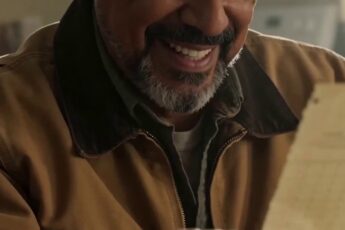
Daniel kept looking at the document on Marcus’s phone.
Amelia Hart Foundation.
The letters were clean, official, impossible to misunderstand.
A few minutes earlier, the garden had been full of soft music and champagne laughter. Now every guest seemed afraid to breathe too loudly. The white flowers beside the aisle moved gently in the Napa breeze, as if nothing important had happened.
But everything had.
Daniel looked at Amelia.
Not with anger first.
That came later, quietly.
At that moment, he looked at her with the shock of a man realizing that the ground beneath his life had been held up by someone he loved — and he had never known.
“You saved the company,” he said.
Amelia’s lips trembled.
“I helped it survive.”
Marcus laughed.
“What a modest way to describe paying off the emergency debt, securing payroll, and keeping the board from forcing a sale.”
Daniel turned toward him.
“You seem to know a lot.”
Marcus’s smile thinned.
“I know enough.”
Amelia lifted her chin.
“You know because you were looking for leverage.”
The garden shifted.
A murmur moved through the guests.
Daniel’s eyes narrowed.
“Leverage?”
Marcus slipped the phone into his jacket pocket.
“This isn’t about me.”
“No,” Daniel said. “You walked into my wedding uninvited. It became about you the second you stepped onto that aisle.”
For the first time, Marcus looked less certain.
Amelia swallowed.
“He came to me three weeks ago.”
Daniel turned back to her.
“What?”
“He knew about the foundation. He said if I helped him get a seat on your board after the wedding, he would keep quiet.”
Marcus scoffed.
“That is not what happened.”
Amelia looked at him, tears still in her eyes, but her voice steadier now.
“You said Daniel was too sentimental to run a company. You said if I truly loved him, I would put someone ‘rational’ near the controls. You said I could either make you useful or watch you make me suspicious.”
The words landed hard.
Daniel stared at Marcus as if a stranger had borrowed the face of someone he once trusted.
“You tried to blackmail her?”
Marcus lifted both hands.
“I tried to protect you from being owned.”
Daniel’s voice dropped.
“By trying to own me yourself?”
Marcus looked away for half a second.
That was enough.
Amelia pressed the ivory box to her chest.
“I should have told you.”
Daniel nodded once.
“Yes.”
The word was small.
But it hurt her more than a shout.
She accepted it.
“I know.”
Marcus tried to step back into control.
“Daniel, don’t let her turn this around. She lied to your face for six months.”
Daniel’s jaw tightened.
“She kept something from me. That is true.”
Amelia flinched.
He did not soften the sentence.
He looked at Marcus.
“But you didn’t come here because you care about truth. You came because truth was useful.”
A few guests lowered their eyes.
Marcus’s face hardened.
“You always did prefer pretty loyalty over hard reality.”
Daniel gave a bitter smile.
“And you always confused cruelty with intelligence.”
The garden went silent again.
At the front row, Daniel’s sister Claire covered her mouth. His mother sat very still, one hand over the pearls at her throat. She had watched him build the company from a garage office, watched him lose sleep, lose weight, lose confidence, and almost lose the last thing his father had believed he could create.
She looked at Amelia now, not with accusation, but with painful understanding.
Amelia noticed.
That nearly broke her.
Daniel turned to his lawyer, who was seated three rows back and had stopped pretending to be only a wedding guest.
“Evan, I want every communication between Marcus, the investors, and the board reviewed. Today.”
Marcus’s expression changed.
“You’re making a mistake.”
Daniel shook his head.
“I made one when I kept calling you a friend after you started treating my failure like an opportunity.”
Marcus’s face flushed.
“I warned people because the company was unstable.”
“You scared people because you wanted it cheaper.”
Marcus did not answer quickly enough.
Daniel’s mother closed her eyes.
Someone near the back whispered, “Oh my God.”
Amelia stared at the grass.
She had not wanted this.
Not a public scene.
Not humiliation.
Not Marcus exposed in front of guests.
She had wanted one quiet day where love was not measured in money, where her name did not enter the room before her heart did.
But secrets do not stay small just because they are kept for soft reasons.
Sometimes they grow in the dark until someone else finds them and uses them badly.
Daniel looked at the ivory box.
“What’s inside?”
Amelia’s fingers tightened around it.
“I wanted to give it to you after the ceremony.”
“May I see it?”
She nodded and handed it over.
Her hands were trembling.
Daniel opened the box.
Inside was a small silver frame.
Behind the glass was a business card.
The first one he had ever printed.
DANIEL REED
FOUNDER
REED & CO. SYSTEMS
The card was slightly bent at one corner. The ink had faded a little. The old logo looked almost embarrassingly simple compared to the clean branding his company used now.
Daniel stopped breathing.
He remembered throwing that card away.
Six months ago.
The week everything collapsed.
He had been alone in the office after midnight, sitting on the floor between packed boxes and unpaid invoices. He had opened the bottom drawer of his desk and found a stack of those first cards from the garage days. Back then, he had printed two hundred of them and handed them out like they were tickets to a future no one else could see.
That night, with bankruptcy papers waiting on his screen, he had dropped one into the trash and whispered:
“What a joke.”
He thought no one heard.
But Amelia had come by with food he never ate.
She must have seen it.
She had saved the card.
The thought was so intimate that it hurt.
He lifted the frame and saw something folded behind the card.
“What is this?”
Amelia wiped her cheeks.
“The framer found it tucked behind the card. I didn’t read it until yesterday. I wasn’t sure if I should put it in the box.”
Daniel carefully opened the back of the frame.
A small piece of paper slipped out.
The handwriting was familiar.
His father’s.
Daniel’s hand shook.
On the paper were only a few lines.
Danny,
Someday this card will look small to you. Keep it anyway.
Not because it proves you succeeded.
Because it proves you began.
If the world makes you feel foolish for needing help, remember that every good thing we built in this family took more than one pair of hands.
Don’t worship pride.
It is a lonely religion.
Dad.
Daniel covered his mouth.
His father had died three years before the company nearly failed. He had never seen the rescue. Never met Amelia. Never watched his son stand under wedding lights with a business card in one hand and the truth in the other.
And yet the words had arrived exactly where they were needed.
The garden blurred.
Amelia whispered:
“I’m sorry.”
Daniel looked up.
“For what part?”
Her face crumpled.
It was the right question.
Not cruel.
Not simple.
Honest.
“For hiding it,” she said. “For deciding what you could handle. For thinking I was protecting your dignity when I was also protecting my fear.”
Daniel held the old business card between his fingers.
“What fear?”
Amelia looked around the garden.
At the guests who knew her as graceful, generous, easy to admire.
At the family name that had opened doors before she learned how to knock.
At Marcus, whose entire plan depended on the idea that money could make love suspicious.
Then she looked only at Daniel.
“My whole life, people have either wanted access to my name or resented me for having it. They smiled differently when they found out. Asked differently. Loved differently. Or maybe not loved at all.”
She took a trembling breath.
“When I met you, you didn’t know about the foundation. You didn’t know my family history. You thought I was just Amelia, the woman who argued with you about terrible office coffee and told you your pitch deck had too many adjectives.”
Despite everything, Daniel almost laughed.
“It did not.”
“It absolutely did.”
One or two guests let out small, nervous laughs.
Then Amelia continued:
“You loved me before you knew what my money could do. And when your company started falling apart, I panicked. Not just for you. For us. I thought if I told you, every time you looked at me, you would see the rescue instead of the woman.”
Daniel said nothing.
Amelia’s voice broke.
“So I told myself silence was kindness. But part of it was cowardice.”
Daniel closed his eyes.
She had said the word before he could.
That mattered.
Marcus muttered:
“How touching.”
Daniel turned toward him.
“You should leave.”
Marcus looked around, still trying to gather dignity from faces that no longer offered it.
“You’ll regret trusting her.”
Daniel’s voice was quiet.
“I may struggle with what she did. I may be hurt for a long time. But I know the difference between someone who hid help out of fear and someone who revealed truth out of revenge.”
Marcus opened his mouth.
Daniel cut him off.
“Leave.”
No one stopped him this time.
Marcus walked back down the aisle he had entered through, but it no longer belonged to him. The same guests who had turned toward him in shock now watched him with the uneasy recognition people reserve for someone whose mask has slipped too far to lift back into place.
When the garden gate closed behind him, no one clapped.
No one cheered.
This was not that kind of victory.
The enemy had left.
The wound remained.
Daniel turned back to Amelia.
The officiant stood frozen under the flowers, unsure whether the ceremony still existed.
Amelia looked at Daniel and whispered:
“If you want to stop, I’ll understand.”
His mother made a small sound but said nothing.
Daniel looked at the business card again.
Then at the note from his father.
Then at Amelia.
“I don’t want to marry you because you saved my company.”
She nodded, tears falling again.
“I know.”
“And I don’t want to marry you as if you didn’t hurt me by hiding it.”
“I know.”
He stepped closer.
“But I also don’t want the first honest thing we do today to be running away from an ugly truth.”
Amelia stared at him.
Daniel held up the card.
“My father wrote that good things take more than one pair of hands. I think he would have liked what you did. I also think he would have told me to be honest about being angry.”
Amelia gave a broken laugh through tears.
“He sounds wise.”
“He was. Annoyingly.”
Daniel reached for her hand, then stopped before touching it.
“Who are you, Amelia? Tell me yourself. Not Marcus. Not a document. Not a foundation.”
She breathed in shakily.
“I’m Amelia Hart. I come from a family with more money than anyone needs and more silence than anyone admits. I’ve spent years trying to be good enough to not seem spoiled and small enough to not scare people away. I love you. I used my foundation to protect what you built because I believed in it, and because I believed in you. But I hid it because I was afraid you would feel owned. And that was wrong.”
Daniel nodded slowly.
Then he said:
“I’m Daniel Reed. I’m proud, sometimes stupidly proud. I built a company because I wanted to prove I could make something that would outlive my grief. When it almost failed, I felt like I was failing my father too. I love you. I’m grateful. I’m hurt. I don’t know yet how to hold all of that neatly.”
Amelia whispered:
“You don’t have to hold it neatly.”
“No,” he said. “But I do have to hold it honestly.”
She nodded.
The officiant cleared his throat carefully.
“Would you both like a moment?”
Daniel looked at Amelia.
“Do you still want to marry me today? Not because people are watching. Not because the flowers are paid for. Not because Marcus tried to destroy it.”
“Yes,” she said. “But only if we don’t pretend this is already fixed.”
“It isn’t.”
“Then yes.”
Daniel took her hand.
Not like he had held it before.
Not as if the world had become peaceful.
As if peace was something they would have to build with truth, argument, forgiveness, and time.
“Then we start with one rule,” he said.
“No more secret rescues,” Amelia whispered.
“No more secret rescues.”
“And no more pride that refuses help because it doesn’t know how to receive love.”
Daniel looked at her.
“That one is mostly for me.”
“It can be for both of us.”
The ceremony continued.
It was not perfect anymore.
The music came in two measures late. Someone in the back was crying loudly. A flower girl asked in a stage whisper whether the “mean man” was coming back. Daniel’s sister laughed and sobbed at the same time.
But when Daniel said his vows, his voice was clear.
“I promise not to make you smaller because your truth scares me,” he said. “And I promise not to call silence peace when it is only fear sitting quietly.”
Amelia’s lips trembled.
When her turn came, she held his hands and said:
“I promise not to decide alone what you deserve to know. I promise to help you without hiding the hand that reaches. And I promise to love you as a partner, not as a project.”
The guests did not clap immediately after the kiss.
For a second, they simply sat with what they had witnessed.
Then Daniel’s mother stood.
She clapped once.
Then again.
Soon the whole garden followed.
It was not the bright, easy applause of a perfect wedding.
It was warmer.
More human.
The applause people give when they know they have watched something almost break and choose to become honest instead.
At dinner, Daniel stood with the framed business card in his hand.
The silver caught the lights above the long table.
“I had a speech prepared,” he said.
A few guests smiled.
“It was charming. Probably too long. Amelia would have edited it.”
“I still might,” she said softly.
The garden laughed.
Daniel looked down at the card.
“This was the first business card I ever printed. I thought it made me look official. It did not. It made me look like a man who had spent too much money on embossed paper before earning enough to buy a decent office chair.”
More laughter.
Then his voice softened.
“Six months ago, I threw one away because I thought the dream was over. Amelia kept it. My father had written something behind it that I didn’t know I needed until today.”
He looked at Amelia.
“She saved my company. But more than that, she remembered what it meant to me at a moment when I was ready to pretend it meant nothing.”
Amelia lowered her eyes.
Daniel continued:
“She also kept a secret that should have been mine to know. Both things are true. Love does not become real by pretending only the beautiful part happened.”
The table went quiet.
“I am learning tonight that gratitude and hurt can sit beside each other. So can love and anger. So can forgiveness and time. Maybe marriage does not begin when everything is clean. Maybe it begins when two people stop sweeping the difficult things under flowers.”
Daniel lifted his glass.
“To truth before comfort. To help without ownership. To love that tells the whole story.”
This time, the applause came quickly.
After the wedding, life did not become simple.
The photos made it look simple.
Golden lights.
Vineyards.
White flowers.
Amelia’s veil moving in the evening wind.
Daniel smiling with his father’s card in his hand.
But photos do not show the hard parts.
They do not show the nights at the kitchen table when Daniel asked questions that hurt them both.
Who knew?
How much?
Why didn’t you tell me after the first transfer?
Did you think I would become cruel?
Did you think I was too proud to love you honestly?
Sometimes Amelia answered well.
Sometimes she cried.
Sometimes Daniel had to walk outside because his anger became sharper than his meaning.
But he came back.
That mattered.
One night, weeks later, he said:
“You took away my chance to say yes.”
Amelia closed her eyes.
“Yes.”
She did not say “I meant well.”
Not first.
She had learned that intention is not a bandage.
Later, when his voice softened, she said:
“I thought I was protecting you from humiliation. But I was also protecting myself from rejection.”
That helped more.
Marcus faced consequences slowly, then all at once.
Emails surfaced.
Messages to board members.
Calls to investors.
Proof that he had encouraged panic while quietly preparing his own offer. His dramatic entrance at the wedding became less heroic every time another document appeared.
He tried to claim he had only revealed the truth.
But truth used as a weapon leaves fingerprints.
Daniel’s company survived.
Not because Amelia wrote a check and made the pain vanish.
Because people worked.
Contracts were renegotiated.
Employees stayed.
Vendors extended terms after learning what had really happened.
At a company meeting, Daniel explained the rescue publicly. He showed the terms: no hidden ownership, no control rights, no board seat for Amelia, no private claim over his decisions.
An older engineer named Luis stood up after the presentation.
“So what you’re saying,” he said, “is she didn’t buy us. She bought us time.”
Daniel repeated that sentence to Amelia that night.
She cried into her tea.
The Amelia Hart Foundation changed too.
Amelia rewrote its investment rules. No more anonymous rescues unless safety required privacy. No more help that left people wondering who held power over them. Every emergency investment needed clear disclosure terms, dignity protections, and a path back to independence.
At the top of the new policy, she placed Daniel’s father’s sentence:
Don’t worship pride. It is a lonely religion.
The framed business card did not go into a vault.
Daniel kept it on his desk.
Not in the conference room where visitors could admire it.
On his actual desk, beside coffee stains, scribbled notes, and whatever snack Amelia left there when he forgot lunch.
The silver frame tarnished a little over time.
Daniel refused to polish it too much.
“Let it look like it has a job,” he said.
Amelia laughed.
“You say that about everything.”
“I married you, didn’t I?”
“Careful.”
He smiled.
It was not the same smile from before the wedding.
It was deeper.
Less innocent.
More earned.
A year later, they returned to the Napa estate.
No guests.
No orchestra.
No long tables.
Just the two of them walking through the garden in ordinary clothes while workers trimmed vines in the distance.
Daniel carried the framed card in a cloth bag.
Amelia raised an eyebrow.
“You brought it?”
“I thought it deserved to see the scene of the crime.”
She groaned.
“That is a terrible joke.”
“It’s been a year. I’m allowed one.”
They sat beneath the same lights, now unlit in the afternoon sun.
Daniel took out the frame and placed it between them on the table.
“Do you know what hurt most?” he asked.
Amelia looked at him.
“That I didn’t tell you?”
“Yes. But also that you thought my love was too fragile to survive your truth.”
Her face softened with shame.
“I had never seen money make love cleaner.”
“Then we’ll have to be our own example.”
“That sounds exhausting.”
“It is.”
“Do we get wine?”
“We are in Napa.”
She smiled.
He reached for her hand.
This time, there was no audience.
No Marcus.
No document on a phone.
Just the two of them and the truth, less dramatic now, but still present.
That was how real healing worked.
Not one big speech.
Not one public vow.
But a thousand smaller choices afterward.
To answer.
To ask.
To listen.
To apologize without demanding immediate forgiveness.
To receive help without shrinking.
To offer help without hiding.
Years passed.
People still talked about the wedding that stopped in the garden.
Some remembered Marcus walking down the aisle with his phone raised.
Some remembered Amelia’s face when the fund was exposed.
Some remembered Daniel holding the old business card like it was worth more than the vineyard, the flowers, and every crystal glass combined.
But the people who truly understood remembered something else.
They remembered that Daniel did not ask, “How much do I owe you?”
He asked for the truth.
They remembered that Amelia did not claim silence was pure love.
She admitted fear.
They remembered that a wedding almost broke under the weight of a secret — and then became stronger because two people refused to pretend the secret was small.
The business card stayed on Daniel’s desk for the rest of his career.
Employees joked that the company’s most valuable asset was a bent piece of paper in a silver frame.
Daniel always corrected them.
“No,” he said. “The most valuable asset is remembering why we began.”
And whenever Amelia came by the office, she touched the corner of the frame.
Not as a reminder of what she had bought.
As a reminder of what she had almost lost by hiding the truth.
The card was small.
Old.
A little faded.
But it had survived the trash.
Just like Daniel’s company.
Just like their trust.
Not untouched.
Not perfect.
But saved in a way that could finally be spoken aloud.
👇 Do you believe hidden help can still be love, or does love need the full truth to survive? Can trust grow stronger after a painful secret is finally brought into the light? Share what this story made you feel — because sometimes the greatest wedding gift is not what was saved, but the courage to stop hiding how it happened.