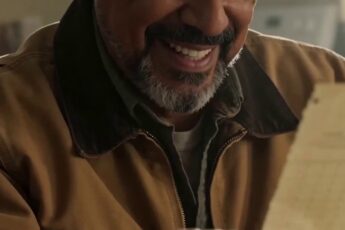
“She was never supposed to be found.”
Charles Whitmore said the words quietly.
But the ballroom heard them.
Every violin note died.
Every crystal glass stopped halfway to someone’s lips.
Even the waiters near the service doors froze with trays in their hands.
Anna stood in the center of the gala hall with one hand closed around the diamond flower pendant, her face pale beneath the warm chandelier light.
Eleanor stared at Charles.
For twenty years, she had lived beside this man inside the same mansion, eaten breakfast across from him, attended charity galas at his side, listened as he comforted her on anniversaries of the worst night of her life.
For twenty years, he had held her hand every time someone mentioned Rose.
And now he had said:
She was never supposed to be found.
Not “Who is this girl?”
Not “This is impossible.”
Not “Eleanor, are you sure?”
He had spoken like a man whose hidden door had just opened in public.
Eleanor pulled her arm away from his hand.
“What did you say?”
Charles blinked, as if only now realizing the room had heard him.
“I meant… this is cruel. Someone is playing a game with you.”
Anna took a step back.
“I’m not playing anything.”
Her voice shook, but she did not lower her head.
“I came here to work.”
Charles turned on her.
“Then work. Stop standing there like you belong in this room.”
The words cracked through the silence.
Eleanor’s face changed.
Not with grief.
With fury.
“Do not speak to her that way.”
Charles lowered his voice.
“Eleanor, you are emotional.”
For twenty years, that phrase had worked.
You are emotional.
You are grieving.
You are imagining things.
You need rest.
Let me handle it.
But this time Eleanor looked down at the diamond flower in Anna’s hand, then at the initials hidden beneath the smallest petal.
R.W.
Rose Whitmore.
Her daughter.
Her baby.
Her empty nursery.
Her unanswered prayers.
And suddenly grief stopped being a cage.
It became a key.
“No,” Eleanor said. “I am not emotional. I am listening.”
Charles looked around the room. Dozens of wealthy guests, donors, board members, family friends and old society names stared back at him.
His polished world had become a courtroom without warning.
He forced a laugh.
“This is absurd. A necklace proves nothing. Any jeweler could engrave initials.”
Eleanor turned toward the elderly man seated near the front table.
“Mr. Bell.”
The old jeweler, Arthur Bell, rose slowly with the help of his cane. His hands trembled with age, but his eyes were sharp.
“I made that pendant,” he said.
Charles went still.
Arthur stepped closer.
“I was commissioned by Mrs. Whitmore twenty years ago. A diamond flower with a hidden clasp. Two initials beneath the smallest petal. And a tiny imperfection inside the center stone.”
He looked at Anna.
“May I?”
Anna hesitated.
Eleanor’s voice softened.
“You don’t have to give it to anyone if you’re afraid.”
That almost broke Anna.
No one had said anything like that to her all night.
She nodded and carefully lifted the chain over her head.
Arthur Bell took the pendant as if it were something holy. He tilted it under the chandelier, opened the hidden clasp with a jeweler’s touch, and held the flower to the light.
His face paled.
“The center diamond has a feather-shaped inclusion,” he whispered. “Exactly where I remember it.”
He turned the pendant over.
“And there is the mark from my workshop.”
He looked at Eleanor.
“This is Rose Whitmore’s necklace.”
A sound moved through the ballroom.
Half shock.
Half shame.
Charles’s jaw tightened.
“That still doesn’t prove who she is.”
“No,” Eleanor said. “But you do.”
Charles stared at her.
She took one step closer.
“You knew before anyone said her name. You knew before Arthur opened the clasp. You knew because you said she was never supposed to be found.”
He looked away.
Only for a second.
That was enough.
Anna clutched the tray against her waist as if it could protect her.
“I don’t understand,” she whispered. “I don’t understand any of this.”
Eleanor turned toward her.
For the first time, the old woman did not see a waitress.
She saw tired eyes.
Careful hands.
A girl who had learned to apologize before anyone accused her.
A girl wearing the necklace Eleanor had once placed inside a velvet box for a baby too small to wear it.
“What did your foster mother tell you?” Eleanor asked gently.
Anna swallowed.
“That I was left at a church outside Boston. Wrapped in a blue blanket. She said there was a note, but she never let me read it. She kept the necklace hidden until I was six because she was afraid someone would take it.”
Eleanor’s hand flew to her mouth.
“The blanket was blue.”
Charles snapped:
“Enough.”
This time the word did not command the room.
It exposed him.
Eleanor turned slowly.
“What was in the nursery that night, Charles?”
He stared at her.
She stepped closer.
“What color was the blanket?”
He said nothing.
“Who knew the pendant was in the nursery drawer?”
Silence.
“Who told me the window had been forced open?”
Charles’s face hardened.
“Eleanor, stop.”
“No.”
The word rang through the ballroom.
Eleanor looked toward the security chief near the entrance.
“Lock the doors.”
Charles’s eyes widened.
“You can’t be serious.”
“I have never been more serious in my life.”
The security chief hesitated only a moment before signaling his team.
The great ballroom doors closed.
A few guests gasped.
Eleanor looked toward her personal assistant.
“Call Detective Morris.”
Charles went white.
“She retired.”
“She did. But she told me years ago that if I ever found something new, I should call her anyway.”
Anna’s knees weakened.
The shop owner—no, not shop owner; the gala manager, a kind woman named Marisol—stepped forward and took the tray from her hands.
“Sit down, honey.”
Anna whispered:
“I’m working.”
Marisol shook her head.
“Not anymore.”
She guided Anna into a chair near Eleanor’s table.
Anna sat like someone who did not trust chairs in rich rooms.
Eleanor noticed.
And it hurt.
Charles had spent twenty years sitting at the center of power.
Her daughter had learned to sit as if she might be thrown out.
Within thirty minutes, the gala had transformed completely.
Guests who had arrived for donations and speeches now stood in clusters, speaking in lowered voices. Some left messages for lawyers. Some pretended not to stare. Others watched Charles Whitmore with the fascinated horror people reserve for elegant men whose masks crack in public.
Then Detective Helen Morris arrived.
She was older now, gray-haired and retired, but the moment she entered, the room seemed to remember authority.
She looked first at Eleanor.
Then at Anna.
Then at Charles.
Her mouth tightened.
“I knew there was something wrong with that nursery.”
Charles said nothing.
Eleanor gripped the back of a chair.
“You said that to me once.”
“I did,” Helen replied. “And I was told to stop saying it.”
Every face turned toward Charles.
He forced a controlled breath.
“I had nothing to do with police procedure.”
Helen looked at him.
“No. You had people.”
The detective asked Anna about her childhood.
Anna answered carefully.
She had grown up with Ruth Keller, a foster mother who worked nights as a cleaner. Ruth had loved her in a hard, frightened way. She never spoke much about the night Anna arrived. She only said:
“If anyone rich ever asks about that necklace, don’t give it to them unless they cry before they reach for it.”
Eleanor covered her mouth.
Ruth was gone now. She had died the previous winter, leaving Anna with debts, a box of documents, and the necklace.
“I didn’t know what any of it meant,” Anna said. “I just needed work. My friend got me on the catering list tonight.”
Helen leaned forward.
“What documents?”
Anna looked nervous.
“At my apartment.”
Charles moved suddenly.
“Convenient.”
Eleanor’s voice turned icy.
“You are finished speaking to her.”
Helen nodded toward two officers who had arrived with her.
“Have someone accompany Ms. Anna to retrieve the documents. And keep Mr. Whitmore here.”
Charles laughed.
“You cannot detain me in my own gala.”
Helen smiled without warmth.
“This gala is at a hotel, Charles. And I can ask you questions until your lawyer arrives.”
His expression changed.
Only then did Eleanor understand the terrible truth:
He was not afraid of being accused.
He was afraid of what Ruth Keller had kept.
An hour later, Anna returned with a worn shoebox.
She held it against her chest the way she had held the tray.
Inside were scraps of a life stolen and hidden.
A faded blue blanket corner embroidered with a tiny white rose.
A photograph of baby Anna at about one year old, wearing the diamond flower pendant over pajamas.
A church intake note listing her as “female infant, approximately six months,” found in a basket at St. Agnes.
And an envelope addressed:
For Rosie, if the truth ever finds her.
Eleanor’s hands trembled so badly that Helen opened the envelope for her.
Inside was a letter written in Ruth Keller’s rough, uneven handwriting.
Rosie,
I am sorry I kept your name from you. I was scared. A man came to me twenty years ago with a baby, money, and a threat. He said the child had to disappear or people would die. He told me she came from a family that would destroy anyone who tried to return her.
I did not know what to believe. I only knew the baby was cold, hungry, and holding that necklace in her tiny fist like God himself had placed it there.
I took the money because I was poor. I kept the baby because I was human.
Years later I learned who you might be. By then I was afraid they would take you and call me a criminal. Maybe I was one. Maybe love does not clean the beginning of a sin. But I loved you.
The man who brought you had a scar across his left hand. He wore a gold signet ring with the Whitmore crest. He said, “Mr. Whitmore wants this finished.”
Forgive me if you can.
Ruth.
The room seemed to drop away beneath Eleanor.
She turned toward Charles.
His left hand was clenched.
Everyone knew that hand.
The scar across it came from a “kitchen accident” two decades earlier.
Eleanor had bandaged it herself.
A week after Rose vanished.
Helen’s voice was quiet.
“Show your hand, Charles.”
He did not move.
“Show it.”
Slowly, Charles opened his fist.
The scar was there.
White.
Thin.
Unmistakable.
Eleanor stared at it and remembered that night.
Charles coming home late.
Blood on his cuff.
The house in chaos.
The nursery empty.
His voice calm.
Too calm.
“They took her, Eleanor. Someone took her.”
And she had collapsed into his arms.
Into the arms of the man who had arranged the disappearance.
“Why?” Eleanor whispered.
Charles’s eyes finally met hers.
For one breath, he looked almost human.
Then pride returned.
“Because she wasn’t mine.”
The sentence struck the ballroom like a slap.
Eleanor went still.
Anna’s lips parted.
Helen’s eyes narrowed.
Charles continued, voice low and bitter now that the first wall had fallen.
“I found the letters. I knew about Edward Hale. I knew Rose was his child.”
Eleanor’s face drained of color.
Edward Hale had been dead for twenty-one years.
Her first love.
The man she had been forced to leave because the Whitmore family needed her marriage to Charles.
One night of grief and weakness before Charles married her anyway.
One child born into a house of polished lies.
Eleanor had never told him.
Or so she thought.
Charles smiled faintly.
“You thought I didn’t know. I knew before she was born.”
Eleanor’s voice cracked.
“And you let me love her for six months?”
“I watched you parade another man’s child through my house.”
“She was a baby.”
“She was a threat.”
Anna flinched.
Eleanor stepped between them.
Charles’s face twisted.
“My father would have cut me out if he knew. The Whitmore inheritance required an heir of my blood. Your little Rose would have exposed everything.”
Helen said coldly:
“So you staged a kidnapping.”
Charles did not answer.
He did not need to.
Eleanor whispered:
“You let me mourn her.”
Charles looked at the floor.
“You survived.”
Something in Eleanor broke open then.
Not loudly.
Not dramatically.
It broke with the quiet finality of a door closing forever.
“No,” she said. “I existed.”
Charles looked up.
Eleanor’s voice grew steadier.
“For twenty years, you let me live in a nursery I could not enter. You watched me light a candle every birthday. You held my hand when I cried. You gave speeches about loss at charity dinners funded with money you protected by stealing my child.”
Charles said nothing.
Eleanor looked toward Helen.
“I want him arrested.”
Charles scoffed.
“On what? A dead woman’s letter? A necklace? An old scar?”
Helen stepped forward.
“Kidnapping. Conspiracy. Fraud. Obstruction. And if half of what I suspect from that original investigation is true, several people around you are about to start talking to save themselves.”
Charles’s confidence flickered.
That was when an old man near the back of the room stood up.
His name was Victor Lane, former head of Whitmore security.
He was white-haired now, retired, almost forgotten.
“I’ll talk,” he said.
Charles turned sharply.
“Victor.”
Victor did not look at him.
He looked at Eleanor.
“I drove the car that night.”
A collective gasp moved through the ballroom.
Victor’s voice shook.
“I was told the baby was being taken somewhere safe because there had been threats. I believed it for one hour. Then I heard Mr. Whitmore tell his father, ‘No one will find her. The nurse has been paid. The woman in Boston will keep quiet.’”
Eleanor gripped the table.
Victor’s eyes filled.
“I should have told you. I was a coward. I had children. A mortgage. They threatened my family. That does not excuse me. It only explains the shape of my shame.”
Helen signaled to the officers.
Charles stepped back.
“This is insane. All of you are insane.”
But the officers moved in.
For the first time in his life, Charles Whitmore was touched by men who did not ask permission.
As they took him toward the door, he looked at Anna.
Not with remorse.
With resentment.
“You should have stayed lost.”
Anna stood.
Her hands shook.
But her voice did not.
“I was never lost,” she said. “I was hidden.”
Eleanor covered her mouth.
Charles was led out through the same ballroom doors he had entered as host.
No applause followed him.
Only silence.
The kind that does not honor a man leaving.
The kind that buries him.
The legal storm lasted months.
News channels called it “The Diamond Flower Case.”
Reporters camped outside the Whitmore mansion.
Old society friends issued statements about shock and sadness, as if they had not spent years admiring Charles’s coldness and calling it discipline.
Anna’s life was pulled into public view before she could understand her own story.
Eleanor hated that.
So the first petition her lawyers filed was not about inheritance.
Not about name.
Not about money.
It was about privacy.
“She has been stolen once,” Eleanor told them. “She will not be consumed now.”
DNA confirmed what the pendant, the letter, and Eleanor’s heart already knew.
Anna Keller was Rose Anna Whitmore Hale.
Eleanor’s daughter.
Edward Hale’s child.
The daughter Charles had erased to protect pride, fortune, and a bloodline that had never deserved the word family.
When the results arrived, Eleanor brought them to Anna herself.
Not to a press conference.
Not to a boardroom.
To Anna’s small apartment above a bakery, where the radiator hissed and the kitchen table had one uneven leg.
Anna opened the envelope.
Read the page.
Then set it down carefully.
“So it’s true.”
Eleanor sat across from her.
“Yes.”
Anna touched the pendant lying on the table between them.
“Does that mean I stop being Anna Keller?”
Eleanor’s eyes filled.
“No.”
Anna looked up quickly, afraid.
Eleanor reached for her hand, then stopped.
Still asking.
Always asking now.
Anna noticed and slowly placed her hand in Eleanor’s.
Eleanor whispered:
“Blood gives us a truth. It does not erase the people who fed us, held us, named us, or failed us in complicated ways.”
Anna looked away.
“Ruth lied to me.”
“Yes.”
“She loved me.”
“Yes.”
“I don’t know which one hurts more.”
Eleanor squeezed her hand gently.
“Sometimes both are true, and the heart has to learn to limp for a while.”
Anna cried then.
Eleanor did not try to make it beautiful.
She simply moved around the table and sat beside her daughter while the bakery downstairs closed for the night.
The reunion was not simple.
People wanted a fairy tale.
Mother finds daughter.
Daughter moves into mansion.
Bad man goes to prison.
Everything heals.
But real wounds do not care what makes a satisfying ending.
Anna did not know how to be Rose.
She did not know how to sleep in the Whitmore mansion without feeling like a guest in a museum.
She did not know how to accept clothes that cost more than her monthly rent.
She did not know how to call Eleanor “Mother.”
At first, she called her Mrs. Whitmore.
Eleanor never corrected her.
The first time Anna said “Eleanor,” the older woman cried later in the car, not in front of her.
The first time Anna said “Mom” by accident, she immediately apologized.
Eleanor shook her head through tears.
“You never have to apologize for a word that arrives before you are ready.”
Anna nodded.
Then did not say it again for three months.
And Eleanor waited.
Because love stolen for twenty years cannot be rebuilt by demanding comfort from the person who was stolen.
Charles’s trial uncovered more than one crime.
A private doctor had falsified records.
A nurse had been paid to sedate Eleanor after Rose disappeared.
A police report had been altered.
Two household staff members had been dismissed and threatened when they questioned why the nursery window showed no signs of forced entry.
Victor Lane testified.
So did others.
Some cried.
Some made excuses.
Some said they were young.
Some said they were afraid.
Eleanor listened from the courtroom, face still.
Anna sat beside her on the third day, wearing the diamond flower pendant over a simple black dress.
When Charles saw her, his expression hardened.
At sentencing, Eleanor spoke.
She stood with one hand on the podium and the other resting lightly on Anna’s shoulder.
“For twenty years, people told me time would soften grief,” she said. “But grief does not soften when it is built on a lie. It hardens. It becomes the room you live in.”
Charles stared forward.
Eleanor continued:
“You did not only take my child. You made me doubt my memory, my instincts, my motherhood. You turned my mourning into your alibi.”
Her voice trembled.
“But Rose lived. Not because of you. Not because of our name. She lived because a frightened woman chose to keep a baby warm. Because a necklace stayed around her neck. Because truth sometimes survives in the smallest hidden place.”
She turned slightly toward Anna.
“And because my daughter walked into a ballroom carrying water, and by simply existing, brought down a house of lies.”
Anna’s eyes filled.
Charles received a long sentence.
Not long enough for Eleanor.
Not enough for Anna.
No number of years could return first steps, birthdays, lullabies, school mornings, scraped knees, lost teeth, graduations that never happened.
But the record changed.
Rose Whitmore was no longer missing.
Charles Whitmore was no longer grieving husband and father.
He was what he had always been beneath the suit.
A man who had hidden a child to protect himself.
After the trial, Eleanor did something that shocked the entire Whitmore board.
She resigned from every ceremonial charity Charles had used to polish the family name.
Then she created The Diamond Flower House.
Not a grand foundation for society applause.
A legal and emotional support center for children separated from families by coercion, private deals, falsified records, and powerful people who believed money could rewrite blood.
Anna helped choose the name.
At first she resisted.
“I don’t want to be a symbol.”
Eleanor nodded.
“Then we won’t make you one. We’ll make the pendant a reminder.”
In the entrance hall of the center, under glass, lay a replica of the diamond flower. The original stayed with Anna.
The plaque read:
THE DIAMOND FLOWER
Made for Rose Whitmore.
Hidden with her.
Carried by Anna Keller.
Returned not by wealth, but by truth.
Below it, Anna added one sentence herself:
A child is not lost because powerful people stop looking.
Eleanor cried when she saw it.
Anna pretended not to notice.
“Too much?” Anna asked.
“No,” Eleanor whispered. “Exactly enough.”
Years passed.
Anna kept working for a while.
Not as a waitress at galas.
But at a small café where no one cared about the Whitmore name. She needed normal mornings. Tips. Coffee stains. People who asked for extra sugar without knowing her history.
Eleanor did not understand at first.
Then she did.
Normal life was not something Anna lacked because she was poor.
It was something she had earned after being turned into a headline.
So Eleanor learned not to rush.
They met every Sunday.
At first for coffee.
Then for walks.
Then for dinner.
Sometimes they talked about Rose.
Sometimes about Ruth.
Sometimes about nothing important at all.
Anna learned that Eleanor hated overcooked carrots, loved old mystery novels, and could not keep houseplants alive despite owning three conservatories.
Eleanor learned that Anna took her tea too strong, folded napkins when nervous, hated being surprised, and hummed when she washed dishes.
One Sunday, Anna brought a shoebox.
Inside were Ruth’s things.
A worn prayer book.
A grocery list.
A photograph of Anna at seven with missing front teeth.
The blue blanket corner.
“I don’t want to hate her,” Anna said.
Eleanor held the photograph carefully.
“Then don’t.”
“She took money.”
“Yes.”
“She kept me.”
“Yes.”
“She loved me.”
“Yes.”
Anna sat with that.
“Can I put her picture somewhere in the Diamond Flower House?”
Eleanor looked at her daughter.
“Of course.”
So Ruth Keller’s photograph was placed in a quiet room, not as a saint, not as a villain, but as a human being who began with fear and ended with love.
The plaque beneath it said:
RUTH KELLER
She kept a secret she should have told.
She also kept a child alive.
Truth must be whole, or it becomes another lie.
That became one of the most visited corners of the center.
Because many lives are not divided cleanly into heroes and monsters.
Some people harm and protect in the same lifetime.
That does not erase the harm.
It does not erase the protection either.
On Anna’s thirtieth birthday, Eleanor gave her the velvet box from the original jeweler.
Inside was not the pendant.
Anna already wore it.
Inside was a handwritten letter.
My dearest Anna, my Rose,
I lost your first twenty years because others chose fear, pride, and silence. I will not spend the next years trying to force time to obey me. You owe me no version of daughterhood that comforts my grief.
Come close when you can. Step back when you need. Use any name for yourself that feels true.
You were Rose before you knew it. You were Anna before I found you. You are not half of either. You are whole.
Love,
Eleanor.
Anna read it three times.
Then she looked up.
“Mom.”
Eleanor froze.
Anna’s eyes filled.
“Just for today, maybe.”
Eleanor laughed and cried at the same time.
“Today is more than I ever thought I’d have.”
From then on, the word came and went.
Mom.
Eleanor.
Sometimes nothing, just a hand squeeze across the table.
They let it be alive.
They did not pin it down.
Charles died in prison years later.
A lawyer called Eleanor first.
Then Anna.
Anna sat with the news quietly.
Eleanor asked:
“What do you feel?”
Anna thought for a long time.
“Less than I expected.”
Eleanor nodded.
“Sometimes monsters take up less room after the door is locked.”
Anna touched the pendant.
“I don’t forgive him.”
“You don’t have to.”
“Do you?”
Eleanor looked toward the window.
“No. But I no longer live in the room he built for my grief.”
Anna reached for her hand.
That was enough.
Many years after the gala, the Whitmore mansion opened one wing to the public as part of The Diamond Flower House.
The nursery was restored.
Not as it had been on the night Rose vanished.
As it should have been.
Warm.
Bright.
With the blue blanket framed on one wall and a small plaque beside the empty cradle:
ROSE’S ROOM
For every child hidden by lies.
For every mother told not to trust her grief.
For every truth waiting beneath the smallest petal.
Anna stood in that room on opening day.
Eleanor beside her.
Arthur Bell, the jeweler, now very old, sat in a chair near the door.
He had made one final piece before retiring: a simple silver pin shaped like a flower, given to every family who found help through the center.
A little girl visiting with her grandmother pointed at Anna’s necklace.
“Is that the real diamond flower?”
Anna knelt.
“Yes.”
“Did it bring you home?”
Anna smiled gently.
“It helped.”
“What else helped?”
Anna looked at Eleanor.
Then at Ruth’s photograph down the hall.
Then at the people filling the house.
“People who finally told the truth.”
The little girl thought about that.
“My grandma says truth is scary.”
Anna nodded.
“It can be.”
“Then why tell it?”
Anna touched the pendant.
“Because lies are scarier when you have to live inside them.”
The girl accepted that with the seriousness of children who understand more than adults expect.
That evening, after the visitors left, Anna and Eleanor stood alone in the old nursery.
The sun was setting beyond the garden.
White roses moved outside the window.
Eleanor whispered:
“I used to dream of this room every night.”
Anna looked at the cradle.
“I used to dream of a blue room. I never knew why.”
Eleanor turned to her.
Anna smiled sadly.
“Maybe the body remembers what the mind loses.”
Eleanor could not speak.
Anna took her hand.
For a long time, they stood there as mother and daughter.
Not repaired.
Not untouched.
But together.
The world remembered the gala as the night a waitress exposed Charles Whitmore.
The tabloids remembered the broken champagne glass, the diamond pendant, the shocking confession.
Society remembered the scandal.
But Eleanor remembered something else.
Anna standing in a plain uniform, tired from work, apologizing for a crime she had not committed.
Anna saying, “It’s mine. I didn’t take it.”
Because that was the first wound the world had given her before the truth even came out:
the assumption that a girl like her could only possess beauty by stealing it.
Years later, Eleanor would tell the story differently.
She would say:
“My daughter did not return because she wore diamonds. She returned because she survived without knowing she was loved.”
Anna would correct her gently.
“I knew I was loved. Ruth loved me.”
And Eleanor would nod.
“Yes. She did.”
The truth, they learned, did not need to be simple to be sacred.
On the twentieth anniversary of the night Anna walked into the gala, The Diamond Flower House held a quiet ceremony.
No champagne.
No society photographers.
Just families, staff, old case files closed at last, and white roses from the garden.
Anna spoke.
She wore a simple dark dress and the diamond flower pendant.
“I spent many years thinking I was someone people had left behind,” she said. “Then I learned I had been hidden. Those are not the same.”
The room was silent.
“Being found did not magically heal me. It gave me questions. Anger. Grief. A name I did not know what to do with. A mother I had missed without knowing I was allowed to miss her.”
Eleanor sat in the front row, crying openly.
Anna continued:
“But it also gave me truth. And truth, even when it hurts, gives you the ground back under your feet.”
She touched the pendant.
“This flower was made for Rose. It was carried by Anna. It belongs to both.”
Then she looked at Eleanor.
“And so do I.”
Eleanor covered her face.
Everyone stood.
Not for wealth.
Not for the Whitmore name.
For a waitress who had walked into a ballroom with water glasses and left carrying a buried history into the light.
The old woman had dropped her glass because of a necklace.
But what shattered that night was not crystal.
It was a lie.
A man thought he could erase a child by changing her name, hiding her records, and trusting that money would outlive memory.
He was wrong.
A tiny diamond flower had remembered.
A foster mother’s letter had remembered.
A retired detective had remembered.
An old jeweler had remembered.
A grieving mother had remembered.
And Anna, even without knowing why, had carried the truth close to her heart until the night it finally opened.
Sometimes the smallest thing in the room is not small at all.
Sometimes a pendant is a witness.
Sometimes a waitress is a daughter.
And sometimes the person who was “never supposed to be found” becomes the reason every hidden door in a powerful house begins to unlock.
💬 Do you think Eleanor was right to confront Charles publicly, or should she have waited until they were alone? Can love survive twenty years of stolen truth? Share what this story made you feel — because sometimes the smallest jewel carries the memory an entire family tried to bury.