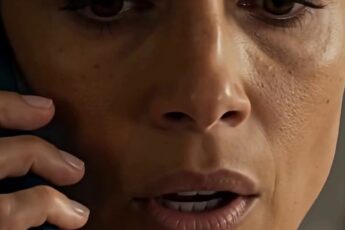
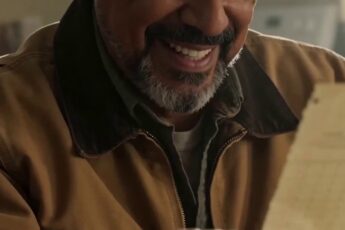
Noah stared at the cufflink in the velvet box.
It was ordinary to anyone else.
Plain gold.
A little scratched along one edge.
No diamond. No family crest. No dramatic shine.
But he knew it.
He knew the tiny dent near the clasp from the night he had dropped it on the bathroom tile before his first investor dinner. He knew the faint line across the back, made years earlier when his father had worn it to work every day until one of the pair finally broke.
Noah had pawned it during the worst week of his life.
Not because it was worth much.
Because he had needed to make payroll and had already sold his watch, his old truck, his coffee table, and nearly every piece of pride he owned.
He remembered standing under a fluorescent light in a pawnshop outside Austin, pretending the cufflink was “just something old” while the man behind the counter weighed it like scrap.
He had walked out with less money than he needed and more shame than he could carry.
And now Emma had brought it back.
Not as a trophy.
Not as proof that she had saved him.
As if she were placing a small missing piece of him gently into his hand.
Noah looked at her.
“You found this?”
Emma nodded, tears caught in her lashes.
“I went back to the pawnshop after you told me about it.”
“I never told you where it was.”
“You mentioned the neon sign once. The one with the broken guitar.”
He almost laughed.
He almost broke.
He had forgotten that.
She had not.
Julian Price stepped forward, phone still raised like he expected the moment to belong to him.
“Touching. Very touching. But she still hid the truth.”
Noah did not look away from Emma.
“Yes,” he said.
Emma flinched.
The word was not cruel.
That made it harder.
It was simply true.
Noah closed the velvet box around the cufflink and held it in both hands.
Then he turned to Julian.
“And you waited until my wedding to use it.”
A murmur moved through the guests.
Julian’s mouth tightened.
“I waited until it mattered.”
“No,” Noah said. “You waited until it hurt most.”
The garden went still again.
The band had stopped completely now. A violinist stood near the oak tree with her bow lowered. Glasses of champagne sat untouched in guests’ hands. Emma’s mother was crying quietly in the second row. Noah’s sister looked like she wanted to throw something at Julian but had decided, for once, that silence might be more dangerous.
Julian gave Noah a thin smile.
“You can be angry with me if you want. It won’t change the document.”
“No,” Noah said. “It won’t.”
Emma wiped her cheek.
“Noah—”
He lifted a hand, not to silence her, but to steady himself.
“I need to ask him something first.”
Julian’s smile faded slightly.
Noah stepped down from beneath the canopy of lights.
“Why do you have that file?”
Julian shrugged.
“I have contacts.”
“That wasn’t my question.”
Julian’s eyes narrowed.
Noah continued:
“Northline was confidential. The funding terms were private. My lawyer, my CFO, and the board knew the trust name, not the controlling donor. So why do you have Emma’s name on your phone?”
Julian glanced toward the guests.
For the first time, he seemed to remember that public scenes can cut in more than one direction.
“I did my research.”
Emma’s voice came quietly from behind Noah.
“He came to me last week.”
Noah turned.
Emma held herself very straight now, both hands around the empty velvet box ribbon.
“He said he knew. He said if I convinced you to give him a consulting contract again, he wouldn’t tell you before the wedding.”
Julian laughed sharply.
“That is not what happened.”
Emma looked at him.
“It is exactly what happened.”
Noah’s face changed.
“You tried to blackmail her?”
“I tried to make sure you knew the kind of woman you were marrying.”
Emma’s voice trembled, but her words did not.
“No. You tried to sell silence first. When I refused, you wrapped revenge in truth.”
Someone in the back whispered, “Oh my God.”
Julian’s jaw tightened.
“You’re very good at sounding innocent.”
Noah took another step toward him.
“Careful.”
The word was soft.
Julian heard the warning inside it.
Still, he pushed.
“She saved your company without telling you. She let you stand in front of your employees and talk about resilience while her money kept the lights on.”
Noah’s hands closed around the blue box.
“Yes,” he said again. “And we will talk about that.”
Emma lowered her eyes.
Noah looked at Julian.
“But you stood beside me while the company was bleeding and told two investors I was too emotional to survive the quarter.”
Julian’s face went still.
Noah kept going.
“You told Graham Capital to wait until we collapsed so they could buy our software assets cheap.”
Julian lifted his chin.
“That was a realistic assessment.”
“You were my consultant.”
“I was trying to preserve value.”
“You were trying to position yourself for the sale.”
The guests stopped pretending not to listen.
Julian looked around, and this time he did not find admiration.
He found recognition.
People were beginning to understand that he had entered the garden with one secret because he hoped no one would ask about his own.
Noah turned toward his lawyer, who was seated near the aisle with a face that had gone from shocked wedding guest to fully alert professional.
“Rachel, I want every communication between Julian, Graham Capital, the board, and any investor who pulled out six months ago. Tonight.”
Julian scoffed.
“You’re making a mistake.”
Noah looked at him.
“No. I made a mistake when I confused your appetite for control with business sense.”
Julian’s face flushed.
“I kept you alive for months.”
“No,” Noah said. “You kept circling.”
The words landed.
Julian pointed at Emma.
“And she kept lying.”
Noah turned back to Emma.
His expression softened, but did not become easy.
“She kept something from me,” he said. “That is true.”
Emma nodded through tears.
Noah looked at Julian again.
“But you came here because truth was useful to your revenge. That makes you honest by accident, not by character.”
Julian opened his mouth.
Noah did not let him speak.
“Leave.”
The wedding coordinator, pale and trembling, signaled to two security staff near the side gate.
Julian laughed once, but the sound had lost its power.
“You’ll regret this.”
Noah looked at the phone in Julian’s hand.
“I may regret many things. Letting you keep speaking at my wedding won’t be one of them.”
Julian tried to walk out with dignity.
He almost succeeded.
But near the back row, Noah’s grandmother, a woman who had said very little since arriving and had seen enough men mistake cruelty for brilliance, leaned toward him and said:
“Son, if you bring fire to a garden, don’t be surprised when people notice the smoke on your own coat.”
A few guests gasped.
Julian left without answering.
When the gate closed behind him, no one applauded.
This was not victory.
It was only the removal of a weapon from the room.
The wound remained.
Noah turned back toward Emma.
For a moment, she looked fourteen instead of twenty-nine. Not in age, but in fear. Like someone waiting to find out if honesty had arrived too late.
“If you want to stop,” she whispered, “I’ll understand.”
His mother made a small sound, but did not interrupt.
The officiant stood under the canopy holding the ceremony book with both hands, clearly unsure whether vows still belonged in a moment like this.
Noah looked down at the velvet box.
“Why this cufflink?”
Emma blinked.
“What?”
“You could have given me anything. Why this?”
She pressed her fingers together.
“Because you told me once that your father owned only one nice pair. That he wore them to every important meeting, even when the rest of his shirt was old. You said when he gave you one, he told you a man doesn’t need a matching set to remember who he is.”
Noah’s throat closed.
He remembered that night.
He had been half-asleep on Emma’s couch, exhausted from board calls, telling stories because grief came out more easily when the lights were off.
Emma continued:
“When you pawned it, you said it was only metal. But your voice changed.”
Noah looked away.
“I hated that week.”
“I know.”
“I hated needing help.”
“I know.”
“You knew that and still gave it anonymously.”
Emma nodded.
“Yes.”
“Because you thought I couldn’t handle knowing it was you.”
She closed her eyes.
“Yes.”
The truth stood between them.
Not dressed up.
Not softened.
Noah took a slow breath.
“That hurts.”
A tear slipped down her face.
“I know.”
“No, Emma. I need you to hear me. It hurts that you helped me. It hurts that I needed it. It hurts more that you decided I could not know.”
She pressed a hand to her chest.
“I hear you.”
He waited.
She did not say “but.”
That mattered.
She did not rush to explain.
That mattered even more.
Finally, she said:
“I was afraid.”
“Of me?”
“Of what shame had already done to you.”
Noah’s face tightened.
Emma spoke carefully now, as if every word had to earn its place.
“You were selling pieces of yourself and calling them inventory. The truck, the watch, the cufflink, your old books, the drafting table your dad helped you build. Every time you said, ‘It’s just stuff,’ you looked like you were burying another part of your life.”
Noah looked down at the box.
She was not wrong.
That made it harder.
“I told myself if the money came through a trust, you could breathe before you had to face it,” Emma said. “I told myself I was protecting your dignity. But I was also protecting myself.”
His eyes lifted.
“From what?”
“From becoming another thing you associated with failure.”
The garden felt very still.
Emma’s voice broke.
“All my life, people have changed when they learn about the trust. Some get eager. Some get resentful. Some start measuring every kindness like it has a price tag. When I met you, you thought I was just Emma, the woman who ruined your barbecue sauce recipe and made you watch old documentaries when you couldn’t sleep.”
A small, strained laugh moved through some of the guests.
Noah almost smiled.
“You did ruin the sauce.”
“It needed acid.”
“It needed rescue.”
“So did you.”
The moment hung there.
Then Emma flinched at her own words.
“I’m sorry.”
Noah surprised himself by laughing once.
Not because the pain was gone.
Because the truth had room for a little air.
Emma continued:
“I loved being ordinary with you. I loved that you didn’t know my grandfather’s name, didn’t know what the trust could do, didn’t treat me like a door to somewhere else. And when the company started collapsing, I thought if I told you, I would lose that. I thought you would look at me and see Northline before Emma.”
Noah’s anger softened into something heavier.
“You should have let me decide what I saw.”
“Yes.”
“You should have trusted me.”
“Yes.”
“You should have trusted us.”
She nodded.
“Yes.”
The repetition hurt.
But it was clean.
Noah turned the cufflink over in his hand.
The gold caught the lights above them.
Then he looked at Emma and asked:
“Who are you?”
She blinked.
“Noah…”
“Not Julian’s version. Not a donor signature. Not the trust. You. If we keep going tonight, I need to hear it from you.”
Emma wiped her cheeks.
Then she stood straighter.
“I’m Emma Claire Whitaker. My grandfather left me Northline, and for years I’ve tried to pretend money was just paperwork because I was scared of what it did to rooms. I am not ordinary, even though I wanted to be loved as if I were. I love you. I used the trust to give your company time because I believed in what you built and because I could not watch you lose everything your father helped you start.”
Her voice shook, but she did not look away.
“And I hid it because I was afraid your pride would turn my help into humiliation. That was unfair to you. I am sorry.”
Noah looked at her for a long moment.
Then he answered his own question too.
“I’m Noah Bennett. I’m proud. Too proud. I built that startup because I wanted to prove grief could become something useful. When it nearly failed, I felt like I was losing my dad all over again. I love you. I’m grateful. I’m hurt. I don’t know how to make those feelings behave politely tonight.”
Emma whispered:
“They don’t have to be polite.”
“No,” he said. “But they do have to be honest.”
She nodded.
The officiant cleared his throat softly.
“Would you both like time?”
Noah looked at the rows of guests, then at Emma.
A private room would have been easier. But the secret had been dragged into the light here. And something in him knew that leaving now would let shame walk beside them.
He held up the cufflink.
“One rule.”
Emma took a shaky breath.
“No more secret rescues.”
“No more secret rescues,” Noah said. “And no more pride that makes love afraid to help.”
“That one is yours,” she whispered.
“It can still live in our house.”
She let out a tearful laugh.
Then he reached for her hand.
Not as if everything were fixed.
Not as if the secret had become harmless.
But as if they were choosing to start the hard part together.
“Do you still want to marry me today?” he asked. “Knowing this isn’t solved just because I understand why?”
Emma looked at him.
“Yes. But only if we don’t pretend understanding is the same as healing.”
Noah nodded.
“Then yes.”
The ceremony continued.
It was not perfect anymore.
The band missed its cue. Someone in the third row was crying too loudly. A little cousin whispered, “Is the mean phone man gone?” and the whole front row broke into a shaky laugh.
But when Noah said his vows, his voice was steady.
“I promise not to make my pride more important than our truth,” he said. “I promise to tell you when I am hurt instead of turning silence into a wall. And I promise to receive love as love, not as a debt.”
Emma’s hands trembled in his.
When she spoke, her voice was soft but clear.
“I promise not to decide alone what you can survive. I promise not to hide my help because I am afraid of being seen. And I promise to love you as a partner, not as a man I must secretly protect from his own life.”
Noah’s mother covered her face.
His grandmother nodded once, as if those were vows worth hearing.
When they kissed, the applause did not come immediately.
For one second, everyone sat with the truth.
Then Noah’s grandmother clapped.
One sharp clap.
Then another.
Soon the whole garden joined.
Not loud at first.
Not polished.
But warm.
Human.
The kind of applause people give when they have watched something almost break and choose honesty instead.
At dinner, Noah stood with the gold cufflink in his palm.
“I had a speech,” he began.
A few people smiled through damp eyes.
“It was lighter than this one. It had a joke about Austin heat, my dancing ability, and Emma’s war against under-seasoned food.”
Emma murmured:
“That war continues.”
The guests laughed.
Noah looked down at the cufflink.
“This belonged to my father. He gave me one because he lost the other and said a man could still remember who he was with half a pair.”
His voice softened.
“I pawned it when I thought my company was over. I told myself it was just metal. Emma knew it wasn’t.”
The room went quiet.
“She bought it back. She also used her trust to save my company. The first act was tender. The second was generous. The silence around the second was painful.”
Emma lowered her eyes, but he waited until she looked up.
“All three things can be true. Love can help. Love can hurt. Love can be afraid. Marriage, I think, begins when people stop pretending only one truth fits at a table.”
His grandmother lifted her glass.
“To bigger tables, then.”
This time the laughter was real.
Noah raised the cufflink.
“To help without ownership. To gratitude without shame. To truth before pride. And to the people who give us back what we were ready to throw away.”
After the wedding, life did not become simple.
The photos made it look simple.
The canopy lights.
Emma’s dress.
Noah smiling with the cufflink in his hand.
But photographs do not show the kitchen table at midnight.
They do not show trust being rebuilt in conversations that circle the same wound more than once.
Noah asked questions.
Who knew?
Why didn’t you tell me when the first payment cleared?
Did you think I would resent you?
Did you think I was that fragile?
Sometimes Emma answered well.
Sometimes she cried.
Sometimes Noah’s voice got too sharp, and he had to stop before his pain became punishment.
One night, he said:
“You gave me space to stand, but you took away my chance to choose how I stood.”
Emma closed her eyes.
“Yes.”
She did not say “I meant well.”
Not first.
Later, when he had calmed enough to hear her, she said:
“I thought I was protecting your dignity. But I was also protecting myself from being rejected for having power.”
That mattered.
Noah learned too.
He learned that pride can make love tiptoe.
He learned that refusing help can turn into a quiet form of control.
He learned that being rescued does not mean being owned.
Emma learned that secret generosity can still become a locked room if no one is allowed to open the door.
Julian Price faced consequences in the slow, public way people hate most.
Emails surfaced.
Messages to investors.
Proof that he had fed panic while positioning himself to profit from the collapse. His dramatic interruption became less noble with every document.
He tried to say he had only exposed the truth.
But truth used as revenge leaves fingerprints.
Noah’s startup survived.
Not because Emma’s trust erased every problem.
Because the team worked.
Vendors renegotiated.
Employees stayed.
Clients returned when the full story came out.
At the first all-hands meeting after the wedding, Noah explained the Northline investment.
No hidden control.
No board seat for Emma.
No claim over the company’s direction.
No secret ownership of his choices.
An older developer named Carla raised her hand.
“So she didn’t buy us,” she said. “She bought us time.”
Noah repeated that sentence to Emma that night.
She cried into a bowl of chili she had over-seasoned out of nerves.
“Too much acid?” he asked.
She laughed through tears.
“Don’t start.”
Northline changed too.
Emma rewrote the trust’s emergency investment policy.
No more anonymity unless someone’s safety required it.
No more help that left the receiver unsure where power lived.
No more rescue that confused dignity with secrecy.
At the top of the new policy, she wrote:
Love should not feel like a loan. Help should not hide its name.
The cufflink did not stay in a safe.
Noah kept it on his desk in a small wooden dish beside paperclips, old receipts, and the cheap pen he preferred over expensive ones.
On hard days, he held it.
Not because it solved anything.
Because it reminded him that something pawned in shame could be returned in love, but still needed truth to stay whole.
Years later, when Noah’s company moved into a larger office, Emma gave him the matching cufflink.
He stared at it.
“I thought it was lost.”
“It was,” she said. “Then your grandmother found it in an old sewing tin and made me swear not to tell you until you stopped being dramatic enough to deserve it.”
Noah looked toward his grandmother, who was sitting in the corner with tea.
She smiled.
“I stand by that.”
Emma placed both cufflinks in his palm.
“One was given back when you needed healing. One is given now because you learned to receive without shrinking.”
Noah looked at her.
No guests.
No Julian.
No interrupted vows.
Just the woman he loved, telling the truth with open hands.
He pulled her close.
People still talked about the Austin wedding that stopped before the vows.
Some remembered Julian in the back row with his phone.
Some remembered Emma’s face when the Northline document appeared.
Some remembered Noah holding a single gold cufflink like it weighed more than the whole estate.
But the people who truly understood remembered something else.
They remembered that Noah did not ask:
“How much do I owe you?”
He asked who she was.
They remembered that Emma did not hide behind the beauty of her motive.
She admitted fear.
They remembered that love did not become weaker when the secret came out.
It became more difficult.
More honest.
More capable of lasting.
The cufflink never became a public trophy.
It stayed on Noah’s desk.
Small.
Scratched.
Ordinary.
But on the inside, where only he and Emma knew to look, they later had one line engraved:
Given back, not bought.
And every time Noah touched it before a hard meeting, he remembered the day he almost confused pride with dignity.
And the woman who loved him enough to save what mattered.
Then brave enough, finally, to tell the truth.
💬 Do you believe hidden help can still be love, or does love need the full truth to survive? Can pride and gratitude learn to sit at the same table? Tell us what this story made you feel — because sometimes the smallest wedding gift carries the whole truth two people were afraid to say.