For twelve years, I had lived with the shape of Amelia’s absence.
It was in the empty chair at Sunday breakfast.
In the birthday candles I stopped buying but still counted in my head.
In the way I paused before passing the girls’ section in department stores, even though my daughter would have been a grown woman by then.
People told me grief changed with time.
They were wrong.
Grief does not leave.
It learns the layout of your house.
It sits quietly in corners.
It waits for ordinary things — a song, a smell, a silver bracelet — and then it stands up again.
That evening, it stood up at my kitchen table with six words written on a strip of paper.
Mom… I am still upstairs.
The kettle had boiled dry before I moved.
The kitchen smelled faintly of metal and burnt heat. The loaf of bread lay on its side. Cough drops had rolled under the sugar bowl. My hands were wrapped around Amelia’s bracelet so tightly the moon charm left a mark in my palm.
For twelve years, I had visited a grave.
For twelve years, I had brought flowers.
For twelve years, I had whispered to a stone.
And now the only thought in my mind was this:
What if she heard me all those years and I never heard her?
I wanted to run back to the old house.
I wanted to pound on the door until my fists bled.
But I was not brave in the way movies make mothers brave.
I was old.
I was shaking.
And two uniformed men had already warned me to go home.
So I did the only thing my fear allowed.
I called the one person in town who had never believed Amelia’s case felt right.
Thomas Reed.
He had been my husband’s closest friend before cancer took Robert from me. Years ago, Thomas had been a detective in another county. Retired now, widowed too, he spent most afternoons repairing clocks and pretending his bad hip did not hurt.
When he answered, I could barely speak.
“Evelyn?” he said. “What happened?”
I looked at the bracelet on the table.
Then at the strip of paper.
“Amelia is alive.”
There was silence.
Not disbelief.
Not pity.
Just stillness.
Then Thomas said, “Lock your doors. Do not call the local station. I’m coming.”
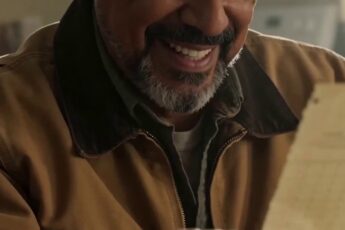
He arrived twenty minutes later in an old brown coat, carrying a flashlight, a folder, and the grim expression of a man who had been waiting twelve years for the missing piece.
I opened the door before he knocked.
He stepped inside, saw my face, and did not ask if I was sure.
That is why I trusted him.
He sat at the kitchen table and examined the bracelet under the lamp.
His hands were steady.
Mine were not.
“This is Amelia’s?” he asked.
“Yes.”
“The one they said was buried with her?”
I nodded.
“I fastened it on her wrist the morning she left. I remember because the clasp was stiff. She joked that if she became famous one day, I could say I had jewelry trouble with a celebrity.”
My voice broke on the last word.
Thomas picked up the strip of paper with tweezers from his old evidence kit.
“Do you recognize the handwriting?”
I stared at the uneven letters.
“No. Not exactly. It looks… weaker. Smaller.”
“After twelve years, it might.”
I covered my mouth.
The thought of Amelia’s hand writing those words, hidden somewhere upstairs in that house, made the room tilt.
Thomas looked at me carefully.
“Tell me everything you saw.”
So I did.
The empty house.
The voice.
The porch.
The officer.
The other man in the hallway.
The warning.
When I described the uniform, Thomas’s jaw tightened.
“Reeves,” he said.
“You know him?”
“I know enough.”
Officer Daniel Reeves had been young when Amelia disappeared. Back then, he was not the calm man on the porch. He was a deputy with a sharp smile, always around the families with money, always eager to be useful to people above him.
Thomas pulled a yellowed file from his folder.
“I kept copies,” he said.
My heart thudded.
“Copies of what?”
“Things nobody wanted me to keep.”
Inside were old newspaper clippings, handwritten notes, and photographs from twelve years earlier. Amelia’s missing-person report. The crash report. The report identifying the body.
I had seen some of it before.
Enough to know the official story.
Amelia had gone on a weekend trip with two friends.
There had been a storm.
A car had gone off a rural road into a ravine.
One body was recovered badly burned.
The police told me it was Amelia.
They told me not to look.
They told me the bracelet had confirmed it.
A mother in shock can be convinced to accept mercy as truth.
I had accepted the closed casket.
The rushed funeral.
The soft voices saying, “Remember her as she was.”
Thomas pointed to the old report.
“The body was never properly identified through dental records. The bracelet was the main personal item.”
“But the bracelet is here,” I whispered.
“Yes.”
“Then whose body did I bury?”
Thomas’s face was grave.
“I don’t know. But I think someone made sure you never asked.”
I sat down because my knees could not hold me.
Outside, evening pressed against the windows. My little kitchen lamp made a circle of yellow light on the table. I thought of Amelia at sixteen, arguing with me about packing too many sweaters. Amelia dancing barefoot in the living room. Amelia rolling her eyes when I told her to be careful.
Be careful.
Mothers say it like a prayer.
Sometimes the world hears it as a joke.
“What do we do?” I asked.
Thomas put the bracelet in a small cloth bag.
“We do not go to Willow Street alone. And we do not call the men who told you to forget a woman asking for help.”
“Then who?”
“State police. Someone outside this town. And before that, we document everything.”
He made calls from my kitchen.
Quiet calls.
Careful calls.
Names I did not know.
People who still owed him favors because Thomas Reed, despite his limp and his old brown coat, had once been the kind of man who remembered every lie told in a room.
One hour later, a woman named Captain Lillian Moore called back.
Thomas put her on speaker.
“Mrs. Carter,” she said, “I need you to listen to me carefully. Do not approach that house tonight. Do not speak to Officer Reeves if he comes to your door. We have units coming from outside the county.”
“How long?” I asked.
There was a pause.
“Soon.”
“I don’t have soon,” I said.
My voice surprised me.
It did not sound like an old woman.
It sounded like a mother.
“My daughter wrote that she is upstairs. She might have been waiting twelve years. I cannot sit here and make tea while she waits one more night.”
Captain Moore’s voice softened, but only slightly.
“I understand.”
“No,” I said. “You don’t. Not unless you have folded a child’s clothes away because people in uniforms told you there was nothing left to bring home.”
Thomas put his hand over mine.
Captain Moore said, “We will move as fast as we can.”
After the call ended, the house felt too quiet.
Every tick of the kitchen clock sounded cruel.
At 9:17 p.m., someone knocked on my front door.
Not Thomas.
He was sitting across from me.
We both froze.
The knock came again.
Slow.
Polite.
Thomas put a finger to his lips and moved carefully toward the window.
He pulled the curtain aside just enough to look.
His face changed.
“Reeves.”
My breath stopped.
The officer’s voice came through the door.
“Mrs. Carter? I just wanted to check on you. You seemed upset earlier.”
Thomas whispered, “Do not answer.”
I stood in the kitchen, one hand pressed to my chest, listening to the man who had told me to forget my daughter’s voice.
“Mrs. Carter,” he called again, still calm. “People get confused when they’re grieving. It happens. Open the door, and we’ll talk.”
Thomas had already taken out his phone.
Recording.
I do not know what came over me then.
Maybe it was fear becoming too tired to kneel.
Maybe it was Amelia’s bracelet, lying on my table like a heartbeat returned from the dead.
I walked toward the door, but I did not open it.
“I remember the wind,” I said loudly.
There was silence outside.
Then Reeves replied, “Good.”
“But there was no wind.”
The porch went still.
Even through the door, I felt the smile leave his face.
“Mrs. Carter,” he said, lower now, “you’re making this harder than it needs to be.”
“For whom?”
No answer.
Thomas stood behind me, still recording.
Reeves said, “You found something that doesn’t belong to you.”
My hand trembled against the doorframe.
“My daughter belongs to me.”
For the first time, his calm cracked.
“You don’t understand what you’re interfering with.”
“I understand I heard a woman call for help from an empty house. I understand my daughter’s bracelet was put in my purse. I understand you are standing on my porch asking for something you never mentioned.”
A car passed outside.
Reeves lowered his voice.
“Give me the bracelet.”
Thomas stepped forward then and spoke through the door.
“You just made a very serious mistake, Daniel.”
Silence.
Then footsteps.
Fast.
A car door slammed.
An engine started.
Thomas looked through the window.
“He’s leaving.”
“Where?”
He grabbed his coat.
“To the house.”
The state units had not arrived yet.
Captain Moore had said soon.
But soon was not enough.
Thomas called her from the car as we drove through the rain toward Willow Street. I sat in the passenger seat, gripping Amelia’s bracelet in both hands. I know he should not have brought me. I know someone will say it was foolish.
But no one could have kept me away.
Not after twelve years.
The old house on the corner looked dead from the outside.
White paint peeling.
Porch sagging.
Curtains gray with dust.
But upstairs, behind the second window, a faint yellow light glowed.
My heart rose into my throat.
“There,” I whispered. “That room.”
Thomas parked two houses away with the lights off.
He did not let me get out.
“Evelyn, listen to me. If state police are two minutes out, we wait two minutes.”
I stared at the upstairs window.
“What if he moves her?”
Thomas’s jaw worked.
Before he could answer, we saw the front door open.
Reeves came out with the other man from the hallway. They were carrying a large canvas bag between them.
Not heavy enough for a body.
But large enough for a person’s belongings.
Or evidence.
Then, from upstairs, the light flickered.
Once.
Twice.
Three times.
I knew that signal.
When Amelia was little and afraid of thunderstorms, she used to flick her bedroom lamp from the top of the stairs to tell me she was awake. I would flick the hallway light back.
Three times.
I unbuckled my seatbelt.
Thomas grabbed my arm.
“Evelyn—”
I looked at him.
“That is my child.”
I stepped out into the rain.
Reeves saw me at once.
His face hardened.
“Get back in the car!”
I did not.
I walked toward the house with Amelia’s bracelet held high in my hand.
“Amelia!” I shouted.
The night seemed to split open.
“Amelia!”
The upstairs window rattled.
A pale hand appeared against the glass.
I heard it then.
Faint.
Broken.
But real.
“Mom!”
I do not remember running.
I remember Thomas shouting.
I remember Reeves moving toward me.
I remember the sound of sirens rising in the distance like the answer to a prayer that had taken twelve years to arrive.
Captain Moore’s units came fast.
Blue lights flooded Willow Street.
Doors opened.
Voices shouted.
Reeves reached for his side, but froze when three officers from outside the county aimed their weapons and ordered him down. The other man tried to run through the side gate and was caught before he reached the alley.
I stood in the rain, shaking so hard I could barely see.
Captain Moore herself took my arm.
“Mrs. Carter, stay behind me.”
“My daughter is upstairs.”
“We know.”
No one asked if I was confused.
No one told me it was the wind.
No one told me to remember it differently.
They broke open the front door.
The sound echoed through the street.
Neighbors came onto porches. Curtains moved. People who had once whispered about the strange lights in the empty house now stood silent under the rain.
I waited at the bottom of the porch steps because Captain Moore would not let me inside.
Those minutes were longer than twelve years.
I heard footsteps.
Radios.
A door being forced upstairs.
Then a cry.
Not loud.
Not dramatic.
A human sound.
A wounded sound.
A living sound.
Captain Moore turned toward the doorway.
An officer came down first.
Then a medic.
Then, wrapped in a blanket, supported on both sides, came a woman.
Thin.
Pale.
Hair cut unevenly.
Face older than the girl I had lost, but with the same mouth, the same small scar near her eyebrow from falling off a bicycle at nine, the same eyes that had looked at me the morning she left with a backpack and a smile.
My knees gave out.
“Amelia.”
She looked down from the porch.
For a moment, we were both frozen in the impossible.
Then she began to cry.
“Mom.”
They tried to bring her slowly.
I could not wait.
I climbed the steps with Captain Moore holding my elbow, and when Amelia reached me, I touched her face with both hands.
Not to hug her first.
To know.
Mothers know the geography of their children.
The curve of a cheek.
The shape of a hand.
The way one eyebrow lifts before tears.
This was my daughter.
Alive.
Ruined by time, but alive.
She fell into my arms, and I held her with all the strength my old bones still had.
For twelve years, I had imagined holding her only in dreams.
In every dream, she disappeared before morning.
This time, she stayed.
“I tried,” she sobbed into my coat. “Mom, I tried so many times.”
“I know,” I cried. “I know now.”
“They said you stopped looking.”
“No.”
“They said you believed I was dead.”
“I did,” I whispered. “Forgive me.”
She pulled back, horrified.
“No. Mom, no. They made you. They made everyone.”
The medics urged us toward the ambulance.
I did not let go of her hand.
Not when they helped her down.
Not when they placed her inside.
Not when Captain Moore told me she would ride with us.
On the way to the hospital, Amelia spoke in pieces.
Not the whole story.
No one could tell twelve stolen years in one ride.
But enough.
She had never died in the crash.
There had been another girl in that car — a runaway no one had cared enough to identify properly. Amelia had survived, injured and terrified. She had seen something she was not supposed to see before the crash: Reeves and two others moving cash and records from a property tied to a local judge.
She had tried to report it.
Instead, the people involved made her disappear.
At first, she was kept in a hunting cabin outside town. Then in a farmhouse. Later, when the old networks thinned and people died or moved away, she was hidden wherever fear and money still had keys. The old house on Willow Street had become the last place — abandoned on paper, watched by men who thought a ghost story would keep neighbors from asking questions.
“How did you get the bracelet into my purse?” Thomas asked gently from the ambulance bench.
Amelia closed her eyes.
“There’s a loose board near the upstairs room. I could drop small things into the wall. Sometimes they fell into the pantry below. Today I heard Mom’s voice outside. I had the bracelet hidden for years. One of the men opened the front closet after she left. Her purse was on the small table by the door for just a moment. I pushed the bracelet through a vent. It landed close enough.”
She looked at me.
“I thought if you found it, you would know.”
I kissed her hand.
“I knew.”
At the hospital, they checked her for dehydration, malnutrition, old injuries, and shock. Nurses spoke softly. Doctors moved carefully. Captain Moore stayed outside the room and took statements. Thomas sat in the hallway, his old coat dripping onto the floor, looking ten years older and strangely relieved.
I sat beside Amelia’s bed.
Her hand stayed in mine.
At dawn, she woke from a restless sleep and looked around in panic.
“I’m here,” I said immediately.
Her breathing slowed.
“Is the door locked?”
“No.”
“Can it stay open?”
“Yes.”
So the door stayed open.
For the first time in twelve years, my daughter slept in a room where no one locked her in.
The days that followed were not simple.
People wanted the story to become a miracle.
They wanted headlines about a mother reunited with her daughter.
They wanted a photograph of us smiling.
But real miracles are not tidy.
Amelia startled at footsteps.
She could not sleep with the light off.
She cried when a nurse brought oatmeal because it smelled like the food she had been forced to eat for years.
Sometimes she clung to me.
Sometimes she could not bear to be touched.
Sometimes she asked what year it was, even though she knew, because knowing and feeling it were not the same.
When she finally came home, I did not take her to the bedroom she had left at sixteen.
Not at first.
That room was a museum of grief.
I had kept too much.
Her posters.
Her books.
The blue sweater on the back of the chair.
A half-used bottle of perfume that had long gone sour.
Instead, I made up the guest room downstairs.
Fresh sheets.
A lamp beside the bed.
Curtains open.
Door open.
A small bell in case she needed me, though I told her she could call my name as loudly as she wanted.
That first night, I slept in the chair beside her.
At three in the morning, she whispered, “Mom?”
I woke at once.
“Yes.”
“Say something normal.”
I understood.
After twelve years of horror, normal was a rope.
So I said, “I forgot to buy sugar.”
She looked at me.
Then she laughed.
It was a small, cracked laugh.
But it was hers.
I cried quietly so she would not feel she had to comfort me.
The investigation widened.
Reeves talked after two days.
Men like him are often loyal only until silence becomes expensive.
There were arrests.
An old judge.
A former coroner.
The second officer.
A businessman whose name had been carved on plaques around town.
Files were opened.
Families were called.
The body buried under Amelia’s name was finally identified as a girl named Sarah Mills, who had run away at seventeen and deserved to have her name spoken too.
I went to that grave with flowers.
Amelia came with me.
She stood beside the stone that had carried her name for twelve years and wept for a girl she had never met, but whose death had been used to bury two lives at once.
“She should have had someone looking for her,” Amelia said.
I held her hand.
“Yes.”
So we made sure her family was found.
Because truth, once it starts breathing, should not stop with only one person.
Months passed.
Slow months.
Hard months.
Beautiful months.
Amelia learned the house again.
The third stair still creaked.
The kitchen window still stuck in damp weather.
The old maple in the yard had grown enormous.
Her room upstairs waited until she was ready.
One afternoon, she stood in its doorway for nearly an hour.
I stood behind her, not touching, not pushing.
Finally she said, “You kept it.”
“I didn’t know how to let it go.”
She walked inside slowly.
Touched the desk.
The faded quilt.
A photo of her father.
Then she picked up the stuffed rabbit she had pretended not to love at sixteen.
“I thought about this room,” she said. “When I was scared. I tried to remember where everything was.”
“Did you?”
“Sometimes. Sometimes I forgot your voice and panicked.”
I pressed a hand to my mouth.
She turned quickly.
“No, Mom. It came back. It always came back.”
That evening, we made tea.
Not because tea fixes anything.
Because it was something we could do.
I burned the toast.
She said, “You always burned the second slice.”
I said, “That is a cruel accusation.”
She smiled.
The ordinary things became sacred.
Buying bread.
Folding towels.
Leaving the hallway light on.
Hearing Amelia move around in the kitchen.
Finding her mug in the sink.
Seeing her shoes by the door.
The first time she left the house alone, only to walk to the mailbox, I watched from the window with my heart in my throat.
She turned back and saw me.
For a second, I thought she would be angry.
Instead, she lifted one hand.
I lifted mine.
She walked to the mailbox.
And came back.
It was the shortest journey in the world.
It was also the longest.
On the anniversary of the day they told me Amelia had died, we did not go to the old grave.
We went to Willow Street.
The house was no longer empty. It had been sealed by investigators, its windows boarded, its secrets pulled into daylight piece by piece.
Amelia stood on the sidewalk where I had heard her voice.
Thomas stood with us.
Captain Moore too.
I held the bracelet in my palm.
The moon charm had been cleaned, but the blue enamel was still chipped. I had offered it back to Amelia. She told me to keep it for a while.
“You found me with it,” she said. “Maybe it belongs to both of us now.”
We stood there under a pale afternoon sky.
No uniforms warned me to go home.
No voice told me what I heard.
No one asked me to remember a lie.
Amelia took my hand.
“I used to imagine you walking past,” she said. “I would hear people outside and think, what if one of them is Mom?”
“I did walk past,” I whispered.
“But you stopped.”
“Not soon enough.”
She squeezed my hand.
“Soon enough to bring me home.”
I cried then.
Not the way I cried at the funeral.
Not the frozen crying of a woman being watched by neighbors and told to be strong.
This was different.
This was grief thawing.
Truth hurting.
Love surviving.
Later, at home, I placed the bracelet in a small glass dish on the kitchen table.
Not hidden away.
Not locked in a drawer.
On the table.
Beside the sugar bowl.
Beside the bread.
Beside the place where Amelia now sat in the mornings, wrapped in a blanket, complaining that I made tea too weak.
The bracelet was no longer only proof of what had been stolen.
It was proof that something stolen could still find its way back.
I still visit graves.
Robert’s.
Sarah Mills’s.
The grave that once carried Amelia’s name has a new marker now, with truth carved into stone.
But I do not bring flowers to my daughter anymore.
I bring her tea.
I bring her toast.
I bring her the newspaper, though she says the world got too loud while she was gone.
And when evening comes, I turn on the hallway light.
Every night.
Not because she is a child.
Not because she is afraid.
But because some lights are promises.
A promise that no cry for help will be called wind.
A promise that no locked room will be mistaken for an empty house.
A promise that a mother’s heart can be broken, buried, lied to, and still know the sound of her child calling from upstairs.
Twelve years ago, they told me to say goodbye.
That night on Willow Street, my daughter found a way to say, “Not yet.”
And I thank God every morning that I listened.
Because sometimes the truth does not come gently.
Sometimes it slips into your purse as a tarnished bracelet.
Sometimes it waits behind an upstairs window.
Sometimes it writes only six words because six words are all it has strength left to give.
Mom… I am still upstairs.
And sometimes, if love is stubborn enough, those six words can tear down twelve years of lies and bring a daughter home.
❤️ Have you ever felt that something everyone told you to accept still did not feel true in your heart? Do you believe a mother can recognize hope even after years of grief? Share what this story made you feel — because sometimes one person listening carefully is enough to bring the truth into the light.