Vanessa did not move.
The little glass bottle was still hidden inside her fist, but hiding it no longer mattered.
Everyone had seen it.
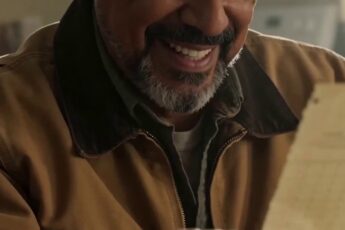
Marcus stood between his daughter and the woman he had almost married, and for the first time in months, all the small wrong things began arranging themselves into one terrible shape.
Lily’s fear before therapy.
The sudden stomachaches.
The notes Vanessa always “helped” organize.
The way his daughter had begun apologizing for needing care.
The way Vanessa had softly suggested, again and again, that maybe Lily needed a “more stable environment” after the wedding.
A facility.
A place with professionals.
A place that was not home.
Marcus’s voice came out low.
“Open your hand.”
Vanessa’s eyes flashed.
“Marcus, don’t do this here.”
“Open your hand.”
A nurse who had been walking toward the glass doors stopped when she heard his tone.
The boy in the gray hoodie stepped closer to Lily’s wheelchair.
Not in front of her.
Beside her.
Like a small guard who was terrified but had already decided not to run.
Vanessa looked around the garden.
At the nurse.
At the boy.
At Lily.
At Marcus.
Then she tried the voice that had worked for months.
Soft.
Wounded.
Careful.
“You’re scaring me.”
Marcus stared at her.
“No,” he said. “You are scaring my daughter.”
The words hit the garden like thunder.
Vanessa’s face hardened for half a second before she smoothed it again.
“This is ridiculous. You’re listening to a child you don’t even know.”
The boy swallowed.
“My name is Noah.”
Marcus turned to him gently.
“Noah. What did you see?”
Noah’s eyes flicked toward Vanessa and then back to Marcus.
“My little brother does therapy here too. Sometimes I wait by the vending machines. I saw her go into the therapy office when nobody was there. She took papers from the folder and put different ones in. I thought maybe she worked here.”
Vanessa laughed once.
Too sharp.
“I was helping. The staff are always overwhelmed.”
The nurse stepped forward.
“I’m sorry,” she said carefully. “Family members are not allowed to alter therapy documentation.”
Vanessa turned on her.
“I did not alter anything.”
Noah’s voice shook, but he kept going.
“She also told Lily that if she tried too hard, she might never walk again. She said her dad would be disappointed if she made things worse.”
Lily made a small sound.
Not quite a sob.
Not quite a word.
Marcus dropped to his knees again in front of her.
“Lily.”
His daughter would not look at him.
“I thought if I tried and then got worse, you’d be sad,” she whispered. “Vanessa said you already had too much to carry.”
Marcus closed his eyes.
For one moment, he was not a successful man, not a father holding himself together, not the person everyone trusted to make decisions.
He was simply a father realizing his child had been suffering right beside him while he called it recovery.
“I was never tired of carrying you,” he said, his voice breaking. “I was only trying to learn how to help.”
Lily’s chin trembled.
“She said Mommy would be disappointed too.”
That changed Marcus’s face.
His wife, Emma, had been gone for three years.
But her name still lived in their house like a candle no one wanted to blow out.
Vanessa had no right to touch that name.
Marcus stood slowly.
“Give me the bottle.”
Vanessa took another step back.
“It’s just calming drops.”
The nurse’s expression sharpened.
“For whom?”
Vanessa did not answer.
Noah pointed.
“She put some in Lily’s water before therapy. I saw it twice. Lily said it made her sleepy.”
The nurse moved immediately.
“Mr. Hale, I need you to step away from Ms. Pierce and let security handle this.”
Vanessa’s head snapped toward the nurse.
“You are not security.”
“No,” the nurse said. “But I know when to call them.”
She pressed the badge clipped to her pocket and spoke into it quickly.
Vanessa’s mask slipped.
“You have no idea what I’ve done for this family,” she hissed.
Marcus looked at her.
“What you’ve done?”
“Yes.” Her voice rose now. “I was the one who made appointments, managed prescriptions, kept everything organized while you buried yourself in work and guilt. I was the one trying to make life normal again.”
Lily flinched at the word normal.
Marcus noticed.
And something inside him went cold.
“You were trying to make her disappear from our life.”
Vanessa’s eyes filled with angry tears.
“That is not fair.”
“Then explain the bottle.”
“I wanted her calm.”
“You wanted her weak.”
“I wanted you free!”
The words burst out before she could stop them.
The whole garden froze.
Even Vanessa heard what she had said.
Marcus stared at her as if she had become a stranger in front of him.
Vanessa pressed her lips together, but it was too late.
The truth had stepped out.
“I didn’t mean—”
“Yes,” Marcus said quietly. “You did.”
She shook her head fast.
“No. You don’t understand. You were drowning, Marcus. Every plan, every trip, every dinner, every moment was about Lily’s therapy, Lily’s fear, Lily’s progress, Lily’s setbacks. You were forgetting yourself.”
“I am her father.”
“And I was supposed to be your wife.”
“You were supposed to love her.”
Vanessa looked at Lily.
For the first time, there was no softness in her face.
Only resentment.
“She was never going to accept me.”
Lily whispered, “I tried.”
Marcus turned back to his daughter.
Lily’s eyes were wet, but her voice was clearer now.
“I made her a card for her birthday. She put it in the drawer.”
Marcus remembered.
Vanessa had told him Lily forgot.
His hands curled.
Security arrived through the glass doors with a hospital administrator and a doctor Marcus recognized.
Dr. Patel.
Lily’s therapist came behind them, breathless, holding a clipboard.
“What happened?”
The nurse spoke quickly.
“There are allegations of altered therapy notes and possible unauthorized substances given to a pediatric patient.”
Dr. Patel’s eyes went straight to Lily.
Then to the bottle in Vanessa’s fist.
“Ms. Pierce,” he said carefully, “I need you to hand that over.”
Vanessa looked at Marcus, waiting for him to protect her.
He did not.
That was when she understood.
Whatever spell she had built with soft words and polished concern had broken in the garden.
Slowly, angrily, she opened her hand.
The small bottle lay against her palm.
No label.
No prescription sticker.
No explanation.
Dr. Patel took it without touching her fingers.
The administrator signaled to security.
Vanessa stepped back.
“You can’t treat me like a criminal.”
Marcus answered before anyone else could.
“You treated my daughter like an obstacle.”
Vanessa’s eyes widened.
Then hardened.
“You will regret this.”
Marcus looked at Lily.
Then at Noah.
Then at the bottle.
“No,” he said. “I already regret not seeing it sooner.”
A social worker arrived within minutes.
Her name was Grace Morrison, and she spoke to Lily as if Lily was a person, not a problem.
That alone made the child look at her.
Grace crouched beside the wheelchair.
“Hi, Lily. I’m not here to make you say anything before you’re ready. But I am here to make sure you’re safe.”
Lily glanced at Marcus.
He nodded.
“You can tell the truth,” he said. “Even if your voice shakes.”
Lily looked down at her hands.
“She said the exercises were dangerous. She said Daddy would get tired of hospitals. She said if I went to a special home, he could be happy.”
Marcus covered his mouth.
Grace’s expression stayed calm, but her eyes changed.
“And did she ever give you anything to drink before therapy?”
Lily nodded.
“Water. Sometimes lemonade. It tasted funny.”
Dr. Patel closed his eyes briefly.
Then he turned to the administrator.
“We need toxicology, review of all medication logs, security footage, access records, and original therapy documentation. Now.”
Vanessa tried to speak.
Security stopped her from moving closer.
“You don’t understand,” she said again.
But nobody in the garden wanted her version anymore.
Not because they had already judged everything.
Because the first honest thing had finally been spoken by the person most frightened to say it.
Lily.
Noah stood awkwardly beside the fountain, suddenly looking very much like a twelve-year-old boy who had used up all his courage at once.
Marcus walked to him.
Noah stiffened, as if expecting anger.
Instead Marcus knelt.
“Thank you.”
Noah blinked.
“I should have told sooner.”
Marcus shook his head.
“You told when you could. That matters.”
Noah’s eyes filled.
“My mom says adults don’t always listen.”
Marcus swallowed.
“Your mom is right. But I’m listening now.”
Noah nodded quickly and wiped his face with his sleeve.
Lily turned her head toward him.
“Thank you,” she whispered.
Noah shrugged, embarrassed.
“You’re not bad at therapy,” he said. “I saw you stand once when she wasn’t there.”
Lily’s eyes widened.
Marcus turned to her.
“You stood?”
Lily’s face crumpled.
“For a little. With the bars. But then Vanessa said it didn’t count because I cried.”
Marcus closed his eyes again.
Dr. Patel stepped closer.
“It counted,” he said firmly.
Lily looked at him.
“It did?”
“It absolutely did.”
The small sentence changed something in her.
Not everything.
Trauma does not dissolve because one kind person speaks.
But a crack opened in the wall Vanessa had built around her.
A crack big enough for light.
Vanessa was escorted through the garden doors.
As she passed Marcus, she stopped.
Her voice dropped.
“You’re choosing a lifetime of limits.”
Marcus looked at his daughter.
Then back at Vanessa.
“No,” he said. “I’m choosing my child.”
For once, Vanessa had no answer.
The doors closed behind her.
And the garden breathed again.
But Marcus did not.
Not yet.
He sat on the bench beside Lily’s wheelchair and leaned forward with his elbows on his knees.
His hands shook.
Lily watched him anxiously.
“Daddy?”
He turned instantly.
The fear in her voice cut him.
“I’m not mad at you,” he said.
“You look mad.”
“I am.” He took her hand carefully. “But not at you. Never at you.”
She nodded, but she did not look convinced.
So Marcus did something he had not done in months.
He stopped trying to sound strong.
He cried.
Not loudly.
Not in a way that frightened her.
But enough for Lily to see that adults could be hurt and still stay.
“I’m sorry,” he whispered. “I should have noticed. I should have asked better questions. I should have believed your fear was telling me something.”
Lily reached out and touched his cheek.
A tiny movement.
Careful.
Like she was not sure she was allowed.
“I didn’t want you to send me away.”
He took her hand and pressed it against his face.
“You are my home, Lily. I don’t send my home away.”
That was when she finally began to cry too.
Grace stood a few steps away, giving them privacy without leaving them alone.
Dr. Patel spoke quietly with the administrator.
The nurse collected statements.
The fountain kept running.
And in the middle of the hospital garden, a father and daughter began again.
The investigation took days.
Then weeks.
The results came back carefully worded and devastating.
Vanessa had no medical authority.
She had accessed therapy schedules through Marcus’s family portal.
She had printed summaries and replaced them with altered versions before Marcus saw them.
She had exaggerated Lily’s pain, minimized her progress, and repeatedly framed every improvement as “dangerous strain.”
Security footage showed her entering restricted therapy areas.
Messages on her phone revealed the rest.
Lily needs a long-term placement before the wedding.
Marcus will never build a new life while he is trapped in the old one.
Once she is settled elsewhere, he will see it was mercy.
There was that word again.
Mercy.
The kind cruel people use when they want their selfishness to sound clean.
The small bottle was analyzed too.
Dr. Patel did not give Marcus every clinical detail, only what mattered.
“It should never have been given to Lily,” he said. “Especially not before therapy.”
Marcus sat in his office afterward with the report in front of him and felt something inside him fold.
His engagement ended with one short written notice through an attorney.
No phone call.
No conversation.
No final meeting where Vanessa could cry softly and rearrange the truth.
She tried, of course.
She sent messages.
Marcus, I was overwhelmed.
I loved you too much.
I thought I was helping.
He did not answer.
Then she sent one that finally sounded like herself.
You will regret letting a sick child control your life.
Marcus forwarded it to his attorney.
Then blocked her.
The legal process was slow, ugly, and full of sentences that felt too small for what had happened.
Emotional manipulation.
Medical interference.
Unauthorized administration.
Endangerment.
Coercive control.
Each phrase was accurate.
None of them captured the way Lily had whispered, “I wanted to try, Daddy.”
Noah and his mother gave statements.
His little brother, Sam, sent Lily a card with a crooked drawing of parallel bars and the words:
Standing counts even if you cry.
Lily kept it on her bedside table.
Marcus kept a copy in his wallet.
Three months later, Lily returned to therapy.
Not easily.
Not magically.
The first time they rolled her into the therapy room, her hands shook so badly that she asked to go home.
Marcus wanted to say yes.
Every protective instinct in him screamed to take her away from anything that made her afraid.
But Grace had told him something important.
“Safety does not mean never being scared. Safety means being scared with people who will not use it against you.”
So Marcus knelt beside Lily’s chair.
“We can leave if you need to,” he said. “But if a small part of you wants to try, I’ll stay right here.”
Lily looked at the parallel bars.
Then at Dr. Patel.
Then at the nurse.
Then at her father.
“Will it count if I cry?”
Marcus smiled through tears.
“It will count even if we both cry.”
She almost smiled.
Almost.
That day, she did not stand.
She only touched the bars.
Dr. Patel wrote it down.
Lily asked, “Why are you writing that?”
“Because it counts,” he said.
The next session, she held the bars for ten seconds.
The one after that, fifteen.
On the fifth week, with Marcus sitting on the mat in front of her and Noah waving both hands from the doorway, Lily pushed herself upright.
Only for a moment.
Her knees trembled.
Her face crumpled.
She cried.
But she stood.
The room did not cheer loudly.
Dr. Patel had warned everyone not to overwhelm her.
But Marcus covered his mouth, and Noah pumped his fist silently, and Lily looked down at her own feet like she had discovered a country she thought had been taken from her.
“I did it?” she whispered.
Marcus nodded, crying openly.
“You did it.”
“I cried.”
“I know.”
“Did it still count?”
He laughed through the tears.
“It counted more than anything.”
Healing did not turn into a straight line after that.
There were setbacks.
Bad days.
Sessions when Lily refused to enter the building.
Nights when she woke crying because Vanessa was in her dream telling her she was making everything worse.
Marcus learned not to rush her past pain just because he wanted to see progress.
He learned to say:
“That was scary.”
“I believe you.”
“You are not in trouble.”
“We can try again tomorrow.”
He put those words on the refrigerator.
Not for Lily.
For himself.
Because fathers need reminders too.
The house changed.
Vanessa’s decorations came down.
The pale curtains she had chosen for the living room were replaced with yellow ones Lily liked because they made the morning feel “less hospital.”
The guest room Vanessa had planned to turn into a nursery one day became Lily’s art room.
On the door, Marcus hung a wooden sign:
Lily’s Studio. Knock first.
The first time Lily saw it, she ran her fingers over the letters.
“You made this for me?”
“Yes.”
“Not for when I get better?”
Marcus crouched beside her.
“For who you are right now.”
She leaned against him.
And for a long moment, neither of them spoke.
Noah became a regular part of their life.
His little brother still had therapy, and he spent many afternoons doing homework beside Lily while she painted.
He never acted like a hero.
That was part of why Lily trusted him.
He teased her about using too much purple.
She told him his handwriting looked like frightened spiders.
They became friends the way children do after surviving something adults made too heavy: carefully at first, then suddenly all at once.
One afternoon, Marcus found them in the art room painting a sign together.
It read:
Standing counts even if you cry.
Marcus looked at it for a long time.
Then he asked if they could make another one for the therapy room.
They did.
Dr. Patel hung it near the parallel bars.
Parents cried when they saw it.
Children touched it before sessions.
Even nurses stopped to read it on hard days.
Six months after the garden, Marcus returned to the hospital for a meeting.
Not for therapy.
For policy.
He sat across from administrators, doctors, legal staff, and social workers with a folder in front of him.
“I cannot undo what happened to my daughter,” he said. “But I can help make sure it is harder for someone to hide behind family access again.”
The hospital changed its procedures.
Therapy notes could no longer be printed and handed through family members without verification.
Restricted areas required stricter badge access.
Children old enough to speak were asked direct safety questions privately, in age-appropriate ways.
A small patient advocacy fund was created in Emma’s name, Marcus’s late wife.
Emma Hale Child Voice Fund.
Lily chose the logo.
A small blue cardigan with a sunflower stitched on the pocket.
When Marcus showed her the final design, she smiled.
“Mommy would like that.”
His throat tightened.
“Yes,” he said. “She would.”
A year later, the hospital garden looked the same.
The fountain still murmured.
Sunlight still touched the stone path.
Nurses still moved in and out through the glass doors.
But for Marcus, it would never be the same garden.
It was the place where truth had hurt.
And then saved.
Lily sat beside the fountain, no longer wrapped tightly in her blue cardigan but wearing it open over a yellow dress.
Her wheelchair was still there.
So were her braces.
So was the hard work ahead.
But beside the bench, leaning carefully against the stone, were two small crutches decorated with purple stickers.
Noah sat cross-legged nearby, eating chips from a vending machine.
“You’re getting crumbs everywhere,” Lily said.
“It’s called decoration,” Noah replied.
Marcus laughed.
Dr. Patel came out to check on them.
“So,” he said, “are we ready?”
Lily looked at the path.
Then at her father.
“Will you walk with me?”
Marcus’s eyes filled immediately.
“Always.”
She rolled her eyes.
“Daddy, don’t cry before I even start.”
Noah snorted.
“He’s totally going to cry.”
Marcus wiped his eyes.
“I am not.”
Lily gave him the look children give adults who are obviously lying.
Then she placed her hands on the crutches.
Marcus did not grab her.
That had been one of the hardest things to learn.
Help does not always mean holding on.
Sometimes it means staying close enough to catch, but far enough to let someone try.
Lily pushed herself up.
Slowly.
Carefully.
Her legs shook.
Her mouth tightened.
One step.
Then another.
Marcus walked beside her, hands ready, heart pounding.
Noah whispered, “You got this.”
Lily whispered back, “I know.”
And that was the miracle.
Not the steps.
Not the crutches.
Not even the distance from bench to fountain.
The miracle was that she knew.
Halfway down the path, Lily stopped.
Tears rolled down her cheeks.
Marcus bent slightly.
“Pain?”
She shook her head.
“Scared.”
He nodded.
“Do you want to stop?”
Lily looked at the fountain.
Then at the glass doors where Vanessa had once tried to escape.
Then at Noah.
Then at her father.
“No,” she said. “I want to keep going.”
So they did.
One careful step at a time.
When she reached the fountain, the nurse who had first called security wiped her eyes with the back of her hand.
Dr. Patel pretended to check his clipboard.
Noah cheered too loudly and got shushed by three people at once.
Lily laughed.
A real laugh.
Small.
Breathless.
Free.
Marcus knelt in front of her.
“You did it.”
Lily touched the fountain’s edge.
“I wanted to try,” she said.
This time, there was no fear in the sentence.
Only pride.
Marcus bowed his head over her hands.
“And I will spend the rest of my life making sure nobody teaches you to be afraid of trying again.”
Lily leaned forward and hugged him.
Above them, the garden remained bright and quiet.
But it was no longer too peaceful for the truth.
It had become the place where the truth finally had room to breathe.
Later, when people asked Marcus how he discovered what Vanessa had done, he never began with the bottle.
Or the altered notes.
Or the investigation.
He began with a boy in a gray hoodie who was scared and spoke anyway.
He began with a child in a wheelchair who whispered the truth after months of being taught to fear it.
He began with the sentence that broke him and rebuilt him:
“I wanted to try, Daddy.”
Because sometimes the worst harm is not only what someone does to a child’s body.
It is what they teach that child to believe about their own courage.
And sometimes healing begins not with a miracle cure, not with a dramatic rescue, not with a perfect ending—
but with one adult finally kneeling down and saying:
“I believe you.”
Dear readers, what did Lily’s story make you feel? Would you have believed the boy immediately, or would you have needed proof first? Share your thoughts in the comments.