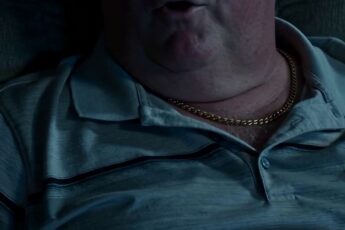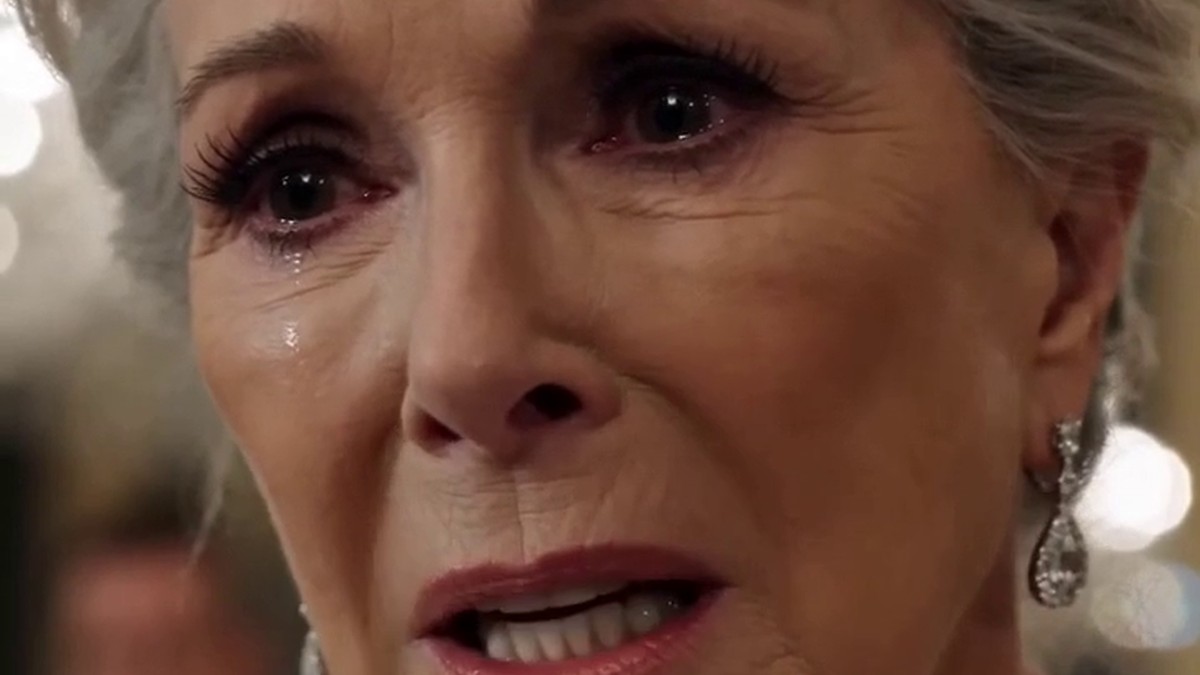
The Oceanview Mansion blazed with the glow of a thousand candles and the soft shimmer of chandeliers imported from Venice. Crystal flutes of Dom Pérignon lined the tables, and the air smelled of gardenias flown in from the French Riviera. It was the kind of affair Newport society would whisper about for years — a diamond-studded celebration for Victoria Harrington’s sixtieth birthday. She sat at the center of it all, draped in a white silk gown, a queen surveying her empire. Around her, laughter bounced off marble columns. Mountains of gifts glittered beneath candles: custom leather handbags, vintage Cartier watches, and a necklace of Burmese rubies that cost more than most people’s homes.
Victoria smiled, but the warmth never reached her eyes. She had outlasted rivals, buried two husbands, and built a real estate legacy that stretched from Manhattan to Palm Beach. Family, to her, was a tool. Her brother Charles grinned from his chair, twirling whiskey in a crystal tumbler. Her attorney, a silver-haired man named Richard Pelham, leaned in to whisper something. Everyone at the head table belonged to the inner circle, the ones who guarded the Harrington name like a fortress.
Then a small shadow appeared in the arched doorway.
At first, only the busboy noticed. A little boy, maybe seven years old, stood shivering on the cold stone. His feet were bare and caked with mud. Jeans with holes in the knees hung loose on his frame, and a faded hoodie did nothing to hide how thin he was. In both hands, he clutched a small cardboard box with a single candle poked through the top — a lopsided, homemade birthday cake.
One of the valets must have let him slip through the garden gate. Two security guards strode toward him immediately, heavy boots clicking on the floor. Guests twisted in their seats. A woman at the far table tittered behind her napkin. Another man muttered, “Is this some sort of street performance?”
Victoria’s gaze cut toward the entrance. Her smile vanished, replaced with cold irritation. “Who allowed that child inside?” Her voice was a blade, quiet and sharp. “Remove him.”
The guards took the boy by the shoulders and started to steer him out. But the boy — his name was Leo, though no one asked — locked eyes with Victoria and spoke with a trembling clarity that stilled the room. “Please. I came to give you this. My mommy made me promise.”
He wrenched free for a moment and placed the tiny cake right on the end of the table, next to a stack of sterling silver boxes and a diamond-encrusted evening clutch. The single crooked candle wobbled. A few guests laughed louder now, convinced this was some absurd joke. “A homemade cake? For Victoria Harrington?”
Leo’s chin quivered, but he didn’t run. “My mommy told me to find you before your birthday ended.”
Something in Victoria’s chest tightened. She set down her champagne glass with a deliberate clink. “What did you just say?”
“My mommy made me promise,” Leo repeated. He slipped a hand into his jacket pocket and drew out a photograph with edges so worn they were almost furry. He held it up toward Victoria.
The moment she saw it, her champagne glass slipped from her grasp and exploded on the floor.
The photograph showed a younger Victoria — thirty years ago, maybe more — with her arm around a teenage girl. The girl had the same sharp cheekbones, the same dark, intense eyes. Amelia. The daughter Victoria had lost three decades ago. The daughter the family claimed had run away in the middle of the night and never looked back.
Victoria’s face went gray. Her fingers, trembling badly, reached for the photo. “Where did you get this?”
Leo’s eyes swam with tears. “My mommy kept it beside her bed. She said you were angry when she left.”
“I wasn’t angry.” Victoria’s whisper tore through the silence. “I searched for her. I never stopped.”
“But my mommy said you never came.”
The words landed like a physical blow. Victoria slowly turned her head toward her family. Charles had stopped swirling his whiskey. Richard Pelham’s face was unreadable, but his knuckles were white around his fork. A dozen faces stared back at her, and a horrible, creeping suspicion began to rise in her stomach.
She looked down at Leo again. “Where is your mother now?”
His lower lip began to tremble violently. “She’s sick. Really, really sick.”
Victoria reached out to touch his cheek, but the boy stepped back. He dug into the folds of the cake box and pulled out a small envelope, crumpled and sealed with a bit of wax. On the front, in wavering cursive that made Victoria’s heart seize, were six words: *For my mother. Tell her everything.*
She tore it open with white-hot urgency. Inside was a handwritten letter, the ink uneven, some letters smeared as if someone had wept while writing. Victoria read the first line. Then the second. The air left her lungs in a rush. The letter didn’t say Amelia ran away. It said someone had been paid to take her — to erase her from Victoria’s life and make sure she never came back. And the person who had signed the payment order was sitting at her birthday table.
Victoria’s eyes, blazing now, swept across her guests. Charles shifted in his seat. Richard Pelham deliberately looked down at his plate.
Leo took a matchbook from his pocket. With a small, sad flicker of a smile, he lit the single wobbly candle on the lopsided cake. The tiny flame danced in the sudden, heavy silence. “My mommy said you would know his name.”
Victoria stared at her brother. The name was already forming on her lips, a truth she had buried under decades of denial. Her fingers closed around the letter like a weapon.
Then, without warning, every light in the mansion snapped off. The chandeliers, the candles, the garden floodlights — all went black, plunging the room into complete darkness.
Gasps ripped through the crowd. A woman screamed. Glassware toppled. Someone shouted for the backup generator. But over the chaos, a new sound cut through: a frail, crackling voice coming from a small speaker Leo had quietly placed beside the cake. The voice of a woman who knew she was running out of time.
“Hello, Mother. Happy Birthday.”
Victoria froze. In the pitch black, she grabbed Leo’s hand, and the boy clung to her.
“I know you’ve been lied to,” the voice continued, echoing off the marble walls. “But I’m done staying silent. Charles paid a man named Gerald Nystrom fifty thousand dollars to take me to a facility in Vermont and make sure no one ever found me. Richard Pelham drew up the documents. They told you I abandoned the family. They told me you wanted me gone. He confessed to me a month ago, thinking I wouldn’t have the strength to do anything about it. But I have one last thing to do.”
The speaker crackled. Then a phone screen lit up across the room. Richard Pelham’s phone, lying on the table, began playing a video. It showed Amelia — gaunt, pale, wrapped in a hospital blanket, propped against pillows in what looked like a hospice bed. She was speaking directly into the camera. And beside her sat Charles Harrington, visibly uncomfortable, recording her on his own device, unaware that Amelia’s phone was hidden and streaming.
On the video, Charles sneered. “You were always a problem, Amelia. Mother’s reputation couldn’t survive a pregnant teenager. The facility was the only way. But if you think I’ll let you waltz back now and claim half the inheritance, you’re delusional.”
The whole room listened in stunned silence. Victoria’s hand covered her mouth. Tears began to spill over her fingers.
Then the lights flickered back on, triggered by some prearranged timer Leo had set with his mother’s help. In the sudden glare, Charles was half out of his chair, his face a mask of rage and terror. Victoria met his eyes, and he knew the mask had crumbled forever.
“You.” The word came out of Victoria in a guttural roar. “You stole my child.” She lunged toward him, but security — the same guards who had nearly thrown Leo out — grabbed Charles’s arms first. Richard Pelham tried to melt into the crowd, but guests blocked his path. Several had already pulled out their phones, dialing 911.
Victoria didn’t care about them. She turned back to Leo, knelt in her silk gown right there on the champagne-soaked floor, and pulled the trembling boy into her arms. “Where is she, sweetheart? Please, take me to her.”
Leo led her outside, past the valet’s stunned stares, to a battered minivan parked on the street. In the back, a hospice nurse was adjusting an IV drip. And there, on a small fold-out bed, lay Amelia — too thin, too pale, her dark eyes still shining with stubborn fire.
“Mom,” she whispered. “I’m sorry I didn’t come sooner. They kept telling me you didn’t want me.”
Victoria climbed into the van and cradled her daughter’s face as if she were still that teenage girl. “I never stopped looking. I never stopped loving you.”
They had two weeks. Two heartbreakingly beautiful weeks. Victoria moved Amelia into the master suite of Harrington House, with a view of the ocean. Specialists came daily. She learned all about Leo — his love for space rockets, his fear of thunderstorms, the way he hummed when he mixed cake batter just like his mother. Amelia passed away on a Tuesday morning, with her mother holding one hand and her son holding the other, a full moon sinking into the Atlantic.
At the funeral, Victoria stood beside Leo, both dressed in gray. She had already fired Richard Pelham and turned over the video evidence to the police. Charles was charged with kidnapping and fraud, a scandal that shattered the Harrington name but brought Victoria a strange, fierce peace. She didn’t care about the reputation anymore. She had rescued what mattered.
A week later, Victoria gathered the family lawyers to amend her will. Everything — the real estate empire, the fortune, the houses — would go into a trust for Leo. The lopsided birthday cake with the single crooked candle became the centerpiece of the kitchen, preserved in a glass case. Victoria never celebrated her birthday again. Instead, every year on that night, she and Leo would bake a messy, beautiful cake together and light one candle for Amelia. And in the flicker of that small flame, Victoria would see her daughter’s smile, and know that some stories, no matter how much time is lost, can still be brought home.