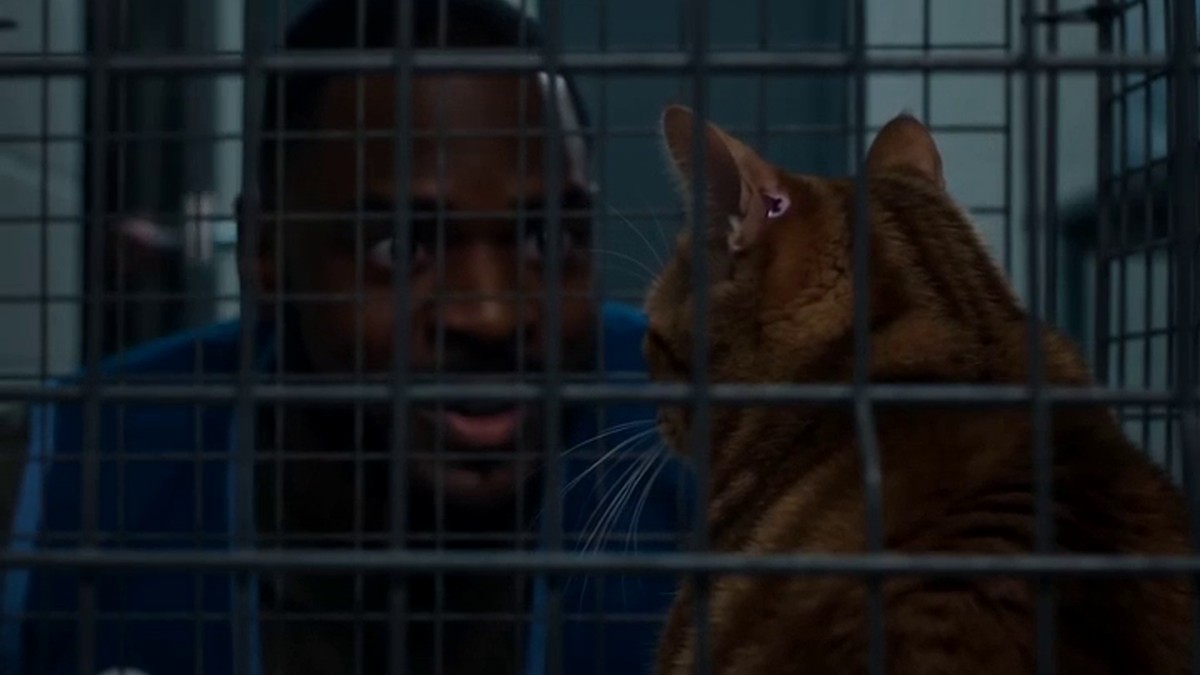
Daniel unlatched the carrier and stepped back. The brown tabby crept out like a shadow poured onto the floor, low to the ground, ears flat. He made it three feet, found the corner where the mop bucket usually sat, and turned his back. Not a hiss, not a growl—just the deliberate, heavy silence of a cat who’d decided this conversation was over.
Daniel crouched, knees popping, and stared at the rigid line of the cat’s spine. Six years volunteering at Second Chance Rescue in Cedar Falls, and he’d never felt so personally stonewalled by eight pounds of fur.
“Tucker, buddy,” he said quietly. “This ain’t personal.”
Tucker’s left ear—the one with the notch—didn’t so much as twitch.
Daniel stood up, rubbed the back of his neck, and pulled the adoption file from the top of the kennel crate. Three return forms inside, each paper-clipped to a tidy little intake summary. He’d seen them before, of course, but now he read them like a detective working a cold case.
First family: young marrieds, a condo over by the river. Returned after nine days. Reason printed in neat block letters: *Hostile. Won’t come out from behind the water heater. Hissed at my husband.*
Second: a retired nurse on Beech Street. *Spent two weeks under the guest bed. Scratched me when I tried to drag him out. Not adjusting.*
Third: a dad with twin eight-year-old girls. Returned after six days. *Cat won’t play. Kids are scared. He just sits in the laundry basket and glares.*
Daniel pinched the bridge of his nose. The fluorescent lights buzzed overhead, and somewhere down the hall a dog barked three short, hopeful yips. He slid the forms back into the folder and headed for the break room, where his co-volunteer, Nora, was chiseling dried food off a bowl.
“Tucker’s back,” he said.
Nora didn’t look up. “I saw the carrier. Third time, right?”
“Yeah.” He filled a mug with lukewarm coffee, took a sip, winced. “I don’t get it. He passed every temperament test we had. No aggression, no litter box issues. The techs said he was shy but fine.”
“Maybe he’s just a jerk when he moves in with people.”
Daniel shook his head. “I’ve met jerky cats. They swat you in the hallway, pee on your laundry, that kind of thing. Tucker doesn’t do any of that. He just… disconnects.”
Nora dried her hands on a towel that had seen better decades and leaned against the counter. “So what’s the plan? Are we putting him back on the adoption floor?”
“Not yet.” Daniel dumped the coffee, rinsed the mug. “I want to talk to someone first.”
He called the retired nurse that afternoon. The line rang five times before a voice answered, wary but not unkind. Daniel introduced himself, said he was following up about Tucker, trying to understand.
The woman sighed, a long exhale that crackled through the speaker. “I don’t know what you want me to say. That cat didn’t want to be touched. I’d reach under the bed to pet him, and he’d just flatten himself like a pancake. One time I got ahold of his collar and he raked my arm open.”
Daniel jotted on a legal pad: *Grabbed collar. Dragged out.* “Did you ever try just… letting him be? Sitting on the floor a few feet away, not reaching, not talking?”
A pause. “If I’m not supposed to touch him, what’s the point of having a cat?”
He thanked her anyway, hung up, and stared at the note. The phrase echoed: *what’s the point.* He remembered a line from the first family’s in-person return interview—something the husband had said while handing over the carrier: *We thought he’d be grateful, you know? We saved him from the shelter, and he acted like we were monsters.*
Daniel pulled the files again and laid all three side by side. The reasons were different words, but the story underneath was the same: grab, pull, force contact. Demand immediate trust. When the cat said *no* the only way a cat can—by disappearing, by hissing, by defending himself—they labeled it broken and sent him back.
That night, Daniel stayed late to finish cleaning the isolation ward. The shelter was locked up, the other volunteers gone, and the only light came from the dim safety bulbs along the baseboards. He was passing the bank of long-term kennels when he heard it.
A low, steady rumble, like a tiny outboard motor.
He stopped. Traced the sound to Tucker’s crate. The cat was still facing the back wall, but his sides rose and fell in a slow, content rhythm. And he was purring. Deep, whole-body purring, the kind that vibrates through the floor.
Daniel didn’t move. Didn’t breathe too loud. The purr went on for maybe two minutes, then stuttered, then died. Tucker’s head shifted a fraction of an inch—he’d sensed something. The silence that followed felt like a door slamming.
But Daniel had heard enough. He walked softly to the front desk, opened his laptop, and started typing.
The old adoption handout began with a gentle sentence: *Your new cat needs love and patience.* Daniel deleted it. The new version started differently.
*First week: DO NOT TOUCH. Do not call. Do not seek eye contact. Place food, water, and litter in a quiet room, shut the door, and leave. Enter only to refresh supplies. Don’t try to pet, don’t try to coax. Give the cat nothing but time.*
Nora found the printout the next morning. She held it at arm’s length, squinting. “This is basically an instruction manual for ignoring the animal.”
“It’s an instruction manual for letting the animal choose.”
“You think people will actually do this?”
Daniel shrugged. “We keep telling them the cat is the problem. Maybe it’s not the cat.”
A month passed. Tucker stayed in his kennel, still facing the wall whenever anyone was watching, and Daniel began to wonder if he’d made things worse. Then, on a Thursday, a woman in her sixties came in—short gray hair, calloused hands from gardening, a voice that didn’t fill up the room. She read the handout twice before asking a single question.
“What if after a month he still won’t come near me?”
“Then he needs more than a month,” Daniel said. “You okay with that?”
She looked at him, and then at Tucker’s photo clipped to the kennel card. “I’ve got time.”
The adoption paperwork took fifteen minutes. She left with the carrier propped on the passenger seat of her old Subaru, Tucker a silent, furious ball of fur in the back corner. Daniel stood at the shelter door and watched the taillights disappear.
Six weeks went by. Daniel thought about calling, decided against it. Then one afternoon, his phone buzzed with a text message. No words—just a photo.
The shot was taken from a couch, looking toward a sunlit window. A wooden sill, a pot of thyme on the left, and right in the center, a brown tabby cat. He was sitting with his chest broad to the room, green eyes half-closed, paws tucked under. Not turned away. Not hiding. Just there, present, looking at whoever held the camera like they belonged to him.
Daniel zoomed in. The notched ear was unmistakable.
He carried the phone to the filing cabinet in the back office. Took out Tucker’s folder, the one with the three return forms that had haunted him for months. He slid it into the bottom drawer, where they kept the adoptions that didn’t need explanation. The ones you just remembered.
Nora came in as he was closing the drawer. She saw his face, glanced at the open drawer, and didn’t ask. She just pulled the phone from his hand, looked at the picture, and let out a long, quiet breath.
“He was never the one who needed saving.”
Daniel didn’t answer. He was thinking about the purr he’d heard that night in the dark, the sound of a creature who just wanted to be left alone long enough to learn that someone could be trusted.