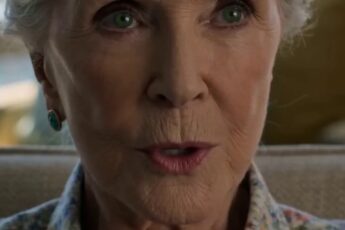
Dr. Eleanor Vance didn't need the coffee in her hand, but the warmth of the mug was a small anchor to reality. It was barely seven in the morning, and the Paws & Rest Animal Hospital in Portland, Oregon, was heavy with a silence broken only by the soft hum of the recovery ward incubators. The air, a familiar cocktail of antiseptic, damp fur, and sterile gauze, settled over everything like dust.
Clementine, a calico with a coat like a patched quilt of autumn leaves and fresh snow, hadn't touched her food. Not this morning. Not yesterday. Not the day before.
She was a fixture on the wide oak sill of the reception window, a loaf of orange, black, and white, staring into the gray March drizzle. Eleanor ran a hand along the cat's spine. Warmth, and a soft, thick coat. But the vertebrae were sharp now, tiny, distinct mountain ridges under the velvet. The cat’s ears twitched at the touch, but her gaze, fixed on the weeping window, never wavered.
Three years. For three years, that window had been her sentry post.
Eleanor’s assistant, a lanky, tattooed young man named Marty, clattered stainless steel bowls in the back. Eleanor remembered the day Clementine arrived as if it were a faded Polaroid. A frantic woman, a name on a chart—Sarah Wells—had rushed her in for a minor urinary tract infection. "I'll be right back," she'd said, her eyes red-rimmed and swollen, fumbling with a twenty-dollar bill. "I just need to move my car. An hour, tops."
An hour bled into a day, into a week. The twenty-dollar bill stayed in a Ziploc bag in the clinic’s petty cash drawer for a month, then Eleanor used it to buy a special kind of pâté for the abandoned cat. The old red leather collar, with its tarnished brass tag bearing a barely-legible number, had been cut off that first night. Eleanor had tossed it in a drawer behind the reception desk, a tiny, forgotten corpse of a promise. She’d never looked at the number. A person who dumps an animal in a vet’s office doesn't deserve the courtesy of a check-in.
Marty appeared, wiping his hands on a towel. "Still on hunger strike?"
Eleanor just sighed, replacing the water in a chipped ceramic bowl with the faded "Paws & Rest" logo. "It’s a waiting game, Marty."
The cat was waiting for someone who was never coming back.
The call came in at 9:42 a.m., just as Eleanor was prepping to spay a hyperactive Springer Spaniel. Marty buzzed the prep room. "Hey, Dr. V? Got a woman on line two. Says she's asking about a cat she left here. A tricolor? Three years ago?"
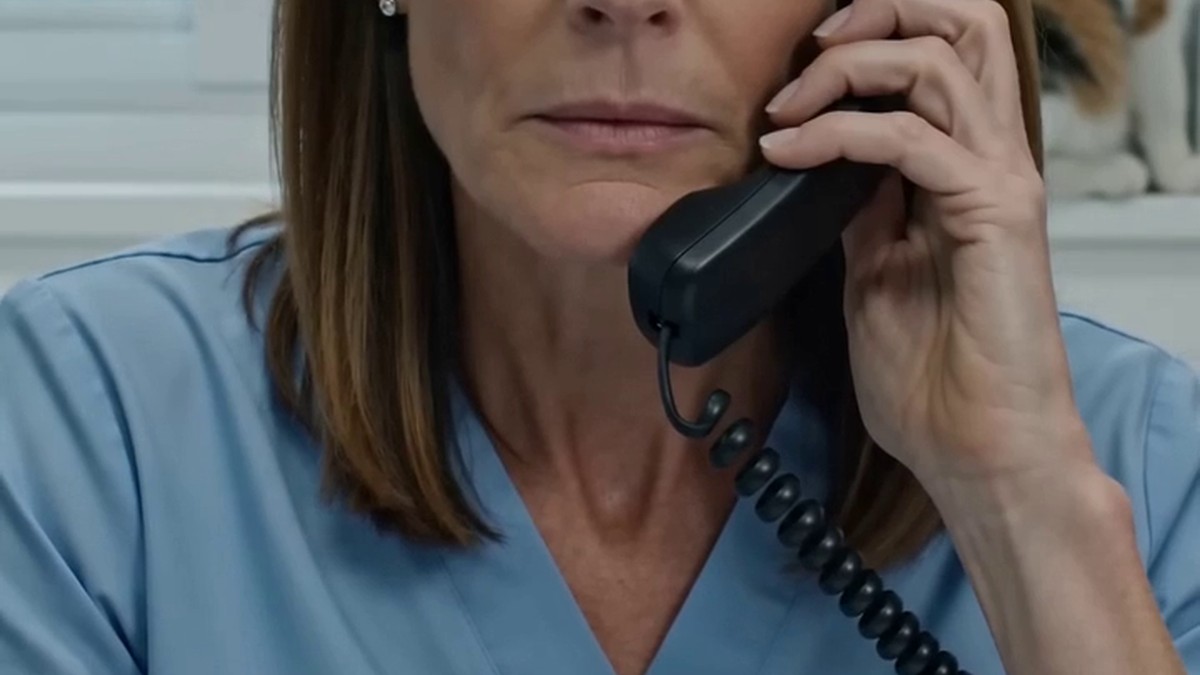
The scalpel in Eleanor’s hand clattered onto the steel tray. A cold, hard knot tightened in her stomach. She peeled off her gloves and picked up the receiver.
"This is Dr. Vance."
The voice on the other end was a whisper, like a dry leaf skittering across pavement. "Dr. Vance… my name is Sarah Wells. I… I left my cat with you. Clementine. I’m so sorry to call out of the blue. I… I’d like to know if she’s still there. Is she okay? Can I… can I come get her?"
A hot wave of anger crashed over Eleanor’s professional facade. Three years of buying grain-free kibble, three years of chin scratches and soft purrs at closing time. Three years of watching this cat pine by the window.
"Ms. Wells," Eleanor said, her voice clipped and sterile, like a surgical blade. "That cat has been living in my clinic for three years on charity. You didn't call. You didn't write. You vanished. And now you want to pick her up like a forgotten dry-cleaning order?"
The silence on the line was so profound, Eleanor thought the call had dropped. Then, a shaky breath.
"I can be there whenever you say," Sarah whispered, ignoring the sharpness of the questions. "Just… please. Can I see her?"
"I'll call you back," Eleanor replied, and hung up.
Marty leaned against the doorframe. "The phantom owner? You’re not seriously thinking about it, are you? Remember the state she left her in? Tossed here like an old newspaper." He cracked his knuckles, a nervous habit. "Don't do it, Doc."
Eleanor wanted to agree. The clinic was Clementine’s home. *She* was Clementine’s person. She called back that evening, after the last patient had left and the lights were dimmed. She sat on the floor next to Clementine’s sill.
"Ms. Wells. The cat is healthy and safe. But I don't consider giving her to someone who abandoned her in a strange place without a backward glance to be the best thing for her."
The same, heavy silence. Then, two words, not an argument, but a simple statement: "I didn't abandon her."
The line went dead. Eleanor felt a tiny, hairline fracture run through the solid wall of her righteous anger. It was a strange, unsettling feeling.
Two days later, Sarah Wells was standing in the rain outside the clinic door. She didn't ring the bell. She was just a blurred, hunched silhouette through the frosted glass, a woman who looked hollowed out, lost inside a rain-soaked parka. Eleanor saw her from the back, and her first, cold instinct was to turn away and let the woman fade into the Portland gray.
But then, something happened that broke Eleanor’s heart just a little bit more. Clementine, who hadn't moved from her window in seventy-two hours, gracefully jumped down from her sill. She walked across the tiled floor, not to Eleanor, but to the front door. She sat down, wrapped her tail around her paws, and stared at the silhouette on the other side of the glass.
She didn't meow. She just waited, a mirror of the woman outside.
Eleanor’s breath caught. She didn't open the door. She couldn’t. After ten long minutes, the silhouette shrank away, swallowed by the downpour. Clementine remained at the door until Marty gently scooped her up. The cat looked over his shoulder, past Eleanor, at the empty glass, and the light in her eyes seemed to go out.
The next morning, a thick, water-stained envelope was taped to the clinic door. Inside was a letter, in handwriting so faint and cramped it looked like a seismograph of emotional pain. Medical documents, too. An oncology report from Oregon Health & Science University, dated three years prior. A diagnosis of Stage III invasive ductal carcinoma. A brutal protocol of chemo, then radiation, then a double mastectomy. A final sheet was a letter.
*"I left Clem because I was told I had a 15% chance of making it six months. I couldn't take her to the shelter. I couldn’t leave her to die alone in my apartment. You were the only compassionate place I knew. I called every month the first year. I was told ‘the vet took her home.’ I knew then she was safe. I promised myself I wouldn't come back for her, wouldn't disrupt her new life, until I was sure I was going to live. I’m two years in remission. I kept my promise. I came back. I know you hate me. But I love her. I never stopped."*
A photo fell out. It was of a woman with the gaunt, stripped look of someone in active treatment, her head wrapped in a bright turquoise scarf, holding a calico cat against her chest. She was pressing her face into the cat’s fur, eyes closed, as if Clementine’s small, purring body was the only living thing keeping her tethered to the earth.
Eleanor slid down the wall in the hallway, the cold from the floor seeping into her bones. She read the letter again. And once more. The same rage was there, but it had no target. It was a firework with nowhere to go. All the assumptions she had built for three years, the solid, comforting story of her own heroism versus a nameless villain’s cruelty, collapsed into a pile of dust. Clementine, who had just appeared beside her, nudged her cold, wet nose into Eleanor’s limp hand.
The cat wasn't waiting for anyone to arrive. She was waiting for permission to go.
Eleanor picked up her cell phone. Her fingers trembled as she dialed the number on the letter. It was answered instantly.
"Sarah? It's Dr. Vance. Come get your cat."
Twenty minutes later, Sarah Wells stood in the clinic’s reception area. She was thin, a survivor’s thinness, and her hair was a short, silver-blonde cap. She didn’t look at Eleanor, only at the calico on the sill.
Clementine turned. For a long, heart-stopping moment, the cat just looked at the stranger who wasn't a stranger. Then, she meowed. It was a rusty, creaking sound, the first she’d made in years. She jumped down and, with a dignity that was almost painful to watch, walked directly to Sarah and head-butted her shin with a force that made her whole body rock.
Sarah knelt down, her movements careful, like a woman who still remembered pain in her bones. She didn't grab; she just opened her hands.
Eleanor turned away, going to the back drawer. She found the old, cracked red collar with the scratched tag, and walked it over. She pressed the cold leather into Sarah’s palm.
"She'll need this," Eleanor said, her voice rough.
Sarah looked at the collar, then at Eleanor, her eyes filling with a relief so profound it was a physical weight lifted from the room. She took a ceramic bowl off the counter—a beautiful, hand-painted one that Marty had bought for the cat last Christmas.
"You keep this one," Sarah said, her voice cracking. "It's her home bowl."
Sarah scooped Clementine into her arms. The cat didn't look back. She burrowed her head under Sarah's chin, into the hollow of her neck, and began to purr, a deep, resonant motor that filled the silence. A sound Eleanor had never, ever heard her make.
Then they were gone. The door sighed shut, and the clinic was quiet again. The air still smelled of rain and disinfectant, but also, faintly, the ghost of a floral perfume.
Marty walked up, staring at the empty windowsill. "Well, damn."
Eleanor looked at the empty sill, at the spot where the red collar had gathered dust for three years. She walked over, ran a finger through the clean rectangle on the dusty wood, and then wiped it all away.
"Bring in the first appointment, Marty," she said, her voice steady now, a doctor’s voice.
She picked up the hand-painted bowl. It was a "normal" bowl, one she had always refused to buy because it felt too permanent, too much like surrender. Now it just felt empty. She turned it over in her hands, feeling the smooth glaze, and for the first time in three days, the tight knot in her chest loosened and the space was flooded with a quiet, unexpected peace. She placed the bowl gently on the shelf, turned her back on the window, and got back to work, the faint echo of Clementine's purr still vibrating in the air.