A Stray Cat Gave Birth in My Shed, Then Disappeared. Two Weeks Later, She Came Back — Not Alone.
Ruth Ellison had been putting off cleaning out the shed all summer. The old garden tools, the mildewed boxes of Norman’s things—it was easier to just keep the door shut. But that morning, a noise came from inside, a tiny, threadbare mewling that cut through the screen door’s rattle.
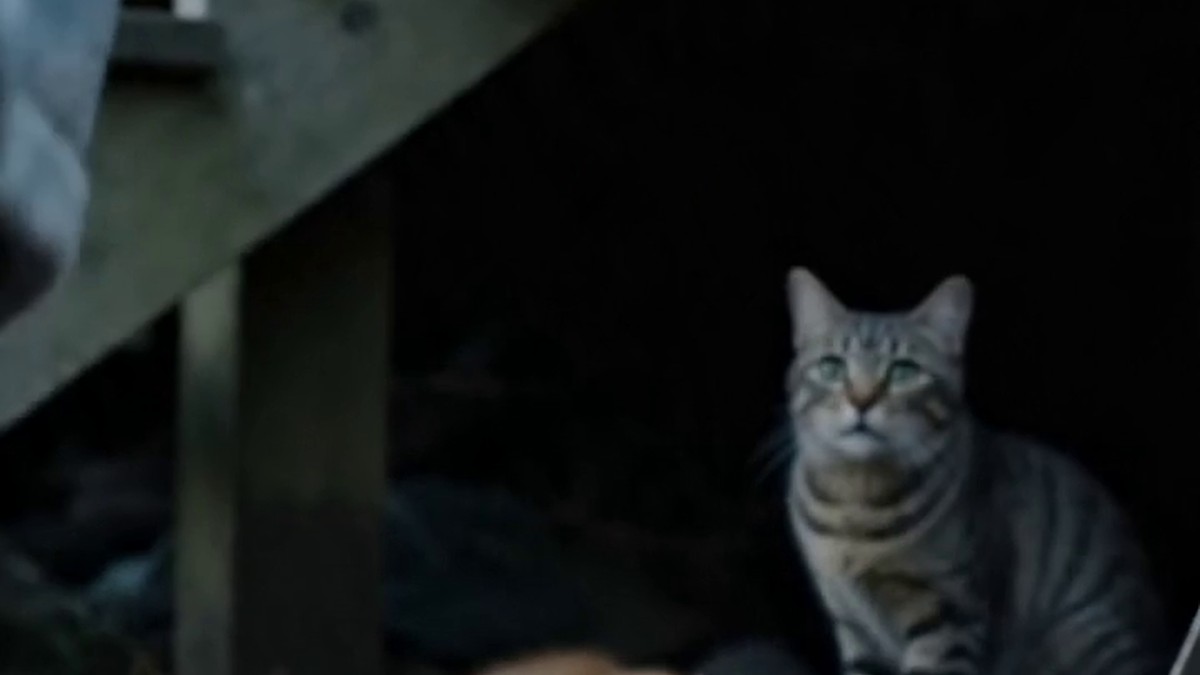
She pulled on her gardening clogs and crossed the yard. The shed door stuck, then swung open with a groan that faded into startled silence. In the corner, draped across a stack of paint-spattered drop cloths, lay a gray tabby cat. Three blind, squirming kittens pressed against her belly, their pink noses twitching.
Ruth’s first thought was to shoo them out. Her second thought was her age—seventy-three, with a hip that ached when it rained and a house that already felt too big. Her husband had been gone six years. Her daughter, Jen, lived out in Portland; her son, Marcus, was in Atlanta. The only voice she heard most days was the weather radio.
The cat lifted her head. Her green eyes were wary but unafraid. She didn’t hiss, didn’t flatten her ears. She just waited, as if she’d already decided Ruth wasn’t a threat.
“All right,” Ruth murmured, backing out. “All right.”
She came back that evening with a bowl of milk and some flaked tuna. The cat ate ravenously, pausing only to glance back at her kittens between swallows, making sure they were still there. Ruth crouched in the doorway, watching. It was the most company she’d had all week.
For nine days, that was the rhythm. Ruth would carry food out in the morning and again at dusk, and the cat would let her sit on an overturned bucket and talk. She talked about Norman. About the way her kids never called unless she texted first. About the empty chair at the kitchen table that seemed to be the only thing she could see anymore.
On the tenth morning, the cat was gone.
Ruth stood in the shed’s doorway, the bowl of food still in her hand. The kittens were mewling, crawling blindly over each other in search of warmth. Their mother’s spot was cold.
Ruth waited until dark. The cat didn’t return.
By the next day, the kittens were weakening. Ruth found an old eyedropper in the bathroom and warmed some milk on the stove the way she’d done decades ago, when Marcus had rescued a half-dead stray. She’d been so exasperated then—*another mouth to feed*. Now she sat on the floor of the shed, holding each tiny body as it suckled from the dropper, her hands steady for the first time in years.
Her neighbor, Patty, stopped by that afternoon with a zucchini from her garden. Patty leaned against the shed door and frowned. “Ruth, what are you doing? You can’t keep three kittens.”
“Their mother’s gone,” Ruth said without looking up. “Somebody has to.”
“Probably hit by a car out on the county road,” Patty said gently. “You should take them to the shelter in town. They’ll find homes.”
Ruth knew she was right. The grandkids were supposed to visit in July, and both had allergies. Besides, what would she do with three cats? She could barely keep the tomatoes watered.
She spent the next night sleepless, listening to the grandfather clock in the hall count off the hours. The house had never been this quiet when Norman was alive. He’d snored like a freight train. The kids would sneak downstairs for cookies after midnight. Even the old dog, Tucker, used to pace the hallway, his nails clicking. Now there was only the clock.
Just before dawn, she heard something else. A thin, insistent meow from the front porch.
She opened the door and froze.
The gray tabby sat on the welcome mat. She was skeletal, her coat matted and dull, one ear torn. But she wasn’t alone. Pressed against her flank was a scrawny orange kitten, maybe four months old, with a notched ear and a back leg that dragged.
“You’re alive,” Ruth whispered.
The cat meowed again—a sharp, businesslike sound—and turned, limping toward the driveway. She stopped, looked back over her shoulder. *Well? Are you coming?*
Ruth grabbed her jacket.
The cat led her down the gravel lane, past Patty’s mailbox, past the abandoned Henderson place with its sagging porch and broken shutters. Old Mr. Henderson had died three winters ago, and nobody had come to claim the property since. The weeds were waist-high.
The cat ducked under the rotting porch steps. Ruth knelt, her hip screaming, and peered into the dark. Three more kittens huddled there—filthy, terrified, their eyes gummed shut with infection.
“Oh, honey,” Ruth breathed. “How many did you find?”
The tabby rubbed against Ruth’s knee, purring like a faraway motor. She wasn’t begging. She was presenting.
Ruth sat back on her heels. She thought of the shelter, of the intake forms and the cages and the quiet, efficient way the staff would put them down if nobody claimed them in a week. She thought of the empty house waiting for her at the end of the lane.
She went home for a carrier, some old towels, and a can of tuna.
By noon, all six kittens—the original three, the injured orange, and the three from under the porch—were in her sunroom, wrapped in fleece blankets from the linen closet. The gray tabby ate slowly now, her eyes moving constantly from kitten to kitten, counting, checking.
Patty came by that evening and stopped in the doorway. “Lord, Ruth. You’ve started a sanctuary.”
“I’m just fostering,” Ruth said, not meeting her eyes. “I’ll find homes.”
“Sure you will,” Patty said with a knowing smile. “Just like you found somebody to take over the church bake sale last year.”
Ruth did try. She posted on the town Facebook page. Her granddaughter set up an online listing. A young couple from the next town over adopted two of the porch kittens. Patty’s niece took a third. The orange kitten with the bad leg, whom Ruth had started calling Oliver, recovered after a vet visit and a round of antibiotics—the leg would always be stiff, but he could walk.
The original three she meant to give away, too. But every inquiry sounded wrong. One woman wanted to declaw them. A man asked if they’d make good barn cats and hung up when Ruth said they’d need to be indoors. She told herself she was just being careful.
By the time the leaves turned, Ruth had five cats: the gray tabby, a sleek, watchful creature she named Mabel; Oliver, who had claimed the armchair as his throne; and the three tabby kittens, who chased dust motes through the sunbeams.
Marcus came down from Atlanta for Thanksgiving weekend. He walked into the sunroom, looked at the cat trees and the feeding station and the litter boxes arranged like furniture, and said, “Mom. There are five cats in here.”
“Four kittens and their mother,” Ruth corrected, handing him a mug of cider. “And yes.”
He watched Mabel grooming Oliver, her tongue working over his torn ear with infinite patience. The orange cat purred so loud you could hear it across the room.
“You know, you look different,” Marcus said finally. “Happier. Like you used to when we were kids.”
Ruth looked out at the sunroom, where the cats were now tumbling over each other in a clatter of paws and tails. The house wasn’t quiet anymore. It was full of small, urgent lives—the skitter of claws on hardwood, the wheeze of Oliver’s one-note meow, the solid thump of Mabel jumping onto the bed at night.
“I didn’t rescue them,” Ruth said after a moment. “She rescued me. Brought me her children, one by one, until I remembered what it felt like to be needed.”
Mabel blinked slowly from her spot on the windowsill, her green eyes half-closed in contentment. Outside, the first snow was beginning to fall, dusting the old shed where it all began. Ruth pulled her cardigan tighter and smiled. The clock on the mantel ticked on, but now it had company.