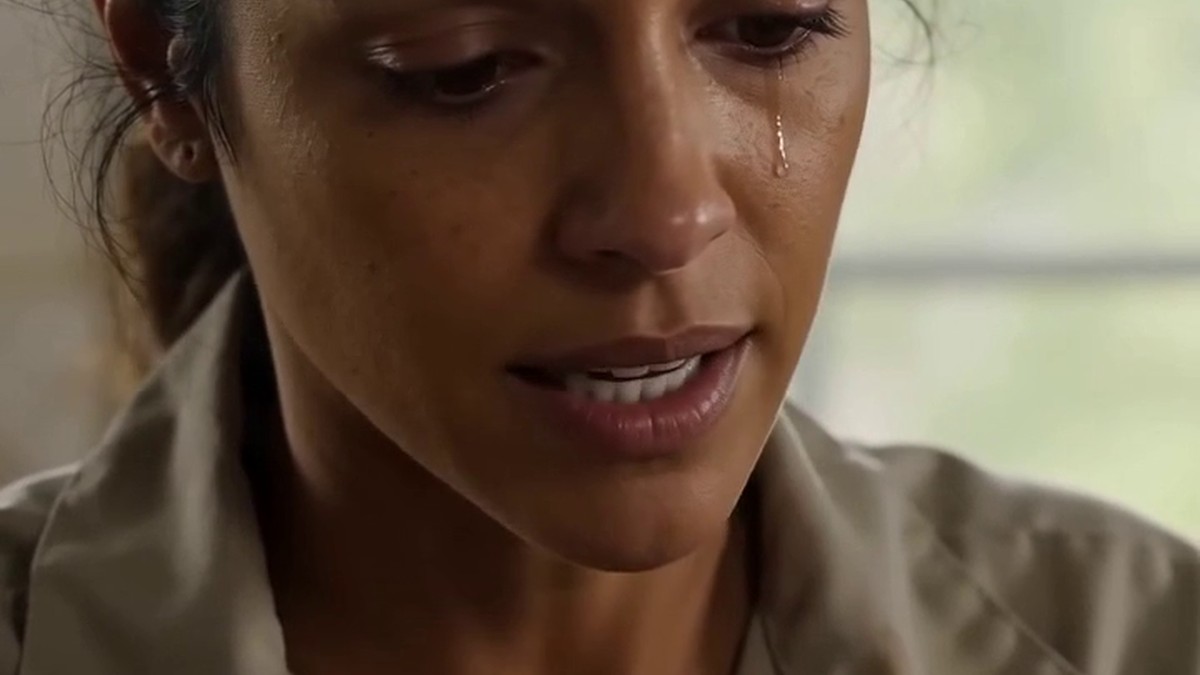
The silence after we buried her wasn’t the peaceful kind. It was heavy, the way the air gets in the fields back home before a tornado. My sister, Megan, and I were in our mother’s kitchen in Hastings, Nebraska, surrounded by Pyrex dishes of lukewarm casseroles neighbors had dropped off. Neither of us had spoken a real sentence in about an hour.
I was washing a coffee mug that was already clean. Megan was wiping down the counter with a sponge, going over the same patch of turquoise Formica again and again. My name is Claire, I was forty-five then, a pediatric nurse who lived three hours away in Omaha with my husband, Derek, and our two boys. Megan was thirty-nine, a manager at a credit union in Lincoln, divorced for six years, raising her daughter, Lily, on her own. Our mother, Margaret, was seventy-four. A woman who could fix a tractor engine and then paint her nails a ridiculous shade of coral before the church bake sale. Our dad, Hank, passed from a heart attack fourteen years before. After he was gone, Mom just seemed to get more stubborn, more rooted to her patch of land. She acted like asking for help was a sin, but she never had to ask. I was always there. A three-hour drive each way, every other weekend, to check her meds, fix the leak under the sink, or just sit with her on the porch when the evening shadows got too long for her to handle alone.
Megan’s life was messier. The divorce had hollowed her out. She was a single mom in a small apartment, tracking every dollar. She couldn’t just take off on a Friday. Instead, she’d send care packages—expensive coffee beans, a new tablet so they could video chat, gift cards for the grocery store. I saw the boxes piling up in the hall closet, and a petty, ugly thought would run through my head: *Mom didn’t want a Keurig, she wanted you.*
The conflict didn’t start over the will. It started over a half-dead philodendron in a clay pot by the sink. I was sorting through a pile of coupons, and Megan reached over and dumped the plant in the trash.
“What are you doing?” I said. My voice was sharper than I intended.
“It’s dead, Claire. Most of the leaves are brown.” She didn’t look at me.
“It could have been saved. You just have to water it. Be here to water it.”
Her hand stopped mid-air. She turned her head slowly, and her eyes were hard, a stranger’s eyes in my sister’s face. “Well, we’ve gotten to the point quickly, haven’t we?”
“What point?” I shot back, my face getting hot.
“The one where you hold up your scorecard and tell me I didn’t visit enough.”
I should have stopped. I didn’t. “You know, it would have been nice if you could have been around for more than just Christmas. I was the one sitting with her in the E.R. at two in the morning. I was the one who knew the name of her cardiologist.”
Megan balled up the paper towel in her fist. “And she never let me forget it. It was always, ‘Claire knows how to fix the sink,’ ‘Claire will handle the insurance.’ Do you have any idea what it’s like to walk into your own childhood home and feel like a guest who can’t find the light switches? You made me feel like an intruder.”
That’s when I said the thing I can never take back. The words just spilled out, hot and venomous. “Maybe you felt like a guest because you acted like one. It was just easier for you to love her from a distance, with a stamp on a package.”
She didn’t scream. She just pressed her lips into a thin, white line and looked at me as if she was seeing me clearly for the first time. “You have no idea how I’ve lived. But you go right ahead and judge from your throne.”
She grabbed her keys from the hook and walked out. The screen door didn’t slam. It just clicked shut with a quiet finality that was ten times louder.
A week passed. Two. A month. Our texts were a study in cold-blooded logistics. “Notary is Tuesday at 10.” “Found the deed to the south acreage.” “Dumpster ordered for Saturday.” Each message was another brick in the wall we were building over our mother’s grave. The house that had held us together was tearing us apart.
I found the box on the top shelf of the pantry, behind Mom’s canning jars. It was an old hatbox from a department store that closed decades ago, striped yellow and white. On the lid, in Mom’s loopy cursive, was a single line written in Sharpie: *Open together when you’ve forgotten you’re sisters.*
My heart thumped so hard I could feel it in my ears. She knew. She had seen this train wreck coming from a mile away. She’d seen my resentment and Megan’s guilt and drawn up a map for us to find each other. I didn’t open it. I pulled out my phone, my thumb hovering over Megan’s name. I hated the feeling that I was the one breaking the silence, but the sight of Mom’s handwriting had knocked a hole clean through my anger. I pressed call.
She answered on the fifth ring. “Hello?” No “hi,” no name. Just a wary question.
“I found something,” I said. “A box from Mom. It’s got our names on it.”
There was a long, dead-air pause. I could hear her breathing, and in the background, the faint, tinny beat of some pop song Lily must be listening to. “Did you open it?” she asked, her voice tight.
“No. It says to do it together.”
She was quiet again. I could picture her face, that closed-off look she gets when she’s balancing between shutting down and letting someone in. “I can drive down Saturday morning.”
She arrived at half past ten on a grey, windy Saturday. She looked exhausted, still in her work clothes from the day before, a coffee stain on her sleeve. She didn’t hug me. She just stepped inside and placed a bag of fresh kolaches on the table, the kind from the Czech bakery downtown that Mom loved. The gesture, a peace offering for a dead woman, nearly broke me.
We sat at the worn oak table. I put the hatbox between us. The yellow stripes looked cheerful and completely out of place in the tense, cold room.
“You do it,” Megan said, nodding at the lid.
I lifted it off. Inside, there were no savings bonds, no family jewelry, no forgotten cash. There were two thick, spiral-bound notebooks, one labeled “Claire,” the other “Megan.” Beneath them was a stack of old photos, a letter from our Dad, and a small, sealed envelope with the words: “Don’t you dare tally up love.”
I opened the notebook with my name on it. Mom’s handwriting, that familiar, rushed script, hit me like a physical force. I read the first page.
*Claire-bear is my rock. She has been since she was ten years old. She thinks if she doesn’t hold up the whole sky, the stars will crash down on us. The problem is, she never puts the burden down, and then she gets angry that no one else’s shoulders are aching. She doesn’t know how to ask for help, so she just assumes nobody wants to give it.*
Megan started reading her own notebook. I watched her face crumple. A tear dropped onto the page, smearing the ink. Mom’s words for her were just as tender, and just as brutally honest.
*My Megan. My quiet girl. She thinks she’s the spare, the one nobody really sees. This is my fault. I always told her, ‘Why can’t you be more like your sister?’ I wanted to push her, but I just pushed her away. She isn’t cold. She just disappears inside herself when she’s hurting. The packages are how she says ‘I love you’ because she’s afraid her voice will crack if she tries to say the words.*
We went deeper. She had kept everything. I found a pharmacy receipt for her blood pressure medication from three years ago, stapled to a note: *Claire paid for this. Wouldn’t take a dime back.* I’d forgotten I even did that. Megan found a stack of her own bank transfer confirmations. Hundreds of dollars every month, quietly funneled into Mom’s checking account to cover the cost of the home health aide I didn’t even know she’d hired towards the end. Mom’s note was attached: *Told Megan not to tell Claire. My strong one would just take it as criticism, that she wasn’t doing enough.*
The last thing in the box was Dad’s letter. It was dated six days before he died. His voice was so clear in the words it was like he was sitting at the table with us.
*Maggie, when I’m gone, don’t let the girls become strangers. Claire will try to be the mother, the father, and the ghost of me. She’ll do so much she’ll suffocate everyone and resent them for not breathing. Megan will fall away like a leaf on a river. She’ll think there’s no room for her at the table anymore. Your job is to grab them both by the scruff of their necks and remind them that a family isn’t a competition. If you don’t, they’ll spend the rest of their lives dividing up your love like it was a piece of land, and they’ll lose each other in the survey.*
Megan pushed her chair back and stood up, walking over to the window. Her back was to me, rigid, but I could see her shoulders shaking. “I wasn’t staying away because I didn’t care,” she whispered, her voice ragged. “I was staying away because I couldn’t stand the way you looked at me. I knew I was failing. I just didn’t know how to climb out of the hole I was in. You had Derek, you had a house, you had the life Mom admired. I had a mountain of debt and a kid who asked me every night why her Daddy wasn’t coming back.”
Her words stripped the air out of the room. I stared at my own hands, the hands that had never been too busy for Mom, but had been too busy to reach out and just hold my sister. The anger I’d been nursing for years suddenly had no place to go. It wasn’t armor anymore; it was just dead weight.
I stood up and walked over, standing beside her, not touching her. “And I’m so damn stubborn, I just stood there with my arms crossed, waiting for you to read my mind and know how tired I was. I wanted you to beg to be a part of things so I could be the gracious one.” I said it to her reflection in the dark window glass. “I’m so sorry, Meg.”
She didn’t forgive me right away with a hug. That’s not real life. She just nodded, a small, broken little nod, and handed me a wadded-up Kleenex from her pocket. We stood there for a long time, not talking anymore, just looking out the window at the barren, winter-dead garden our mother had loved.
Later, we finally made a pot of coffee from the expensive beans Megan had sent Mom six months ago. We sat and talked until the kitchen was dark and we hadn’t bothered to turn on a light. We didn’t talk about the house or the paperwork. We talked about Mom’s laugh, the way Dad could never find his glasses, the summer a stray dog gave birth under the back porch, and the time Megan and I tried to build a raft that sank in thirty seconds flat. We talked about our own lives, the things we’d been hiding from each other for a decade.
We decided not to sell the farmhouse right away. We’re renting the land to a neighbor, a young farmer named Jake, to keep the taxes paid. I kept Mom’s old quilts, the ones she’d made from our Dad’s worn-out flannel shirts. Megan took the turquoise kitchen timer, the one shaped like a hen, and a single coral-pink sweater that still held a whisper of Mom’s rose-scented lotion. It wasn’t about being fair, on paper. It was just about knowing what the other person needed.
The yellow hatbox isn’t hidden in the attic. It’s on a shelf in the living room. I see it every time I walk in. It doesn’t feel like a memorial anymore. It feels like a directive. My mother left us the only piece of advice we ever really needed. She didn’t give us a house to sell. She gave us a key to a door we’d built ourselves, the one that stood between us, silent and locked. And the only way to turn the key was to do it together.