Maggie heard the familiar question before she even saw her grandson’s face.
“Grandma, is it true the ocean makes noise even at night?”
Oliver stood in the kitchen doorway, barefoot on the cracked linoleum, hugging a faded backpack to his chest like a life raft. Maggie smiled, though something inside her chest twisted tight. Three days until the trip. The boy had been crossing off dates on a calendar he’d drawn himself, the squares messy with purple crayon, each X a small victory.
Inside that backpack he kept a towel with frayed edges, a red toy car missing one wheel, and a shell he’d molded from blue Play-Doh— the one he planned to trade for a real one the moment his toes touched the sand in Destin.
His mother, Emma, had been gone for almost four years, working as a live-in caregiver for an elderly woman named Mrs. Greenwood up in Chicago. Every Sunday afternoon, the video call came, and every Sunday, the same promise spilled through the speaker.
“This time I’ll be there. We’ll see the water together, baby. I swear.”
Oliver believed every syllable.
That afternoon he’d parked himself by the chain-link fence again, chin resting on the metal bar, eyes locked on the empty road that cut through the Indiana cornfields. A neighbor walking her dog called out, and Oliver puffed up his chest.
“We’re going to the ocean soon.”
Inside, Maggie kneaded dough at the counter and stole glances at the boy through the window. She had learned the hard way what promises meant when they came from people who lived in other people’s houses, in other cities, in other lives. Not that they lied— just that life had a way of bulldozing plans.
The phone rattled on the counter.
The screen lit up: *Emma*.
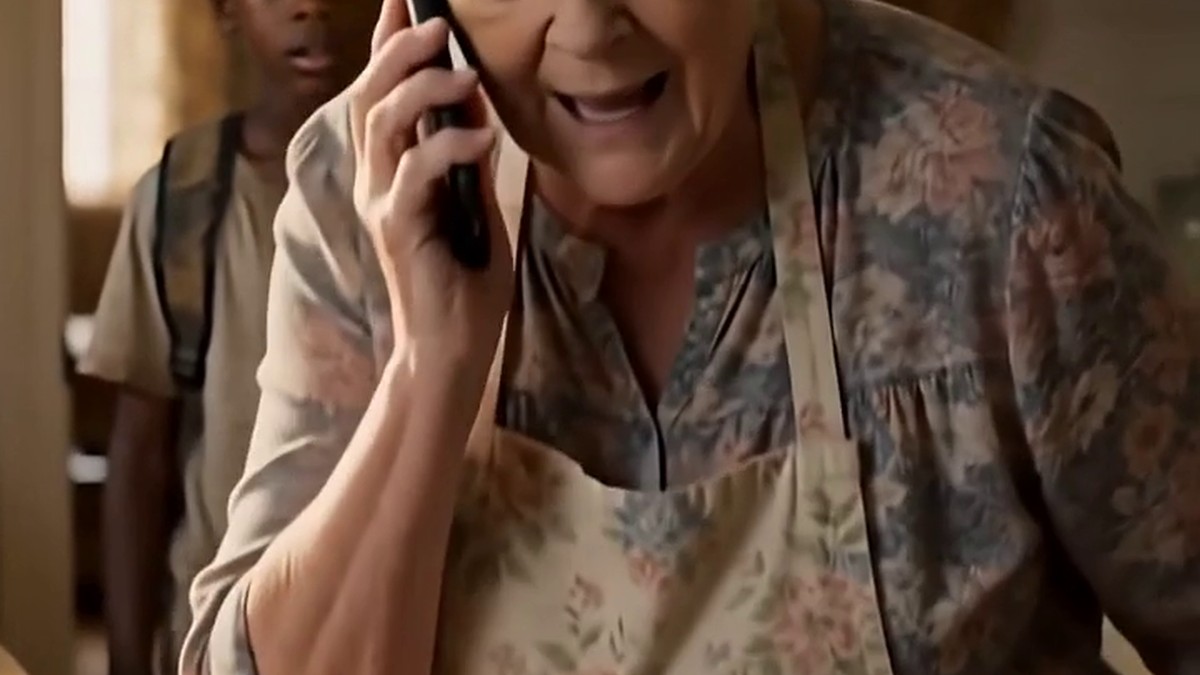
Maggie wiped her floury hands on her apron and answered. For a long moment she just listened, the air being sucked from the room. Then she lowered herself into a kitchen chair, the old wood creaking beneath her.
“Mama… I’m so sorry… I can’t come.” Emma’s voice wobbled through static. “If I leave now, I’ll lose the job. I can’t leave her alone. She doesn’t have anyone else.”
Oliver was already at her elbow, eyes huge.
“Is it Mom? When is she coming?”
Maggie couldn’t look at him right away. The silence stretched until it felt sharp enough to cut.
“Sweetheart… we’re not going.”
The boy didn’t cry. He didn’t shout. He just tightened his grip on the backpack strap, nodded once, and walked to his room with a stillness that was worse than any tantrum.
That night, Maggie lay awake and heard the whisper through the thin wall— a voice thick with tears.
“You promised, Mom. You promised.”
The next morning, she pulled a knotted handkerchief from the back of her dresser drawer. Worn twenty-dollar bills, a few fives, some ones soft as cloth. She had been saving for an emergency that never quite arrived. Now she counted, licked her thumb, counted again. Enough for two bus tickets. Enough for a cheap motel one block from the beach. Enough for three days of the ocean Oliver had never seen.
“I think… this might be enough,” she whispered to herself.
And that’s when the knock came— heavy, urgent, rattling the doorframe.
Maggie tucked the handkerchief into her pocket and crossed the room. She turned the deadbolt, pulled the door open, and froze.
Emma stood on the cracked concrete stoop. A canvas suitcase sat at her feet. Her hair was pulled back in a hasty ponytail, her eyes red-rimmed but fierce. The morning light caught the wet shine on her cheeks.
“I quit,” she said, the words tumbling out before Maggie could inhale. “Or— she let me go. Mrs. Greenwood called her nephew. He’s taking over for a week. She told me I’d taken care of her like a daughter, and that no paycheck was worth missing this.”
Maggie’s hand rose to her mouth.
“You’re here,” she breathed.
Behind her, small footsteps pounded down the hallway. Oliver skidded to a stop, the backpack still glued to his body. For three seconds, he just stared. Then he launched himself through the door and into his mother’s arms.
Emma sank to her knees on the stoop, crushing him against her, sobs spilling into his hair. “I’m here, Ollie. We’re going to see the water. All three of us.”
The bus left that evening. Oliver pressed his nose to the window as the flat cornfields gave way to rolling hills, then to tangles of palms and the first salty breath of the Gulf. He didn’t sleep once.
They reached Destin just before sunrise.
Maggie hung back as Emma took the boy’s hand and walked him across the cool white sand. The sky was turning tangerine at the edges, and the waves came in low and steady, folding over each other like pages in a book.
Oliver stopped at the waterline. He dug into his backpack and pulled out the Play-Doh shell— now a little squashed— and crouched down. A real shell, pale pink and ridged like a fan, had washed up a few feet away. He picked it up, replaced it with the Play-Doh one, and pressed the real shell into his palm. Then he turned to his mother and grandmother, his grin breaking open.
“It’s the same,” he said. “The ocean really does make noise at night.”
Maggie laughed, the sound catching in her throat. Emma wrapped an arm around her mother’s shoulders, and the three of them stood in the foaming edge of the tide, no distance left between them.
That night, in a motel room with a rattling air conditioner, Oliver fell asleep with the shell clutched to his chest. And through the thin walls, the Gulf murmured on— a steady, ancient whisper that didn’t break promises.