For several seconds, nobody moved.
The ocean kept flashing beyond the windows.
The flowers trembled in the draft from the open doors.
The officiant stood frozen with the book in his hands.
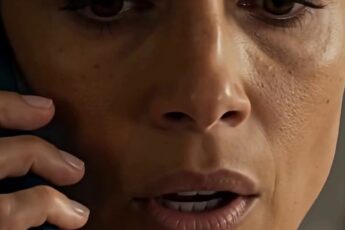
And Caleb Stone stared at the woman he had spent seven years trying to forget.
Lena.
She wore no gown.
No diamonds.
No careful smile made for rich guests and wedding photographers.
She stood in the doorway in a simple navy dress, one hand gripping the frame as if the room itself might push her back out.
She looked older.
Thinner.
Tired in a way that did not belong to one bad night.
But she was alive.
Noah turned toward her.
“Mom…”
That one word moved through the room more powerfully than the wedding music ever had.
Caleb looked from Lena to the boy.
The eyes.
The serious mouth.
The way Noah lifted his chin when he was afraid, as if courage were something he had learned by watching his mother do it first.
Caleb’s fingers closed around the bracelet.
Always your sunrise — L.
He remembered the morning Lena had given it to him. It had been raining then too, not enough to run from, just enough to make the sidewalks shine. She had laughed when he called it dramatic.
“You’re sunrise to me,” she had said. “Even when you act like a storm.”
Then she had disappeared.
No goodbye.
No explanation that made sense.
Only a letter that said she was leaving, that she had chosen another life, that he should not look for her.
And he had believed it.
Not at first.
At first he had searched like a man losing air.
Then came the second letter.
Then the bank transfer someone said she accepted.
Then the warnings from people he trusted.
And slowly, grief had hardened into pride.
Pride into silence.
Silence into seven years.
Natalie stepped back beside him.
Her bouquet shook in her hands.
Caleb turned to her.
“How long have you known?”
Natalie opened her mouth.
No sound came out.
Caleb’s mother, Vivian Stone, rose from the front row before Natalie could answer. She wore pale silk and pearls, her expression controlled, as always.
“Caleb,” she said. “Do not let this woman turn your wedding into a spectacle.”
Noah moved closer to Lena.
Caleb saw it.
That tiny step backward.
That instinctive search for safety.
And in that moment, something in him shifted.
He walked down from the altar and knelt in front of the boy.
Not too close.
Not with his arms open.
Not like a man expecting to be welcomed.
Just low enough so Noah would not have to look up at him.
“Are you afraid of me?” Caleb asked softly.
Noah looked at Lena.
She nodded, barely.
“I don’t know,” Noah said honestly.
Caleb swallowed.
It hurt.
But it was fair.
A man who learns he is a father at his own wedding has no right to ask a child for trust.
“Then we’ll go slowly,” Caleb said. “You don’t have to give me anything I haven’t earned.”
Lena closed her eyes for a moment.
Not in relief.
Not in forgiveness.
But as if those words had touched a place in her that had not been allowed to rest for years.
Caleb stood and faced the room.
“I want the truth.”
Vivian’s voice sharpened.
“The truth is that Lena left you.”
Lena stepped forward.
“I tried to reach him.”
Caleb turned.
“What?”
She reached into her small bag and pulled out an old envelope. The edges were soft, worn by years of being opened and folded again.
“I kept this because I thought I needed proof not to come back.”
Caleb stared at it.
“What is it?”
“The letter you supposedly wrote me.”
His face went still.
“I never wrote you a letter.”
Lena’s mouth trembled.
“It said I was a mistake. That your family would never accept me. That I would ruin your future. That Natalie understood your world in a way I never could. It said if I had any dignity left, I should leave before I embarrassed myself.”
Caleb looked as if the floor had dropped beneath him.
“I never wrote that.”
“And I never wrote the one you received.”
His voice lowered.
“What did mine say?”
Lena looked at Noah, then back at Caleb.
“That I was pregnant, but I didn’t want our child raised around your family. That I had taken money. That I had found someone else who could give me a quieter life.”
Caleb’s hand tightened around the bracelet until the silver pressed into his skin.
“You never took money.”
“No.”
Vivian’s jaw hardened.
“Enough.”
Caleb looked at his mother.
“No. Not even close.”
From the side of the chapel, a woman in a black uniform stepped forward. Mrs. Della Reed, the estate housekeeper, had worked for the Stones for twenty-eight years. She had arranged flowers, polished silver, greeted guests, and carried secrets through halls where nobody thought servants heard anything important.
Her hands trembled.
But she did not step back.
“Mr. Caleb…”
Vivian turned sharply.
“Della, return to the house.”
Mrs. Reed’s eyes filled.
“I have returned to the house too many times when I should have spoken.”
Caleb looked at her.
“What do you know?”
Mrs. Reed took a breath.
“Lena came to the Newport estate seven years ago. More than once. She was pregnant. She begged to see you.”
Lena covered her mouth.
“You were at the gate.”
Mrs. Reed nodded, tears spilling now.
“Yes. And I told you Caleb did not want to see you. Because I was ordered to say it.”
The room seemed to tilt.
Caleb closed his eyes.
The betrayal had not come from strangers.
It had come from the people who stood closest to him.
Vivian stepped forward.
“I did what had to be done.”
Caleb’s eyes opened.
“You kept my child from me.”
“I protected your future.”
“My son was my future.”
Vivian’s face tightened.
“She was nobody, Caleb. A girl with no family name, no protection, no place in the life you were born into. You were about to take control of the company. She would have pulled you down.”
Lena lifted her head.
“I was carrying his child.”
Vivian’s voice went cold.
“You were carrying a scandal.”
“No,” Lena said quietly. “You were afraid he would choose us.”
No one answered.
Because the truth does not need to shout when it lands exactly where it belongs.
Caleb turned to Natalie.
“And you?”
Natalie wiped her cheeks quickly.
“Your mother said Lena might come back one day. She said there was a child, but that he might not be yours. She said Lena had already taken money once. She said if she showed up, it would only be to destroy us.”
“And you believed her?”
Natalie looked down.
“I wanted to.”
That was worse than a lie.
It was the truth beneath one.
Caleb nodded slowly.
“Because it gave you what you wanted.”
Natalie whispered:
“I loved you.”
Lena’s voice was low.
“Love does not build a wedding on another woman’s disappearance.”
The officiant closed his book.
Caleb took Natalie’s ringed hand.
For one terrible second, she seemed to hope he was reaching for comfort.
Instead, he removed the ring.
Gently.
Finally.
“The wedding is over.”
Two quiet words.
And the perfect ending shattered.
The music did not return.
The guests began standing one by one, faces pale, eyes lowered, some whispering with the late outrage people often find only after the truth has already won.
The white roses suddenly looked too clean for a room where such a dirty secret had lived.
Caleb turned to security.
“No one involved in this leaves the estate until my attorney and the police arrive.”
Vivian went white.
“You would call the police on your own mother?”
Caleb looked at Noah.
The boy stood beside Lena, one hand wrapped in the fabric of her dress.
“I would call the police on anyone who took seven years of my son’s life from me.”
Lena’s face broke at the word son.
Not because everything was fixed.
Because someone had finally said the truth out loud.
Later, the three of them sat in a small library off the main hall.
Lena in an armchair.
Noah close beside her.
Caleb across from them, not too near.
The silver bracelet lay on the table between them like a small piece of the past nobody had managed to destroy.
Noah stared at Caleb.
“Are you really my dad?”
Caleb breathed in slowly.
“I believe I am.”
“But you weren’t there.”
Lena closed her eyes.
Caleb lowered his head.
“No. I wasn’t.”
“Why?”
The question was small.
But it weighed seven years.
Caleb answered carefully.
“Because adults lied. And because I believed the wrong adults.”
Noah thought about that.
“Mom never said you were bad.”
Caleb looked at Lena.
His eyes filled.
“What did she say?”
Noah tugged at the sleeve of his jacket.
“That maybe you didn’t know about me.”
Lena looked toward the window.
The ocean was dark now, silver under the evening sky.
“I didn’t want him to grow up with hatred,” she said.
Caleb had no answer.
Some gifts are so large that thank you feels too small to carry them.
The weeks that followed were not romantic.
They were not the kind of story where a ruined wedding becomes a beautiful second chance overnight.
There were attorneys.
DNA tests.
Statements.
Old bank records.
Forged letters.
Mrs. Reed’s testimony.
Staff members who admitted they had seen more than they had ever said.
Drivers who remembered taking envelopes.
Assistants who remembered being told certain calls were never to be put through.
People who had stayed silent because powerful families pay well for silence.
The test confirmed what Noah’s eyes had already told him.
Caleb was his father.
When Caleb read the result, he sat down on the floor of his office.
A man who had signed contracts worth millions could not hold one sheet of paper without shaking.
Seven years.
He had missed the first cry.
The first steps.
The first word.
Fever nights.
Birthdays.
The first lost tooth.
The first school drawing Noah made of a family with one blank space he did not understand.
Caleb did not cry elegantly.
He cried like a man finally understanding that money cannot buy back time.
Lena did not move into the Newport estate.
Everyone expected it.
The lost love returns.
The boy finds his father.
The family becomes whole.
But real life does not obey other people’s hunger for a pretty ending.
Lena rented a small cottage near the water. Close enough that Noah could see Caleb. Far enough that the door belonged to her.
Caleb offered to pay for everything.
She refused.
Later, she accepted help.
But with rules.
For Noah.
Not as a payment for guilt.
Not as an attempt to buy love.
Not as a shortcut to forgiveness.
Caleb had to learn that.
Help is not control.
Money is not an apology.
A child does not automatically trust you because the truth finally came out.
Noah began visiting Caleb twice a week.
At first, Lena stayed.
Then she waited in the garden.
Then, after a while, she left for one hour and came back before Noah had to ask where she was.
The first visits were awkward.
Caleb bought too many toys.
Noah looked at the bags and asked:
“Am I supposed to be happy now?”
Caleb put them away.
“No.”
“Good.”
“What do you want to do?”
Noah shrugged.
“I don’t know.”
“Then we can not know together.”
That earned the first tiny smile.
They started with small things.
Collecting shells.
Eating ice cream.
Building a model sailboat that sank in the bathtub the first time they tested it.
Noah laughed so hard Lena came in from the porch to make sure everything was alright.
Caleb held the dripping boat.
“I don’t think I’m much of a sailor.”
Noah wiped his eyes.
“You’re terrible.”
“Thank you for your honesty.”
“Mom says honesty matters.”
Caleb looked toward Lena.
“Your mother is right.”
Noah watched him seriously.
“Do you say that because you love her?”
Caleb froze.
So did Lena.
Children sometimes ask the questions adults spend years building detours around.
Caleb did not answer right away.
Then he said:
“Yes. But that does not mean she owes me anything.”
Noah thought about it.
“Good.”
Lena said nothing.
But that night, after she put Noah to bed, she cried for the first time not from pain, but from relief.
Caleb was beginning to learn correctly.
Vivian Stone left the estate.
Not proudly, as she would have preferred.
Not as a wounded mother.
But with attorneys, suitcases, and a son who no longer allowed her to call cruelty protection.
The investigation lasted months.
Forgery.
Coercion.
Fraud.
Manipulation of documents.
It became public.
Of course it did.
“Newport Wedding Stopped by Child.”
“Missing Woman Returns With Son.”
“Stone Family Accused of Hiding Truth for Seven Years.”
Caleb hated the headlines.
Lena hated them more.
They turned their lives into drama people could read between coffee and the weather.
Some called Noah “the boy with the silver bracelet.”
Lena banned photographers from going near his school.
Caleb hired lawyers.
This time, not to bury the truth.
But to protect it.
Natalie disappeared from society for a while.
Later, she sent Lena a letter.
Three pages.
Regret.
Explanations.
Sentences like “I was under pressure too” and “I didn’t know how far it had gone.”
Lena read it once.
Then placed it in a drawer.
Caleb did not ask if she would answer.
A week later, Lena said:
“Some apologies don’t come because someone understands your pain. They come because silence has become heavier than guilt.”
Caleb nodded.
“Will you write back?”
“No.”
“Why?”
Lena looked out at the water.
“Not every door has to stay open just because someone finally knocked.”
One year passed.
Then two.
Nothing became easy.
But many things became true.
Noah had two toothbrushes.
One at Lena’s cottage.
One at Caleb’s estate.
He had two favorite places.
The bench outside his mother’s little porch.
And the stone steps by Caleb’s cliffside garden, where they watched the waves without saying much.
“You have to wait,” Caleb said once while they tried to fish and caught nothing.
Noah grinned.
“You’re bad at waiting.”
“I’m practicing.”
“Mom says you practice a lot.”
Caleb glanced at him.
“She says that?”
“Yeah.”
“Does that sound good or bad?”
Noah thought.
“Like hope, but careful.”
Caleb smiled sadly.
“I can live with that.”
Lena and Caleb did not become a couple again immediately.
People disliked that.
They wanted a beautiful ending.
A wedding simply delayed.
A photograph by the sea.
A white dress, this time on the right woman.
But real love is not furniture you pull out of storage after seven years and place back where it used to stand.
You have to test whether the floor still holds.
Lena had to see that Caleb was no longer the man who had believed blindly.
Caleb had to understand that remorse is not a shortcut to forgiveness.
And Noah had to learn that family does not mean everyone suddenly tells the same story.
Sometimes family means the adults are willing to read the painful chapters aloud without tearing the child between them.
On the third summer after the wedding that never happened, Noah celebrated his tenth birthday by the water.
Not at the estate.
He decided that himself.
“Too big,” he said.
So there were colored lights in the garden of Lena’s cottage, a crooked cake, and a table covered with chocolate fingerprints.
Caleb did not bring an expensive gift.
Only a small wooden box.
Noah opened it suspiciously.
Inside lay the old silver bracelet.
Cleaned.
Carefully repaired.
Beside it was a second, smaller bracelet.
Also silver.
No expensive stones.
On the inside, it read:
For our brave sunrise — Dad.
Noah read it once.
Then again.
He looked up at Caleb.
“Dad?”
Caleb barely breathed.
“Only if you want.”
Noah said nothing.
He put the bracelet on.
Then suddenly threw his arms around Caleb.
Not carefully.
Not politely.
Like a child finally stopping himself from holding the door only halfway open.
Caleb held him.
Over Noah’s shoulder, he saw Lena.
She was crying.
But she was smiling.
Later, when the children were tired and the lights moved in the sea breeze, Lena and Caleb stood near the water.
“I don’t know what we’ll become,” she said.
Caleb nodded.
“I don’t know either.”
Once, he would have given her an answer.
A plan.
A promise.
A ring.
Now he only said:
“I won’t push you.”
Lena looked at him.
“Good.”
“But I’ll stay.”
She turned her eyes toward the ocean.
“I hope so.”
It was not a promise.
But it was more than goodbye.
Years later, people still talked about the Newport wedding that never happened.
About the boy who arrived before the final vow.
About the silver bracelet.
About the bride who went silent.
About the mother who confused power with love.
About the man who lost a wedding at the altar and found his son.
Noah told the story differently.
When people asked if he had been afraid, he nodded.
“Very.”
When they asked why he walked in anyway, he shrugged.
“Mom said he would recognize the bracelet.”
“And if he hadn’t?”
Then Noah usually looked toward Caleb, who always grew quiet at that part.
“I would have tried again,” Noah said.
Because that was what Lena had taught him.
Love does not always get the door opened the first time it knocks.
But sometimes behind the door stands someone who did not even know he had been waiting all those years.
The silver bracelet was never locked in a safe.
Never placed behind glass.
Never turned into proof of old guilt.
Sometimes Caleb carried it in the inner pocket of his jacket.
Sometimes Lena kept it on her nightstand.
Noah took it with him on important days.
First day of school.
First concert.
First time traveling by train alone.
“Why do you always bring it?” Lena asked once.
Noah turned the bracelet in his hand.
“Because it found us.”
Lena kissed his forehead.
“No, sweetheart.”
She looked toward Caleb, standing in the doorway.
“You found us.”
The truth had not been created that evening in Newport.
It had existed all along.
In Lena’s tears.
In Caleb’s doubts.
In Noah’s eyes.
In letters that never arrived.
In a bracelet no one could throw away because love sometimes outlives every lie.
And in a little boy who walked into a room full of strangers, even though his knees were shaking, because his mother had said:
He will know it.
And Caleb did.
Dear readers, what did this story make you feel? Do you believe one small sign can bring back an entire lost truth? Share your thoughts in the comments — someone may need the reminder today that love does not always return loudly. Sometimes it walks quietly through a door, in the hand of a child.