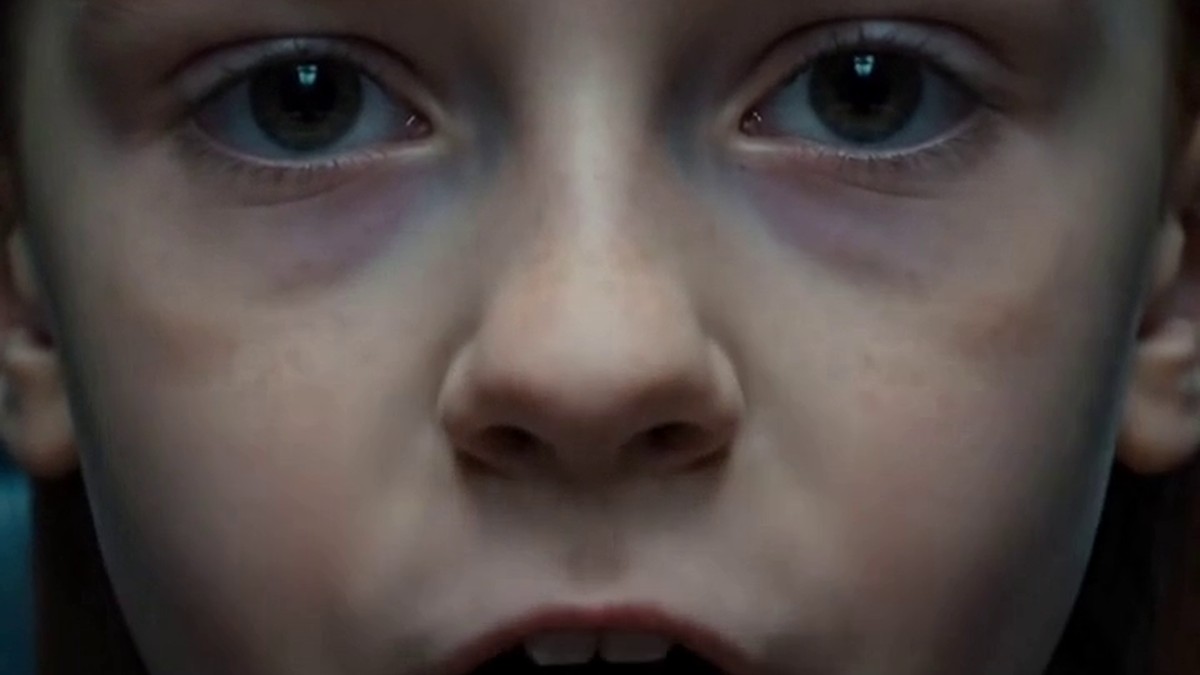
A little girl, seated across a table full of suits.
"I speak seven languages."
The room burst open with amusement.
"You're just a kid."
She dropped her gaze to her hands.
Stung.
But steady.
Then she lifted her eyes—
and replied in flawless French.
The air changed.
Then German.
Then Italian.
Every smirk vanished in an instant.
Because suddenly—
nothing about this was amusing anymore.
"Where on earth did you learn all of that?" one of the men asked.
The girl paused.
"My father taught me."
The older man went still.
Because something in those four words—
landed somewhere it had no business landing.
But here was the worst of it—
she hadn't yet told them her father's name.
And in that silence, one of the men set down his pen.
Slowly.
Like a man who has just remembered something he spent years trying to forget.
The others noticed.
The way you notice a crack in glass before it spreads.
"Your father," the older man said carefully. "What does he do?"
The girl looked at him the way children look at adults who are pretending not to know something.
Directly. Patiently. Without mercy.
"He *did*," she said. "He's gone now."
Another shift in the room.
A junior suit cleared his throat and reached for his water. Missed the glass entirely. Didn't look down.
"Gone how?" the older man asked.
And she said the name.
—
The room didn't burst open this time.
It collapsed inward.
Quietly.
The way old buildings go — not with a crash, but with a slow surrender of every beam that was holding the weight.
Two of the men exchanged a look that lasted less than a second and said everything.
The older man — the one at the head of the table, the one who had laughed first, the one whose laugh had given the others permission to laugh — pressed both palms flat against the table.
As if the floor had moved.
"You're his daughter," he said.
Not a question.
"I am."
She folded her hands in her lap.
Small hands. Steady hands. Hands that had learned to be still because stillness, her father had told her, is what frightens people most.
*Be still*, he had said, *and let them fill the silence. They always do.*
—
She had been seven when he started teaching her languages.
Eight when she understood why.
Not for travel. Not for beauty. Not for the romance of foreign sounds on her tongue.
For rooms exactly like this one.
*They will underestimate you*, he had said, sitting across from her at their kitchen table — the one with the wobbly leg he never fixed, the one she still couldn't think about without her throat tightening. *Let them. It's the only advantage that costs you nothing and pays you everything.*
He had known these men.
Had sat in rooms with them.
Had trusted some of them.
She knew which ones.
—
"What do you want?" the older man asked.
And there it was.
The question underneath all the other questions.
The real air in the room.
She reached into the bag beside her chair and placed a folder on the table.
Thin. Unremarkable. The kind of folder you'd use for grocery lists.
Nobody moved to open it.
"My father kept records," she said. "He was careful about that. He said that careful men outlive careless ones."
She paused.
"He was right about almost everything."
The *almost* hung there.
A small blade.
The junior suit — young, ambitious, the kind who had not yet learned to control his face — looked at the folder the way you look at something that might be alive.
"You were twelve when he died," the older man said. It wasn't a question either. He was reconstructing something. Calculating. "That was six years ago."
"Yes."
"You've been planning this since —"
"I've been *preparing*," she said. "There's a difference."
She had her father's precision with words.
Some of them flinched at it.
—
The older man leaned back in his chair.
He was good at this — she knew that, had studied him, had read every account of every room he had ever controlled.
He was trying to find the angle. The leverage point. The place where she was still just a girl with a dead father and a folder full of papers she might not fully understand.
He hadn't found it yet.
He wasn't going to.
"You could have gone to lawyers," he said.
"Lawyers would have taken years and settled for less than I deserve."
"You could have gone to journalists."
"I still can," she said simply. "That option doesn't expire when I leave this room."
The crack in the glass spread a little further.
"What do you want?" he asked again.
And this time the question was naked.
All the authority stripped out of it.
Just a man asking.
She let the silence breathe for a moment — let them fill it the way her father had taught her, watched two of them shift in their seats, watched the junior suit swallow —
and then she told them.
—
Not revenge.
She had thought about revenge.
Had lived inside the shape of it for years, turned it over in her hands in the dark, learned its weight, its texture, the particular warmth of it at two in the morning when grief comes back with its boots on.
She had decided against it.
Not because she was merciful.
Because her father hadn't raised her to want something that would end.
He had raised her to want something that would *last*.
—
What she asked for was specific.
Clean.
Documented.
An acknowledgement. A correction of the record. Funds redirected to the people who had been quietly, systematically harmed by decisions made in rooms like this one.
And one more thing.
A seat at the table.
Not today's table.
A different one. The real one. The one these men reported to.
"You want to be in the room," the older man said.
"I want to *change* the room," she said. "There's a difference."
That word again.
*Difference.*
He looked at her for a long time.
She did not look away.
She had been practising not looking away since she was eight years old.
—
He opened the folder.
Read it slowly.
The others waited.
When he closed it, his face had changed in some way that was difficult to name — not broken, not defeated, but *revised*, the way a man's face changes when he has been holding a wrong belief for so long that releasing it feels like losing something, even if the thing he's losing was always a lie.
"Your father," he said quietly, "was a remarkable man."
"I know," she said.
"He would have been —" He stopped. Chose a different word. "He would have been proud."
She felt it then.
The thing she had been holding back for six years, the thing she had packed down under seven languages and careful hands and the long discipline of stillness.
It moved.
Just once.
Just for a second.
But she was her father's daughter.
And she let the silence hold it.
"Do we have an agreement?" she asked.
The older man looked around the table.
One by one, like dominoes deciding to stand instead of fall, they nodded.
He looked back at her.
"We have an agreement."
—
She left the building alone.
Stepped out into the cold air and stood on the pavement for a moment, bag over one shoulder, the city moving around her the way cities do — indifferent, relentless, not knowing or caring what had just happened inside that room.
She looked up at the sky.
Grey. Ordinary. The same sky it had always been.
*Careful men outlive careless ones*, her father had said.
She had been careful.
She had outlived the version of this story where she lost.
She put her hands in her pockets — steady, quiet, still —
and walked forward into whatever came next.