It was a gray November afternoon when the bell above the diner door chimed and a small, ragged girl stepped inside. The air smelled of fried onions and old coffee. Every head turned, then quickly looked away. She couldn’t have been more than seven—her dress too thin for the cold, her hair matted, her eyes hollow from hunger. She stood clutching the doorframe as if hoping the world might just swallow her whole.
Bea wiped the counter and watched. In thirty years at the griddle she had seen plenty of drifters, but never a child alone like this. The girl shuffled forward, stopped at the counter, and stared at her shoes. When she spoke, her voice was a splinter of sound. “Excuse me, ma’am. I’m real hungry. But I don’t have any money.”
Bea didn’t answer right away. She saw the trembling hands, the cracked lips. Without a word, she set down a slice of apple pie she’d been saving for her break, then ladled a bowl of beef stew and placed it beside. “Sit down, honey,” she said, her voice cracking just a little. “Just eat, sweetheart.”
The girl stared at the food as if it might vanish. Then she ate like someone who’d forgotten what full felt like. Bea refilled her bowl twice, murmured “slow down, little one,” and asked no questions. When the plate was clean the girl finally looked up. Her eyes, blue and startlingly bright against the grime, filled with tears. She didn’t say thank you—she couldn’t. She just nodded, slid off the stool, and disappeared through the same door. Bea tucked a ten-dollar bill into the girl’s coat pocket as she left, but the child never felt it.
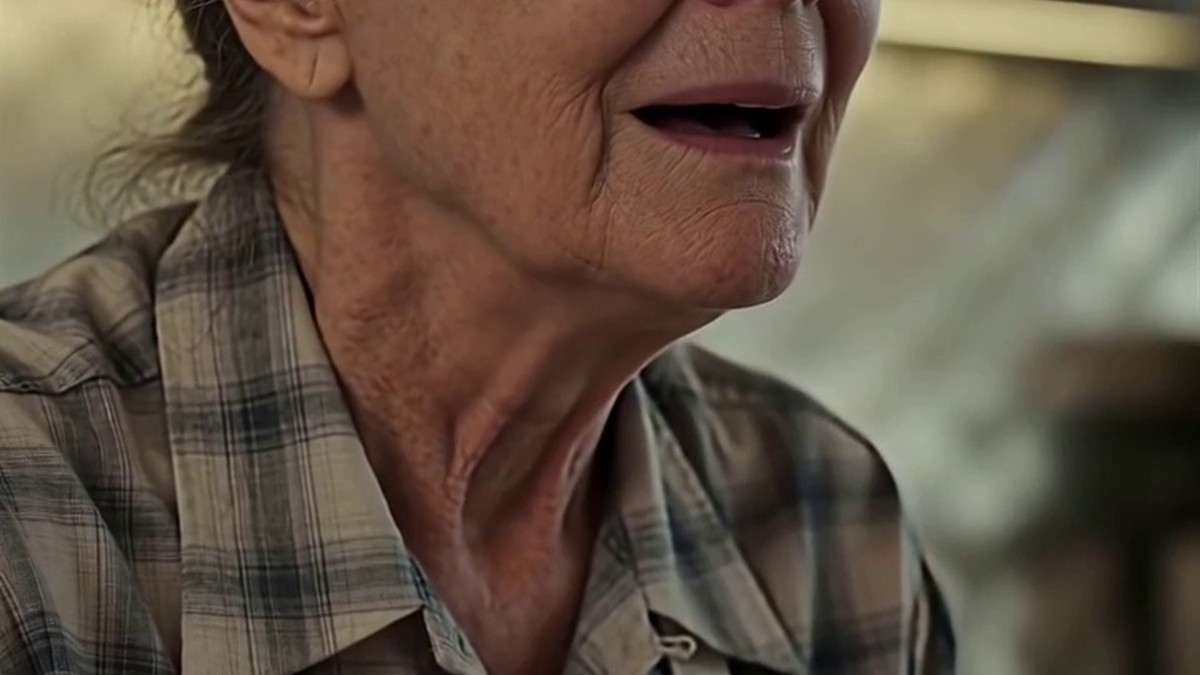
Years passed. The diner saw better days, then worse. The town shrank, the highway bypassed the street, and the regulars grew old and passed on. Bea kept the coffee hot and the griddle sizzling, even when her hands started to ache and her bones creaked. She never forgot that little girl, though she never learned her name.
One blindingly bright summer morning, a woman in a cream-white dress walked through the diner door. She moved slowly, as if stepping into a cathedral. The place was nearly empty—just a trucker in the corner and the hum of the ancient refrigerator. Bea looked up from arranging napkins and blinked. The woman was beautiful, with a calm, deliberate grace. Her tailored dress and soft heels spoke of a life far from this peeling linoleum. But her eyes were wet, and she held a hand to her chest like she was trying to keep something inside.
“Bea?” the woman said, her voice unsteady.
Bea squinted, the dishrag frozen in her grip. “Yes, honey. What can I get for you?”
The woman approached the counter and sat on the same stool that little girl had chosen all those years ago. She leaned forward until Bea could smell the faint gardenia of her perfume. Then she whispered three words—three words that punched the air right out of Bea’s lungs.
“Just eat, sweetheart.”
Time didn’t just slow; it stalled. The buzz of the fluorescent lights, the distant drone of a lawnmower outside, the ticking of the old diner clock—all of it vanished. Bea felt the world tilt. Her lips parted but nothing came. Before she could form a sound, the woman straightened, tears spilling freely down her cheeks. She was smiling now, a shaky, broken smile that seemed to hold a decade of gratitude.
And in that frozen moment, Bea’s mind reeled. The grime, the desperation, those startling blue eyes—it all flooded back. The little girl, the stew, the ten dollars she’d never known about. The child who disappeared without a name. “It’s you,” Bea breathed, the words strangling her. “Oh God, it’s you.”
The woman—Lucy, she would soon say—nodded, unable to speak. She reached across the counter and took Bea’s worn hands in her own. “You saved me,” she finally managed. “I wouldn’t be alive if not for you. I’ve been trying to find you for years. I made a promise.”
Bea shook her head, tears streaking the wrinkles on her cheeks. “I just gave you supper, child. That’s all.” But Lucy wouldn’t let her diminish it. She told the story Bea never knew. After leaving the diner that day, Lucy had wandered until a social worker found her at a bus station. She was taken into foster care, then adopted by a kind family in the next county. She finished school, earned a scholarship, became a pediatrician. All the while, she carried the memory of a nameless waitress who fed her without judgment, who whispered three words that became her life’s motto. “I tell my patients that every day,” Lucy said, her voice breaking. “Just eat, sweetheart. Just breathe. Just take the next step.”
Bea was speechless. She thought of the diner’s dwindling business, the stack of unpaid bills she’d hidden in the back office, the fear of closing the one place that had been her home. Lucy seemed to sense it. She drew a folded paper from her purse. “I bought the diner yesterday,” she said, placing the deed on the counter. “The bank was about to foreclose. I’m not going to change a thing—I want you to keep running it, as long as you want. But you’ll never have to worry again. I owe you everything.”
The few customers had fallen silent, watching the two women. Bea stared at the paper, her trembling hands mirroring that little girl’s from so long ago. She thought of all the years she’d worked, the loneliness, the quiet kindnesses no one ever noticed. “I don’t know what to say,” she whispered.
“Say you’ll let me take you to lunch after your shift,” Lucy said, her smile breaking wide. “And maybe tell me all the stories. I want to know who you are.”
Bea laughed, a wet, joyful sound. She leaned across the counter and pulled Lucy into an awkward, desperate hug. The old diner, so tired and so faithful, seemed to exhale around them. The bell above the door chimed again as the trucker left, and the sun poured through the window in long, golden shafts.
That evening, Bea locked up and walked out arm in arm with the woman she’d fed a lifetime ago. On the front door she’d placed a new sign Lucy had made: “Just eat, sweetheart. —Est. 1972.” And hidden in the corner, a single line in smaller print: “Second chances served daily.”
The story spread through town, of course. But Bea never cared about that. Every morning when she flipped the sign to OPEN, she would look at the stool where a hungry little girl once sat, and she would remember that a single moment of kindness can echo across decades—and come back to save you right when you need it most.