He was fifty-eight, retired from the post office, and lived in a single-story brick house in Knoxville with a perfectly manicured lawn he bragged about but never touched. I met him at a memorial service for a mutual acquaintance neither of us really knew well. He handed me a lukewarm coffee in a styrofoam cup and said, “You look like a woman who has good stories but never tells them.” Corny. Absolutely corny. But I was fifty-three, three years out from a divorce that had hollowed me out, and nobody had said anything remotely interesting to me in months. So I fell for it like a teenager.
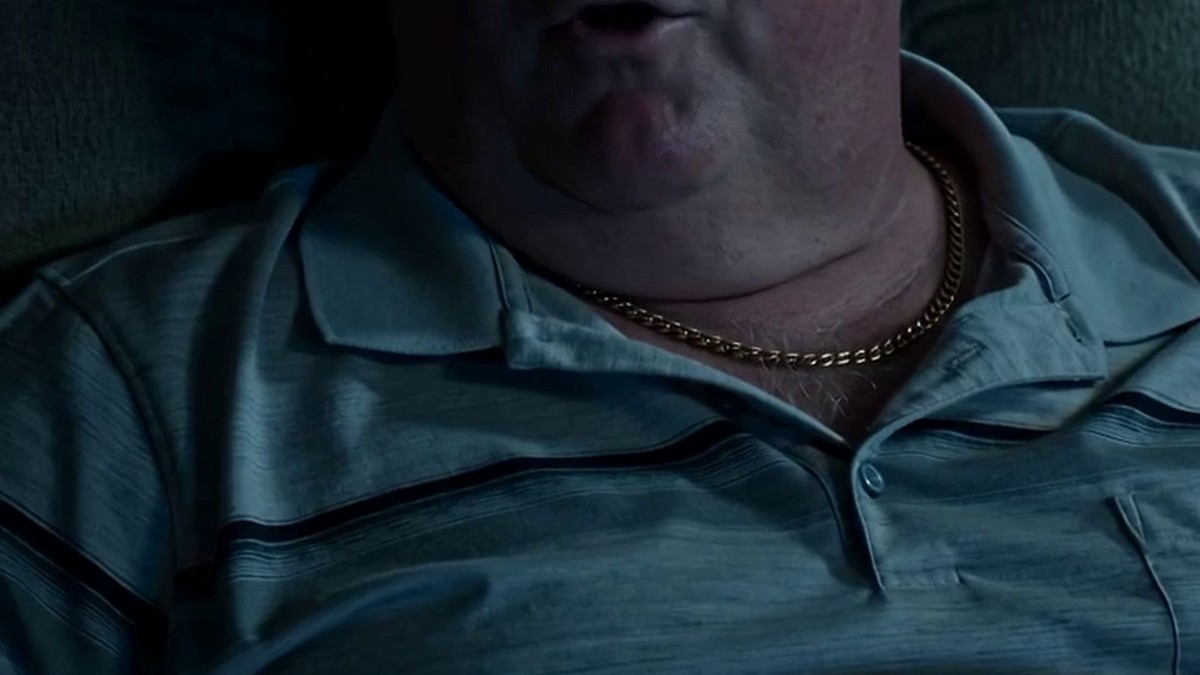
His name was Gerald. Gerald with a G, as he liked to say, tapping his chest. He had white hair buzzed short, a gold chain tucked into a polo shirt, and a laugh that filled a room. He took me to a catfish place on the river for our first date, then to a Garth Brooks cover concert at the civic center. By week six, he was saying he’d never met anyone like me, that his big house felt empty, that I deserved to be taken care of for once. I was renting a cramped apartment near the interstate at the time while my son and his pregnant wife were saving for a down payment, and Gerald knew exactly which buttons to push. “Move in, darlin’. What’re you waitin’ for? Life’s too short for ‘maybe.’”
So I did. End of June, two years ago. I packed my Honda with four suitcases, my grandmother’s cast-iron skillet, and a standing lamp shaped like a palm tree that my daughter insisted I keep. I left the apartment to my son. Thought I was being generous. Thought I was starting something.
The first ninety days, Gerald was a dream. He made scrambled eggs on Saturday mornings. He bought me a robe from some fancy catalog—soft, cream-colored, the kind of thing I’d never spend forty-eight dollars on myself. He’d leave notes on the bathroom mirror in his blocky handwriting: “Smile, beautiful. You’re home now.” My coworkers at the dental supply warehouse thought I’d won the lottery. I thought so too.
Then the shift happened. Little things, at first. I’d come home after nine hours on concrete floors, filling orders for root canal files and impression trays, and the living room would look like a frat house. Dirty plates stacked on the coffee table. Crumbs ground into the beige carpet. Towels balled up in the hallway. Gerald would be in his recliner, watching some reality show about people buying storage units, and he’d glance up and say, “Rough day, sleepyhead? Kitchen ain’t gonna straighten itself.”
I laughed the first time. Thought it was a joke.
It wasn’t.
“I was at work all day, Gerald. You’ve been here.”
He’d tilt his head, patient, like he was explaining something to a slow child. “Shelia, I’m retired. I put in my decades. Now it’s my time to rest. You still got a job—that’s fine—but a woman’s got duties. My mama kept a spotless house and never once complained.” He’d say this while I was standing there in my scrubs, still holding my lunch bag, still smelling like the cleaning solution we used on the countertops at work.
It escalated methodically. He criticized how I folded his undershirts. The roast was too dry. I used the wrong spray on the bathroom mirror—he could see streaks, why couldn’t I see streaks? His ex-wife, Carolyn, a woman I’d never met and who’d apparently fled to Florida years ago, became a ghost in every conversation. “Carolyn could iron a dress shirt so sharp you could cut your finger on the crease. Don’t know why that’s so hard.” He’d say it while scrolling his phone, not even looking at me, tossing these little grenades and waiting for the blast.
I am not a slob. I’m not. But the more he picked at me, the smaller I got, and the smaller I got, the harder it was to keep up with everything. He’d leave a deliberate trail through the house—coffee rings on the end table, bacon grease congealed in a pan on the stove, a single dirty sock on the kitchen counter, just sitting there like a dare. If I didn’t clean it by the time he finished his afternoon nap, I’d hear about it. “Looks like a tornado hit in here. You don’t see it? Right there. You ain’t blind, are you?”
Money was a whole separate wound. I bought the groceries on my eighteen-dollar-an-hour paycheck. He’d hand me a list—a list, like I was running his errands—for ribeyes, for his brand of whiskey, for those expensive mixed nuts he liked. Never once offered a dime. Meanwhile, he’d bought himself a new bass boat that sat in the driveway under a tarp, used exactly twice, payments north of three hundred a month. I asked once, tentatively, if he could chip in for the electric bill since I’d covered groceries three weeks in a row. He looked at me like I’d asked him to sell a kidney. “Shelia, you live here rent-free. Don’t start counting nickels like some kind of beggar. It’s beneath you.”
Friends? He was a magician with friends. At his buddy Frank’s Labor Day cookout, he had his arm around me, fetching me lemonade, calling me “my Shelia” in this warm, buttery voice. Everyone beamed at us. “You two are adorable,” Frank’s wife said. I smiled so hard my jaw ached. Back in the truck, before the engine even turned over, he said, “You talked too much. That story about your daughter’s job was boring people. Just thought you should know.” He said it casually, adjusting the rearview mirror, like he was mentioning the weather.
I got sick that winter. A brutal flu—fever of 102, chills so bad my teeth chattered. I was on the couch, wrapped in that cream robe, drifting in and out of a fever dream. Gerald walked through the living room twice, looked at me, and said, “No dinner tonight, I guess. Figures. Soon as I need something, you’re out of commission.” He made himself a sandwich and ate it standing in the kitchen doorway, staring at me while I shook under the blanket.
My son called, of course. “Mom, you sound run down. Everything okay over there?” I told him it was just a bug. What was I supposed to say? That I’d moved into Gerald’s house and somehow become a ghost in someone else’s life? That I, at fifty-three, had handed my spine to a retired mail carrier with a gold chain and a talent for cruelty?
The end came on a Tuesday. A nothing Tuesday. I’d worked a double shift—someone called out—and by the time I got back to the house it was almost nine at night. My lower back was screaming. I opened the front door and the kitchen lights were blazing, the television was on in the living room, and every single dish from Gerald’s afternoon—and possibly his morning—was piled in and around the sink. A skillet with something burnt and black crusted on the bottom. Three glasses with orange juice pulp dried to the sides. Silverware scattered like he’d just tossed it from across the room. A half-eaten bowl of chili on the cutting board, just sitting there, skin forming on top.
Gerald was in his recliner. He didn’t look up.
I stood in the kitchen doorway. I didn’t yell. I didn’t cry. I said, soft and even, “Gerald, I just worked fourteen hours. Can you please—please—clean up after yourself?”
He muted the television. Turned his head slowly, deliberately, the way he did when he was about to deliver a verdict. He looked at the mess, then at me in my stained scrubs, then back at the mess.
“Shelia, let me tell you something.” His voice was calm. Almost friendly. “You don’t pay a dime to live in this house. You don’t contribute to the mortgage, the taxes, the insurance, nothing. What you do contribute”—he gestured at the kitchen with a flick of his wrist—“is this. Cooking. Cleaning. Keeping the place livable. That’s the arrangement. That’s why you’re here.”
Something crackled in my chest, but I stood perfectly still.
He went on. “If you don’t like it, that’s fine. Nobody’s forcing you. Door’s right there. But if you stay, let’s not have another conversation like this. It’s beneath both of us.” He unmuted the television. A man in a hard hat was shouting about a storage locker.
I didn’t say a word. I walked to the bedroom—the guest bedroom he’d graciously cleared out for my things, not his, never his—and I pulled my four suitcases from the closet. The standing lamp shaped like a palm tree. The cast-iron skillet I’d be damned if I left behind. I packed methodically, carefully, not in a frenzy, not giving him a scene he could use. I could hear the television still blaring. At some point he must have realized the house had gone too quiet because he appeared in the hallway, leaning against the doorframe with his arms crossed.
“What are you doing.”
“Leaving.” I zipped the last suitcase.
“Because of dishes?” He actually laughed, this incredulous little bark. “You’re leaving because of dishes? Shelia, come on. Don’t be dramatic. Sit down. Let’s have a drink and you’ll feel better.”
I straightened up and looked at him. Really looked. At the gold chain, at the self-satisfied tilt of his chin, at the recliner-shaped dent in his whole existence. And I felt nothing. Not rage, not sorrow, just this vast, clean emptiness where all my feelings for him used to be.
“You don’t need a girlfriend, Gerald. You need a maid and an audience, and I’m done being both.”
His face shifted—surprise, then something uglier underneath. “You walk out now, don’t bother coming back. I mean it.”
I picked up my suitcases. Set the skillet on top of the pile. I didn’t slam the door on my way out, didn’t leave a note, didn’t even take the pretty cream robe. I just drove to my son’s apartment, called him from the parking lot, and said, “Hey, baby. Can I crash on your couch tonight?”
He came down in his pajama pants, took one look at the car full of my stuff, and just hugged me. No questions. Not yet. He carried the suitcases up three flights while I held the skillet and my grandmother’s lamp, and when we got inside, my daughter-in-law, eight months pregnant, waddled over and put a cup of tea in my hands without a word.
The next morning, I woke up on their pullout sofa, stiff and disoriented, with my grandson-to-be kicking against my daughter-in-law’s ribs in the next room. I got up and made pancakes for everyone. I burnt the first batch. The smoke alarm went off. My son fanned it with a dish towel, laughing, and nobody mentioned Gerald once.
He called three times that week. Left voicemails. First one was angry—said I’d abandoned my responsibilities, that I was overreacting, that I owed him an apology. Second one was softer, almost sweet, the same voice that had handed me coffee at a funeral and told me I looked interesting. Third one was just: “Shelia. Pick up. Come on now.”
I deleted all three without listening to the end.
A month later, my daughter-in-law had the baby—a little girl, eight pounds, with a shock of dark hair and my son’s stubborn chin. I was in the delivery room when she arrived, holding one hand while my son held the other, and when that baby cried for the first time, I cried too. Ugly, messy crying that had nothing to do with the baby and everything to do with being back in a room where I was wanted for exactly who I was.
I found a small rental near their place, walking distance to a park where I push a stroller now on Tuesday afternoons. The apartment is small and the bathroom tile is ugly and nobody leaves me notes on the mirror. And nobody empties a kitchen expecting me to fill it back up with my own dignity. I paid five dollars at a yard sale for a new lamp. Not shaped like anything. Just a lamp.
Gerald still lives in that brick house with the lawn he never mows. Frank’s wife told a friend who told my cousin that he’s seeing someone new now. A widow, apparently. Nice woman. Moves in next spring.
I hope she keeps the skillet.