My name is Rachel, and I’m fifty-one years old. I live in the same modest house in Springfield, Illinois, that I’ve called home for the last twenty years—ever since I married Keith, a widower with two little twin boys, Tommy and Paul. They were four at the time. Their mother, Ruth, had died of ovarian cancer just a few months before I met Keith, leaving him shattered and alone with two children who barely understood why their mom was never coming home.
I never tried to replace Ruth. That was a promise I made to myself, and to Keith, and later to the boys as they grew. I wasn’t there to stand in someone else’s shoes. I was there to be present, to do what needed to be done. I drove them to preschool, made their meals, held them through fevers, sat in every parent-teacher conference, learned to braid their hair when they came home with lice, and cried with them every single time something hurt. Slowly, without anyone planning it, I became their mother in every way that mattered. We still talked about Ruth openly, kept her picture on the mantle, and weaved her name into ordinary conversation as naturally as breathing.
What almost nobody knew—least of all the boys until recently—was that I could never have biological children of my own. A medical condition discovered long before I met Keith had closed that door for good, and for years I’d believed I would never know what it felt like to raise a child. Tommy and Paul, unaware of that ache inside me, filled a void so completely that I’ll never be able to thank them enough.
Keith died six years ago. A sudden heart attack while driving home from work, and I was left a widow with two twelve-year-old boys and no legal claim to them. I wasn’t their mother on any document, had no obligation that tied me to them, and I remember some of Keith’s relatives, with genuinely good intentions, suggesting that maybe the boys would be better off living with Ruth’s sister, who had more money. I never entertained that thought for a single second. They were my sons, paperwork or no paperwork. So I kept going, working double shifts as a nurse at the county hospital to get them through.
Tommy and Paul turned eighteen three weeks ago, on a Saturday in May. We’d planned a simple dinner at home, nothing extravagant because we never had much money for big celebrations. After we blew out the candles and started clearing the table, Tommy asked me to sit down. He said they needed to talk to me about something important. A knot tightened in my stomach—I figured maybe this was the conversation about moving out, going away to college, something I knew I’d have to face sooner or later.
Paul spoke first, calling me by my name like they always did, even though I was their mom in everything except legal ink. “Rachel, we’ve been talking about this for months, just the two of us. We know you wanted kids of your own. We know you couldn’t. And we know you gave us everything a mother could give her biological children, without ever asking for anything in return.”
Tommy’s eyes were already glistening as he continued. “We did some research, talked to a social worker at the county. There’s a group home here in town, with little girls waiting for a family. We want you to come with us to meet them—no commitments, just to see. And if you feel like you want to start the foster or adoption process, we’ll help you. With money, with time, with whatever it takes. We’re adults now. We can work, we can really chip in. We want you to have the chance to be a mom from the very beginning, the way you were for us, even if no papers ever said so.”
For a long time, I couldn’t speak. The tears started falling on their own, and both of them came over to hug me, clumsy as always when they were showing affection, these two tall young men who used to fall asleep each one holding onto one of my arms.
The following week, we drove together to the Bright Horizons Group Home on the north side of town. I met several little girls, but there was one—Emily, three years old, with a serious gaze that inexplicably reminded me of the look Tommy and Paul had when I first met them. Two small children who had lost someone who loved them far too early. The same quiet watchfulness. The same guarded hope. We started the foster process that month. I didn’t know how it would end—these procedures are slow and full of uncertainty—but for the first time in years, I felt that peculiar mixture of terror and hope that only comes when you’re starting to build a family.
What kept me up at night wasn’t the possibility of having Emily with us. It was that my own boys, the ones I raised with no blood between us, had thought of me like that. They wanted to give back, in their own way, everything I had tried to give them, expecting nothing in return.
The foster-to-adopt journey was anything but smooth. There were home visits, background checks, endless paperwork, and interviews that dug into every corner of my past. Tommy and Paul both got part-time jobs at the local hardware store and quietly set aside money for a crib, a dresser, a car seat we didn’t yet own. Emily started weekend visits first—tentative hours that stretched into full weekends, then whole weeks while the courts deliberated. She called me “Miss Rachel” for the first two months, and the first time she accidentally said “Mama,” one night when I was tucking her in, I had to leave her room so she wouldn’t see me sobbing into my sleeve.
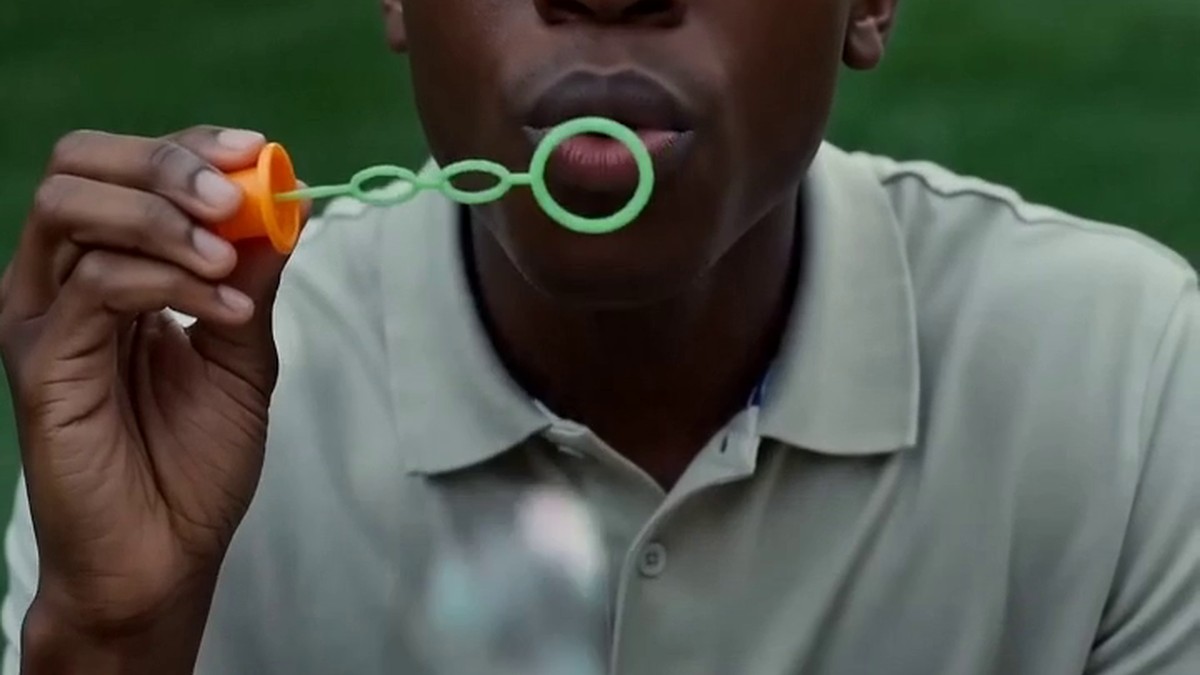
The real turning point came on a brutally hot July afternoon six months into the process. We were all in the backyard—Tommy was manning the old charcoal grill, Paul was trying to teach Emily how to blow bubbles, and I was slicing watermelon on the picnic table. A silver sedan pulled into the driveway. Out stepped my husband’s cousin, Denise, the same one who years earlier had suggested I give the boys to Ruth’s sister. She was holding a manila envelope and wore the expression of someone carrying bad news.
“Rachel, we need to talk.” She didn’t sit down or accept a glass of lemonade. “I’ve spoken to a lawyer. You’re not blood to those boys, and now you’re trying to bring another child into this? What stability can you offer? The house is in Keith’s family’s name, and there’s a legal question about your right to remain here, let alone adopt.”
The world tilted. I’d known the house title was still under Keith’s estate, but I’d never imagined anyone would challenge it. Denise had always been warm to me. I saw now that warmth had been conditional. She handed me a letter threatening a custody review over Emily if my housing situation wasn’t “resolved” within thirty days.
Tommy set down the spatula. Paul’s hand stilled on the bubble wand. The two of them exchanged a look that I recognized—the same silent communication they’d had since they were toddlers. Tommy walked over and stood beside me, his shoulder almost brushing mine.
“Denise,” he said, his voice terrifyingly calm, “you’re going to want to leave now. But before you do, you should know something. We’ve been saving for three years—not just for Emily, but for this house. We spoke to a real estate attorney last spring. The deed issue was resolved last week. This property belongs to Rachel, free and clear. We bought it for her, through a trust, with the money we earned and the life insurance we didn’t touch. You have no claim here. Not on this house. Not on Emily. Not on our family.”
Paul stepped forward, pulling out his phone to show a digital copy of the deed transfer, legally recorded. “You can check the county records. It was finalized Friday.”
Denise’s face drained of color. She sputtered something about “family rights,” but Tommy cut her off.
“Family is what we choose, Denise. Not blood. Not paperwork. Rachel taught us that. Now get off our property.”
I stood frozen as her car pulled away, the dust from the driveway settling on the grass. My boys—my sons—had not only thought ahead; they had fought for me, for Emily, in ways I never saw coming. I didn’t even know they knew about the deed issue.
That night, after Emily was asleep in her new room with the glow-in-the-dark stars on the ceiling, I sat on the porch and lit a single candle. Tommy and Paul came out and sat on either side of me, just like when they were little.
“You should have told me,” I whispered.
“You would’ve tried to handle it on your own,” Paul said. “You always do. We wanted to be the ones to protect you this time.”
The adoption hearing was set for December 18th, a week before Christmas. The courthouse was old and grand, with high ceilings and wooden benches that creaked. I wore a blue dress Tommy said matched my eyes. Paul held Emily’s hand on the way in, and she insisted on bringing her stuffed rabbit, the one with the missing ear.
The judge’s questions were kind but thorough. When she asked Emily who her family was, the little girl pointed straight at me, then turned and pointed at Tommy and Paul. “Mama, and my brothers,” she said, her voice carrying in the quiet chamber.
The gavel fell. The papers were signed. Emily Margaret became Emily Margaret Martin, my daughter, legally and forever.
We stepped out of the courthouse into a swirl of snow, the first of the season. Tommy scooped Emily onto his shoulders, and Paul took my arm, guiding me down the frosty steps. She laughed, catching snowflakes on her tongue, and I looked at my three children, all of them mine in the only way that ever truly counts.
That night, after the celebration dinner where we ate pizza right out of the boxes because nobody wanted to do dishes, I tucked Emily into bed and read her the same story I used to read to the twins when they were small. Her hand curled around my finger.
I walked into the hallway and found Tommy and Paul waiting with an old photo album. “We found this in a box in the attic last week,” Tommy said, opening it to a picture of the three of us, years ago, on the first day they’d called me “Mom” in front of their friends. I’d forgotten that day entirely. They hadn’t.
And as I stood there, holding the album with my two grown sons, listening to the faint sound of sleepy breathing from the room down the hall, the tears came again. Not from sadness, not from stress, but from a gratitude so deep it held the weight of every sacrifice, every sleepless shift, every moment I’d thought I wasn’t enough.
They’d given me everything back, in one gesture, in one signed piece of paper, in one little girl who now called me Mama. And I’ll cry about it until the day I die—because love like that, the kind you build with your own choices day after day, is the only thing that never fades.