The Dog That Wouldn't Move
Mike Kessler killed the engine of his pickup and sat gripping the wheel, staring at the crew of four men who should have been swinging sledgehammers but were instead leaning against their truck, smoking in the cool May morning. The foreman, Dave, was already walking toward him, shaking his head before Mike even rolled down the window.
“Dog,” Dave said. “That’s it. Red mutt, medium size. Won’t budge. Lying right on the doorstep like she pays the damn mortgage.”
The call had come at seven a.m., dragging Mike out of a half-dream about the garden his wife Sarah wanted to plant where the rotting shed now stood. Dave’s voice had been flat: *There’s a dog. We can’t work.* Mike had cursed, thrown on jeans, and driven out to the property he’d bought in March—a sturdy little house on half an acre in Oak Creek, and one decrepit shed that looked like a decaying thumb sticking up from the lawn.
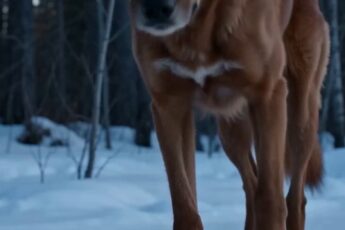
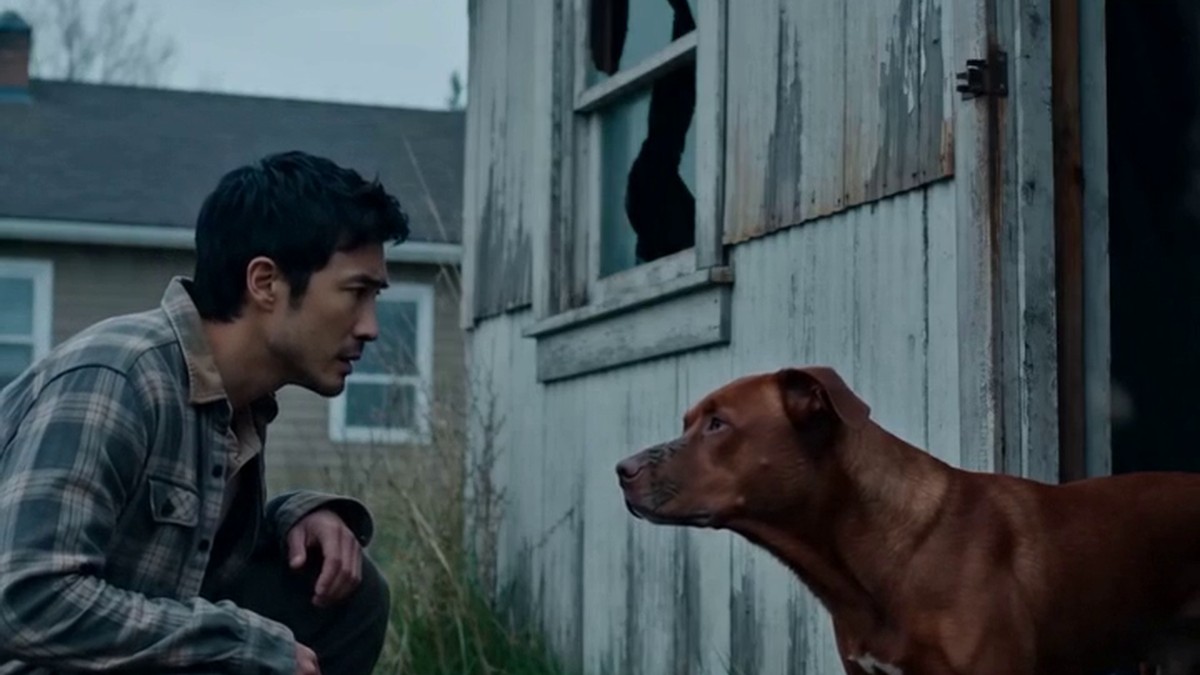
Now he got out, boots crunching gravel, and walked past the crew. A crowbar and a sledgehammer lay abandoned in the weeds. In front of the shed, exactly where Dave had described, a reddish-brown mutt stretched across the threshold. One eye was permanently squinted, the other dark and wet and fixed on him. Ribs showed through a dull coat, and her paws were crossed with a strange sort of dignity. No barking. No snarling. Just absolute stillness.
“Shoo,” Mike snapped, stomping his foot. The dog’s hackles rose in a slow wave, and she stood, backed up half a step, then lay down again, blocking the gap between warped door and frame. Dave shrugged. “We tried sticks, shouting, stomping. She just circles back. Stubborn as hell.”
Mike crouched, bringing himself level with those unblinking eyes. The left one leaked a little, like an old injury that never healed. There was no anger there, only something he couldn’t name—a fierce, quiet boundary. “Fine,” he muttered, rising. “I’m going in.”
He pushed the door, hinges shrieking, and squeezed inside. The air was thick and damp, heavy with the stink of rotting wood, but underneath it rode another scent: warm and milky, alive. His mother had once bottle-fed a litter of kittens in their laundry room, and the smell was exactly the same.
His eyes adjusted, picking out a cobwebbed workbench, a smashed crate, and then the far corner, where a thin blade of daylight fell through a crack in the roof. There, a gray blanket had been gathered into a nest. On it lay four puppies—tiny, blind, their closed eyes like dark buttons, their limbs trembling as they squirmed over each other. The runt had a black patch on its back and twitched in its sleep, dreaming.
Mike’s legs folded under him. He knelt in the dirt, fingers reaching without permission to touch one impossibly fragile spine. The pup didn’t wake. A soft rustle behind him, and the mother dog slipped in, circled him without a sound, and lay down beside her newborns. She began to lick them, one by one, a rhythmic, unhurried baptism. Her whole world had narrowed to that blanket, and Mike meant nothing at all.
He stayed there for a long stretch, the damp soaking through his knees, listening to the pups nurse. The mother finally closed her squinted eye and rested her head on her paws, the tension gone. When he eventually stepped back outside, Dave was waiting with a thermos of coffee.
“Rats? Raccoons?”
“Puppies,” Mike said. “Four of them. Blind. She just gave birth in there.”
Dave scratched the old burn scar on his wrist. “So, uh, do we demolish or not?”
Mike stared at the shed door, still open a crack. A patch of red fur was visible, unmoving. That dog had no chance of stopping four men with crowbars. She didn’t growl, didn’t bite, didn’t run. All she had was a body planted on a rotten threshold and a refusal to leave. He couldn’t be the one to crush that.
“No,” he said. “We wait. Until they’re old enough.”
Dave whistled for the crew, and they cleared out, the sledgehammer clanking into the truck bed. Mike pulled out his phone. “Sarah, I need dog food. And a bowl—two bowls. I’ll explain when I get home.” She started peppering him with questions, but he was already looking for something to hold water. An old, rusted pan lay against the shed wall. He filled it from a bottle in the truck, set it just inside the door. The dog’s nose twitched, but she didn’t move.
He sat on the front steps of the house with the sandwich Sarah had packed, chewing slowly. A bird piped a single note over and over, and the May air smelled of wet grass and gasoline. The shed still sagged, green paint peeling in curls, its roof caved on the right. But from inside drifted that warm, milky current, and the grey blanket in the corner was no longer garbage. It was the first bed of four tiny lives.
—
That evening, Mike told Sarah everything over plates of leftover casserole—the standoff, the squinted eye, the puppies curled like commas in their nest. She listened, fork unmoving, and when he finished, she set it down.
“You did the right thing,” she said. “But Mike, that roof is a deathtrap. What happens when it rains?”
He hadn’t thought that far. The next morning, while Sarah packed a cooler with ground beef and old towels, he drove to the hardware store for a heavy tarp and rope. Back at the property, the dog—he’d started silently calling her Ginger—greeted them at the door, tail giving two cautious wags. She’d emptied the water pan, and her belly looked a little softer. Sarah knelt a safe distance away and murmured nonsense while Mike lashed the tarp over the worst of the sagging roof. The whole structure groaned under his touch, a deep, splintery creak that sent a chill down his spine.
Over the following days, they fell into a routine. They came every evening after Mike’s shift at the auto shop, bringing kibble for Ginger and a warm bottle of puppy milk replacer just in case. Sarah would sit cross-legged in the dirt, humming while Ginger nursed. The mother’s posture relaxed a little more each time. On the fifth day, the smallest pup—the one with the black spot—opened its eyes: two cloudy blue marbles blinking into the dust-filtered light. Sarah made a sound that was half-laugh, half-sob.
But on Friday, Dave called again, his tone sharper. “Container rental runs out Tuesday, and I got a crew heading to Springfield after that. That shed’s coming apart, Mike. I’m not sending my guys into a collapse zone.”
Mike promised it would be done by Monday. The plan was to move the whole family into the house’s basement that weekend—he’d already built a whelping box from scrap lumber. The forecast warned of severe thunderstorms late Saturday, possible hail, and the tarp wouldn’t hold in a real blow. Saturday morning, he showed up with a pet carrier, a flashlight, and heavy gloves.
But Ginger was having none of it. The moment he stepped into the shed with the carrier, she rose and planted herself between him and the nest. No growl. Just that same immovable, ancient stare that said *I will not be moved*. He tried treats, soft words, letting her sniff the carrier’s interior. Nothing. The puppies were too small to separate from her; if she panicked, she could reject them. After an hour, Mike retreated, his stomach tight, praying the old timbers would hold one more night.
The storm hit at two a.m. Mike woke to rain hammering the bedroom windows and wind screaming through the gutters. Then came a crack of thunder so loud the walls seemed to flinch. He was already pulling on boots when Sarah sat up, face pale in the lightning flashes.
“Mike, the roads are awful—”
“I have to go.”
He drove through curtains of water, dodging fallen branches, the sky an ugly bruised green. When he finally bumped onto the gravel drive, his headlights caught the disaster: the shed’s left side had pancaked inward, the tarp torn to ribbons. No barking, no whimpers, just the roar of the storm.
He grabbed the flashlight and ran, scrambling over splintered boards and twisted nails, calling Ginger’s name. Then he heard it—a tiny, breathy cry. He found them in the sole corner still standing, a fallen beam angled just enough to create a pocket. Ginger lay on her side, her back leg crushed under the rough timber, her body curved in a tight crescent around the blanket nest. She was still licking the pups, still shielding them, even now. The four puppies squirmed and squealed, but they were dry, untouched.
“Easy, girl, easy,” Mike choked, voice shaking. He wedged his hands under the beam, braced his shoulder, and heaved with everything he had. The wood shifted just enough that Ginger could drag herself free with a raw yelp. She collapsed, panting, leg dangling grotesquely, but she didn’t snap even when he scooped her up. He wrapped the puppies in his raincoat, bundled Ginger against his chest, and staggered to the truck.
The emergency vet in Oak Creek worked through the night. Ginger’s leg had a clean break—they set it with a pin, no long-term damage. The puppies, now almost three weeks old, were healthy, their bellies full. Mike sat in the clinic’s plastic chair, still soaked, still smelling of blood and rain, until Sarah arrived and folded herself around him without a word.
Two weeks later, Mike demolished the shed himself. He salvaged a handful of boards, planed them smooth, and built a sturdy, insulated doghouse painted the same faded green, but with a small wooden plaque Sarah made that read *Ginger’s Place.* Three puppies found homes with friends and coworkers; the runt with the black spot stayed. They called him Bandit.
Ginger’s cast came off in June. By then, the back corner of the yard was a splash of wildflowers Sarah had planted, and every evening Mike would sit on the porch with a cold beer, watching Bandit chase fireflies while Ginger lay at his feet, her mismatched eyes half-closed in contentment.
He thought often about that first morning, how she had stood on a rotting doorstep and stared down a wrecking crew with nothing but her own small frame. She hadn’t barked, hadn’t attacked, hadn’t fled. She’d simply refused to move. And in doing so, she’d given him a truth he hadn’t known he needed: that even the most stubborn, broken things deserve someone who will hold the line. The shed was gone, but the nest was always there, in the quiet space between a man and the dog who taught him what it meant to protect something no matter the cost.