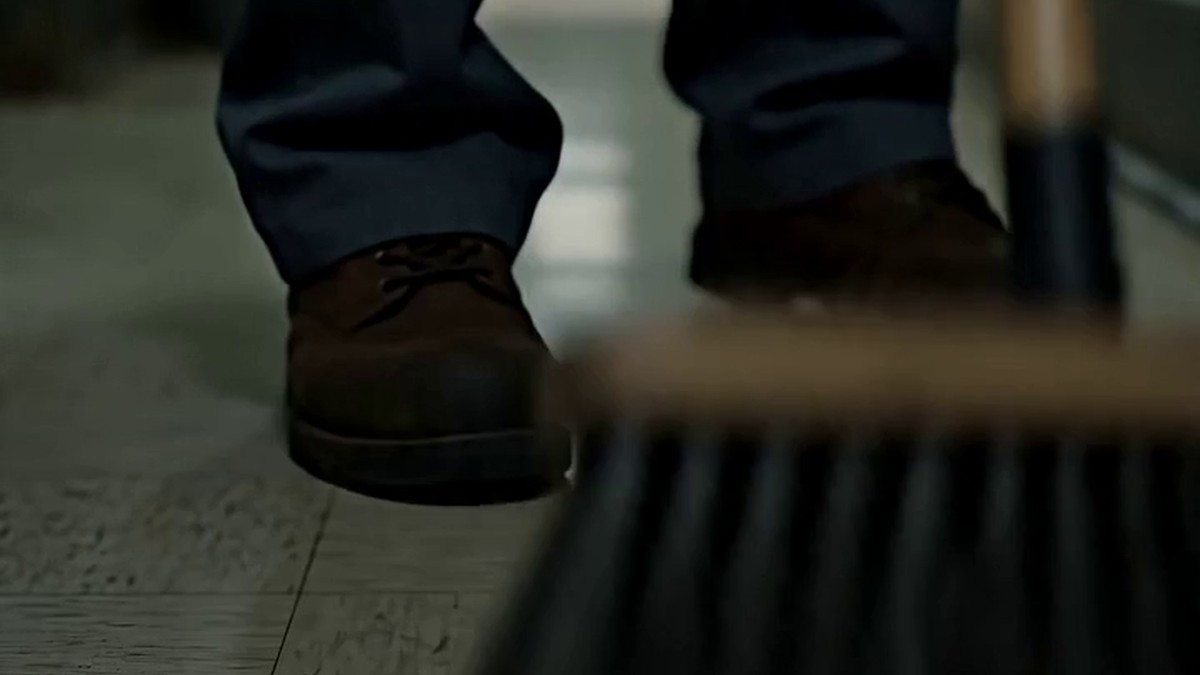
Vince dragged his broom across the courtyard at six in the morning, the bristles scraping wet asphalt in a rhythm that could wake the whole first floor. April had no business smelling this much like fall—damp leaves, cold stone, the ghost of winter not yet gone. A calico cat sat on the bottom step of the stoop, thin as a rumor. Her fur was matted along the ribs, and the green of her eyes didn’t blink. She opened her mouth to meow, but no sound came out, just a little puff of silence.
Vince leaned the broom against the brick wall and crouched, his knees complaining. “Where the hell did you come from?”
The cat blinked. Opened her mouth again. Nothing.
The next morning she was there, same step, same silence. Then the next. Vince brought an aluminum saucer from his apartment and the leftover chicken from last night’s dinner. She ate slowly, ears pinned back, waiting for a trick. After eating, she didn’t leave. She walked up the stoop, turned right down the hallway, and laid herself across the doormat of apartment twelve. Not apartment eleven, not apartment thirteen. Apartment twelve.
On the third day, Vince noticed. On the fifth, he stopped calling it coincidence.
Brenda from the fourth floor came down Monday morning with a trash bag and stopped dead, staring at the saucer. “Vince, are you running a cat café out here?”
“I’m feeding her,” he said, and kept sweeping.
Brenda waved a hand, her red nails catching the gray light. “This is how it starts. Fleas, fur, God knows what. The Millers on three have a baby, have you thought about that?” Her perfume was sweet and thick, clogging the air worse than the exhaust from the street.
Todd from the second floor leaned against the doorframe in baggy sweatpants, a cigarette hanging from his lip. He smirked through a stream of smoke. “Vince, you’re like the cat whisperer now. Maybe she’ll pick your lottery numbers next.”
Vince didn’t look up. “That cat didn’t just show up.”
Brenda snorted. Todd took a long drag, blew it out slow. “Whatever, philosopher,” he said, and went back inside.
The broom kept scraping. The cat stayed at apartment twelve’s door, paws tucked under, eyes fixed on the threshold. Silent.
Mrs. Beck in apartment twelve lived alone. She was past seventy, maybe older—nobody knew for sure because she didn’t throw birthday parties or invite anyone in. Small, bird-boned, always in a blue scarf and a gray wool coat that had seen too many winters. Until a week ago, she’d come down every morning for bread and milk, both hands on the railing, placing each foot like she was testing ice. Vince would see her, and sometimes she’d nod, sometimes not.
He tried to remember the last time he’d spotted her. Two days? Three? Longer. Since his wife died four years ago, he’d developed a habit of listening to other people’s doors. He paused outside apartment twelve. The paint near the bottom was chipped clean off. Quiet inside. Too quiet.
The cat sat at his feet, staring at the door, unblinking.
On Wednesday he ran into Brenda on the stairs. “You seen Mrs. Beck lately?”
“Who? Oh, the woman in twelve.” Brenda adjusted her hair. “No. She keeps to herself. Probably out of town.”
“She doesn’t have family.”
Brenda spread her hands. “Well, then, she’s just staying in. It’s still freezing out.”
It was fifty-seven degrees. Vince didn’t argue. Her heels clicked away, and the perfume evaporated like it was never there.
He put his ear to the door of apartment twelve. Nothing. Or almost nothing. Then the cat made a sound for the first time—a raspy, broken little mew, like lungs trying to remember how the hell it worked.
Vince knelt and ran a palm along her spine. He could count every rib through the fur. The cat didn’t look at him. She kept her eyes on the keyhole.
Thursday morning he was mopping the ground-floor hallway when a noise crashed down from above—not a meow, something heavier, wrong. The wet rag slipped from his fingers and slapped the floor. He ran, two stairs at a time, knees burning.
The cat stood at apartment twelve, tail high, ears flat. The lock on thirteen clicked, and a neighbor poked her head out. “What’s going on?”
“Call 911,” Vince said. “And get the fire department. We need this door open.”
“You can’t just—”
“Now.”
He wiped his wet hands on his jacket. The patch on the elbow turned dark.
It took twenty minutes to break the lock. The door swung open and stale, dead air poured into the hallway. Vince stepped in first.
Mrs. Beck was on the floor between the kitchen and the living room. One slipper sat neatly against the wall, like someone had placed it there on purpose. Shattered glass lay near her hand, a chalky white stain on the linoleum where water had dried up long ago. The phone was on the nightstand in the bedroom, maybe four feet from her outstretched fingers. Four feet too far.
Later, the paramedics would say: fractured hip, severe dehydration. Another day and it would have been too late.
When they carried her down the stairs on a stretcher, Mrs. Beck was conscious. Cracked lips, cloudy eyes, gray skin. But she wasn’t looking at the EMTs or the neighbors on the stairs. She was looking at the cat, sitting silent on the bottom step.
Her bony fingers twitched on the blanket. “Vince,” she whispered. “Feed her. Please.”
His throat closed. He just nodded.
The ambulance doors slammed shut. The red-and-blue lights painted the courtyard, then faded into the sound of traffic.
Brenda stood off to the side, hand pressed to her mouth. Todd sat on the bench, elbows on his knees, not moving.
The next morning Vince came out at six o’clock, like always. The saucer by the stoop was full of kibble, and next to it sat a green plastic bowl with clean water—the kind you buy at any corner store, probably from someone’s kitchen. He looked up at the dark windows. None were lit, but on the fifth floor, a window creaked open just an inch.
His broom started its rhythm across the pavement. Ten minutes later, Brenda stepped out. No makeup, a coat thrown over her nightgown. She stopped on the stoop and stood there, watching the cat eat from the bowl. Then she leaned down and ran her hand over the matted back, quick and almost secret. She walked to the dumpster without looking back.
Todd came down later with a folded plaid blanket. “Hey, Vince,” he said, clearing his throat. “Figured if she’s out here at night… it’s old, but I washed it.”
He dropped it on the step and walked away before Vince could answer.
Vince smoothed the blanket on the concrete. The cat sniffed the wool, kneaded it with her paws, curled into a tight ball, and closed her eyes.
The courtyard smelled like wet leaves and something else—something that hadn’t been there before.
***
Mrs. Beck spent three weeks in the hospital and another three in a rehab facility. During those weeks, the cat never left the courtyard. Brenda fed her mornings. Todd left treats. The neighbor from apartment thirteen put a small cardboard box with a towel outside her door, and the cat slept there every night, as if waiting.
Vince visited Mrs. Beck once, in a room that smelled like antiseptic and wilting flowers. He told her about the cat. She was quiet for a long moment, her thin hands folded on the white sheet.
“I had a calico, years ago,” she said finally. “She ran away when I had to move here. I always liked to think she found a good spot to land. Smart animals. They remember.”
Vince didn’t say anything. But he thought about the cat’s eyes on that keyhole, and the sound that had broken the silence.
The day Mrs. Beck came home, the sun finally felt like April. She walked slowly, still fragile, leaning on a cane. The cab door opened, and there was the cat, sitting on the stoop like she’d been carved from stone.
Mrs. Beck stopped. The cat stood, stretched, and walked toward her. For the first time, Vince heard a real, full-throated purr rumbling from that tiny ribcage as Mrs. Beck bent down—slowly, carefully—and touched the cat’s head.
“Well, hello,” she whispered. Her voice cracked, but she was smiling.
That evening, Vince saw light in apartment twelve’s window. The cat sat on the sill, backlit and calm.
Three days later, the cat was gone.
The saucer sat untouched. The green water bowl had a film of dust. Vince stared at the empty stoop, a tight feeling spreading through his chest. He searched the courtyard, the alley, the street. Nothing. He walked two blocks before he found her at the edge of the neighborhood park, sitting under an old oak tree. The calico patches looked almost golden in the slant of morning light.
She turned her head and looked at him. Those green eyes held his for a long, steady beat. Then she stood, stretched one more time, and walked away into the brush beyond the fence. She didn’t look back.
Vince watched until the last flick of her tail disappeared. Then he walked home, slowly, the sense of something sacred and complete hanging in the air.
That afternoon, the neighbors gathered in the courtyard without being called. Brenda brought coffee. Todd lit his cigarette but didn’t smoke it, just held it between his fingers. Mrs. Beck came down with her cane and sat on the bench, the plaid blanket still folded neatly on the step.
“She did what she came for,” Mrs. Beck said softly. Her eyes were clear, peaceful. “Some things aren’t accidents.”
Vince nodded, picking up his broom. “Told you she didn’t just show up.”
Nobody laughed. Nobody even smiled for a second.
The saucer and bowl stayed on the stoop for a long time, just in case. But they all knew. The courtyard felt different after that—like something had shifted in the bones of the building, something quiet and watchful and good.
And every morning at six, when Vince swept the pavement under a sky just starting to lighten, he could swear he still felt a pair of green eyes on his back, even when nothing was there at all.